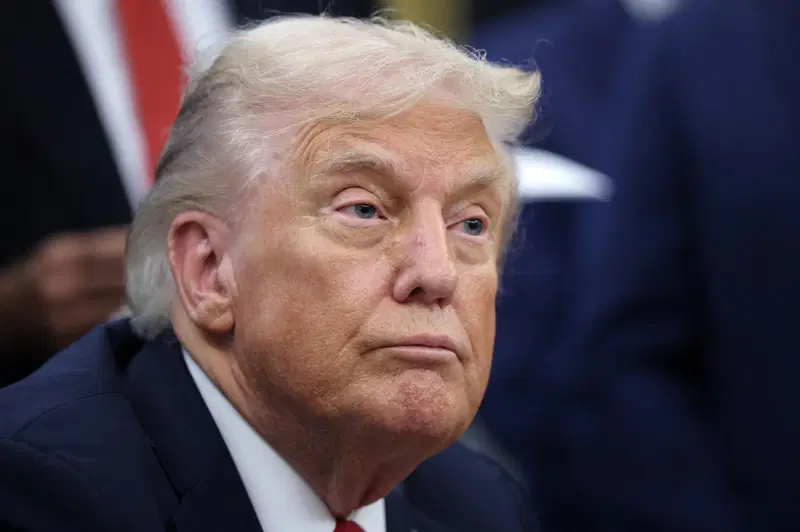
Crude oil prices soared more than two percent on Thursday after U.S. President Donald Trump announced sweeping sanctions against two of Russia’s largest oil companies Rosneft and Lukoil in a move aimed at ramping up pressure on Moscow over its ongoing war in Ukraine.
The sanctions, unveiled during a press briefing at the White House, immediately triggered a rally in global energy markets, with Brent crude rising 3.2 percent to $64.58 per barrel and West Texas Intermediate gaining 3.3 percent to $60.44 its highest in nearly two weeks.
Trump said the measures were necessary after fresh peace efforts between Washington and Moscow had “gone nowhere,” following the collapse of a planned summit with President Vladimir Putin in Budapest earlier this week.
“Every time I speak with Vladimir, I have good conversations, and then they don’t go anywhere,” Trump told reporters.
“We’re introducing tremendous sanctions on Rosneft and Lukoil, but I hope they’ll be short-lived once the war is settled.”
The announcement came as the European Union introduced a new round of sanctions targeting Russian financial networks and key industries, aligning with Washington’s latest actions to curb Moscow’s ability to finance its war effort.
The oil market rally was further bolstered by Trump’s claim that India had agreed to significantly reduce its crude imports from Russia as part of ongoing U.S.-India trade discussions.
However, New Delhi has yet to confirm or deny any such policy shift, though reports from Bloomberg cited Indian refinery officials suggesting that Russian oil inflows could drop “close to zero” in coming weeks due to the new restrictions.
While oil markets rallied, global equities also rebounded sharply following news that China and the United States will resume high-level trade talks later this month.
China’s Vice Premier He Lifeng confirmed plans to meet with top U.S. officials in Malaysia from October 24 to 27, signaling a potential thaw in trade tensions.
The announcement soothed investor fears after reports earlier this week indicated that the White House was considering new export restrictions on software-driven technologies including laptops and jet engines citing national security concerns over Beijing’s control of rare earth minerals.
Those reports had sparked renewed fears of a U.S.–China trade war, prompting Trump to threaten 100 percent tariffs on Chinese imports.
“Peace through trade is possible, but only if China plays fair,” said U.S. Treasury Secretary Scott Bessent, adding that any export limits “would be coordinated with G7 allies.”
According to Chris Weston of Pepperstone Group, the possibility of new software curbs introduced uncertainty, but market sentiment remained optimistic that “tariff escalation is unlikely to materialize before November 1.”
READ ALSO:Uptrend continues as equities market gain N110bn
Hong Kong’s Hang Seng Index rose 1.0 percent to 26,039.82, while Shanghai’s Composite Index gained 0.2 percent to 3,922.41.
European markets followed suit, with London, Frankfurt, and Paris opening higher amid investor optimism over renewed U.S.–China dialogue.
However, Japan’s Nikkei 225 closed down 1.4 percent at 48,641.61, reflecting cautious sentiment in Asian trading.
In currency markets, the dollar strengthened slightly against the yen, trading at ¥152.58, while the euro slipped to $1.1594.
Gold prices rose nearly two percent to $4,110 per ounce, recovering some of the week’s earlier losses after dropping from record highs above $4,381.
Analysts warn that the new U.S. sanctions could exacerbate tensions between Washington and Moscow, potentially disrupting global energy supplies at a time when major economies are already battling inflationary pressures.
Energy economist Dr. Marina Petrov said the move “marks a significant escalation in U.S.-Russia energy confrontation” and could “force Moscow to seek alternative buyers in Asia at discounted rates.”
Meanwhile, European officials hailed the sanctions as “a unified stand for peace,” though experts cautioned that the move could drive short-term volatility in fuel markets across the continent.
The sanctions, combined with resurgent U.S.- China trade diplomacy, have set the stage for an intense geopolitical week ahead, as Trump prepares to meet Chinese President Xi Jinping at the APEC Summit in South Korea.
“Everything is on the table,” Bessent reaffirmed, hinting at potential breakthroughs but leaving open the prospect of additional trade measures.
As the world watches the twin power plays unfold sanctions against Russia and trade talks with China global investors are bracing for a turbulent but potentially transformative end to the year.