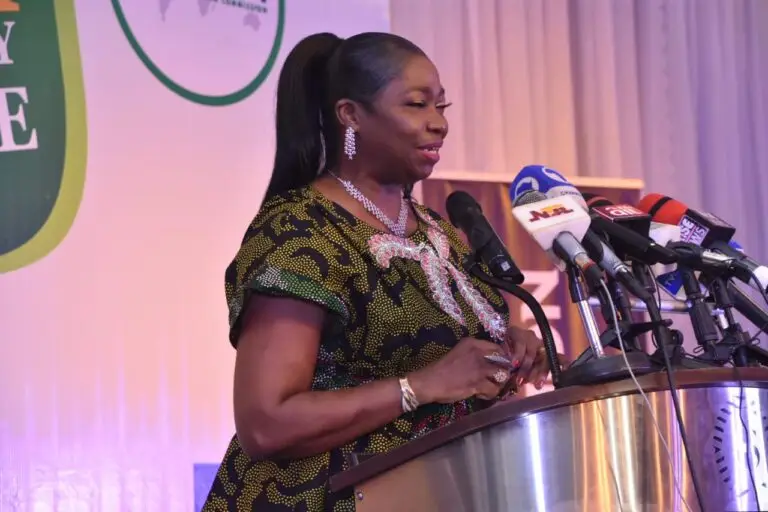
The Chairman of the Nigerians in Diaspora Commission, NIDCOM, Abike Dabiri-Erewa, has issued a strong warning to Nigerians on the rising dangers of illegal migration, stressing that thousands of citizens continue to expose themselves to avoidable harm by attempting risky journeys in search of better opportunities abroad.
She gave the warning on Wednesday in Abuja while speaking on the dangers of irregular migration at an event organised by the Nigeria Bar Association, NBA, Human Rights Institute to mark the 2025 International Human Rights Day.
Dabiri-Erewa said she had witnessed countless cases of Nigerians willingly venturing into life-threatening situations abroad, driven by desperation and false promises.
She added that the commission, working with the NBA Human Rights Institute, had intensified efforts to rescue citizens stranded in vulnerable conditions.
She lamented that “In Iraq alone, there are over 7,000 stranded. They are looking for hope in hopelessness. Citizens often underestimate the dangers of illegal migration.”
The NIDCOM boss urged Nigerians to explore opportunities within the country rather than risk their lives on unsafe journeys, stressing that “the grass is not greener on the other side; the grass is greener where you water it.”
Dabiri-Erewa narrated the case of a young woman who recently returned from Libya after spending N2.5 million—money meant for her medical care—on an illegal trip.
The woman returned empty-handed, a development the NIDCOM chief described as a painful example of why awareness and preventive action are vital.
She also highlighted the deadly risks along major irregular routes, noting that one in every 24 migrants faces the danger of being killed in Libya alone.
She added that NIDCOM and its partners were currently working to repatriate 10,500 stranded Nigerian children.
Also Read: Libya deports 80 Nigerians over illegal migration
The commission’s chairman questioned why citizens willingly expose themselves to such grave conditions, stressing that only documented, lawful migration with viable livelihood plans is acceptable.
She he called for a whole-of-government and whole-of-society response to reduce the rising cases of irregular migration.
Dabiri-Erewa maintained that stronger collaboration, sustained advocacy, and the creation of safe opportunities within Nigeria were essential to protect citizens and foster national development.
Speaking at the event, the NBA 1st Vice President, Sabastine Anyia, urged leaders, institutions, law enforcement agencies, communities, and citizens to share responsibility in promoting safety and securing human rights.
Anyia encouraged members of the Bar to speak out in difficult times, insisting that silence enables injustice.
He challenged Nigerians to imagine a country where children walk freely, farmers work without fear, and citizens live without violence.
“That Nigeria is possible. But it demands unyielding, unwavering, unapologetic commitment. Are we as a unit ready for that?” he asked.
He said the commemoration of International Human Rights Day should serve as a reminder of the nation’s duty to uphold justice, peace, and human dignity.
“May we commit to building a Nigeria where human rights are protected in our laws, practiced in our streets, and preserved in our hearts. A Nigeria where security is a guarantee for all. May our collective courage shape the Nigeria we deserve,” he added.
NAN