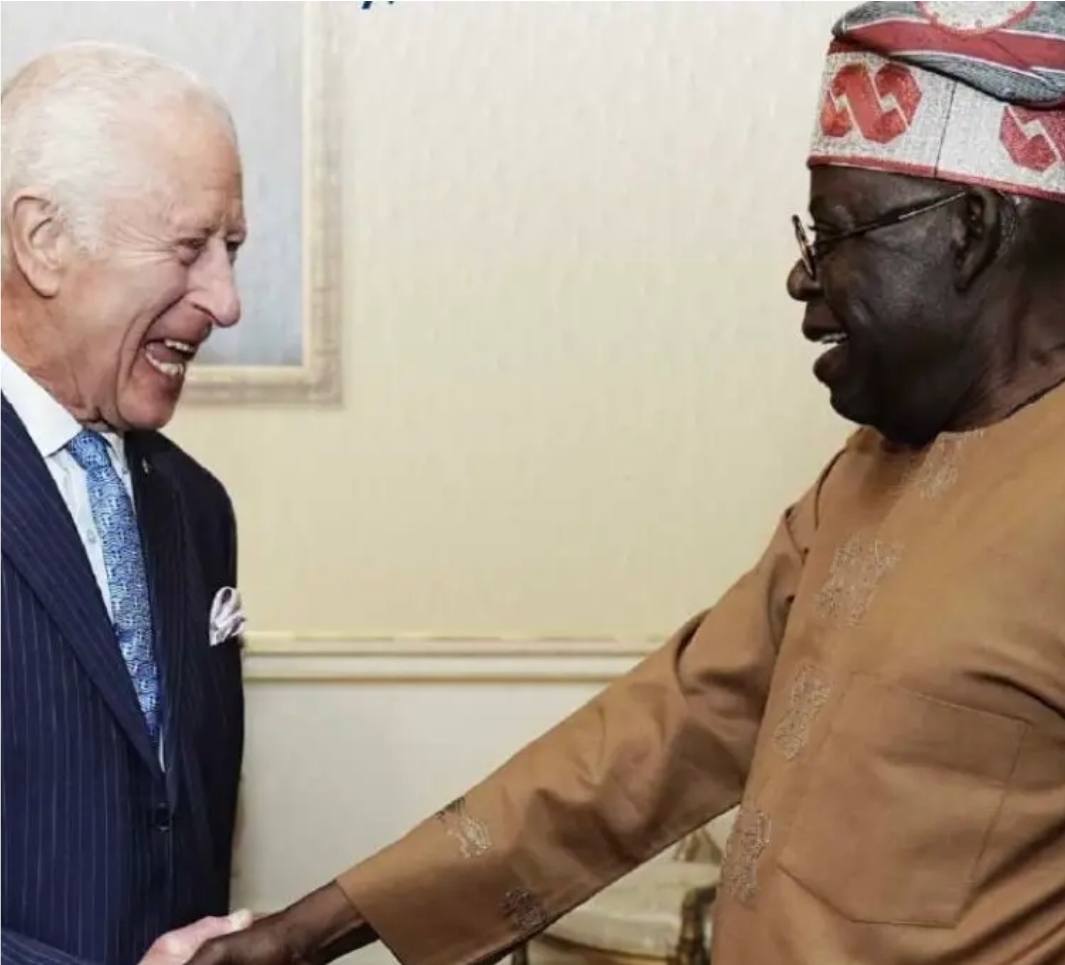
King Charles III has extended an invitation to Nigerian President Bola Tinubu for a state visit to the United Kingdom on March 18-19, marking Nigeria’s first such visit in 37 years.
The announcement, made by Buckingham Palace, represents a significant milestone in the diplomatic relationship between these two Commonwealth nations and signals a deliberate warming of ties after decades of limited high-level engagement.
President Tinubu and First Lady Oluremi Tinubu will be hosted by King Charles and Queen Camilla at Windsor Castle during the two-day visit. State visits are considered the highest form of diplomatic engagement, employing the full ceremonial pageantry of the British monarchy—including carriage processions, state banquets, and elaborate receptions—to demonstrate the importance with which the UK views its relationship with the visiting nation.
The significance of this invitation becomes clearer when placed in historical context. The last Nigerian state visit to the UK occurred in May 1989, when military ruler General Ibrahim Babangida travelled to meet Queen Elizabeth II for a four-day visit that included the iconic scene of the Nigerian leader riding alongside the Queen in a ceremonial horse-drawn carriage. Since Nigeria gained independence from Britain in 1960, only three Nigerian leaders have been accorded the honour of a state visit: General Yakubu Gowon in 1973, President Shehu Shagari in 1981, and General Babangida in 1989.
The 37-year gap between state visits reflects the complex and often turbulent nature of Nigeria-UK relations over recent decades. Nigeria experienced periods of military rule, political instability, and economic challenges that strained diplomatic ties and made high-level ceremonial engagement difficult. The relationship between former colonizer and colony has also required careful navigation, with both countries working to move beyond the colonial past toward a more equal partnership based on mutual interests rather than historical obligations.
The timing of this invitation is far from coincidental. Several converging factors have made 2026 an opportune moment for this diplomatic reset. Most prominently, the economic relationship between the UK and Nigeria has grown substantially stronger in recent years. Bilateral trade between the two countries now exceeds £8 billion annually, making Nigeria one of the UK’s most important trading partners on the African continent. UK exports to Nigeria alone amounted to £5.7 billion in the four quarters ending in the third quarter of 2025, representing a remarkable 14.2% increase over the previous period.
Also Read: King Charles III prepares to visit the Vatican
This economic momentum received institutional support in February 2024 when the UK signed an Enhanced Trade and Investment Partnership, ETIP, with Nigeria. This agreement is particularly noteworthy as it represents the UK’s first and only bilateral trade and investment framework with an African country. The partnership sets out priority areas for future cooperation and dialogue, focusing on expanding opportunities for business, technical cooperation, and the sharing of best practices in areas of mutual interest. The ETIP has been viewed by observers as part of the UK’s post-Brexit strategy to deepen economic ties with Commonwealth nations and establish stronger footholds in emerging markets.
President Tinubu himself has become an increasingly prominent figure on the international stage since taking office in May 2023. His administration has embarked on ambitious economic reforms that have attracted attention from international financial institutions and foreign investors. The reforms have focused on fiscal consolidation, with the fiscal deficit narrowing dramatically from 5.4% of GDP in 2023 to 3.0% in 2024, supported by improved government revenue collection and expenditure management. Tinubu has also pursued policies aimed at strengthening foreign reserves, managing inflation, and creating a more favourable environment for private sector growth.
These efforts have yielded results that have bolstered Nigeria’s international standing. The World Bank has projected that Nigeria’s GDP will grow by 4.3% in 2026, driven by higher crude oil production and stronger performances in key economic sectors. President Tinubu has declared 2026 the “Year of Families and Social Prosperity,” emphasizing his administration’s commitment to inclusive economic expansion that benefits ordinary Nigerians. While challenges remain—including persistent inflation, security concerns, and poverty—the trajectory of reform has been sufficient to renew international confidence in Nigeria’s economic prospects.
King Charles’ personal connection to Nigeria adds another dimension to this invitation. Unlike a purely transactional diplomatic gesture, the King has demonstrated genuine engagement with Nigeria throughout his life. He visited the country four times as Prince of Wales—in 1990, 1999, 2006, and 2018—and has publicly expressed his appreciation for Nigerian culture, including Pidgin English and Afrobeats music. In 2023, The King’s Trust International, formerly known as The Prince’s Trust, officially launched operations in Nigeria with projects specifically aimed at tackling youth unemployment, one of the country’s most pressing challenges.
President Tinubu has already established a rapport with King Charles through previous meetings. The two met at Buckingham Palace in September 2024, and they also held a bilateral meeting on the sidelines of the COP28 summit in Dubai. These prior engagements laid the groundwork for the more formal and ceremonial state visit now being planned. The fact that King Charles personally extended this invitation, rather than it being solely a governmental initiative, underscores the relational foundation being built between the British monarchy and Nigerian leadership.
The state visit also reflects broader strategic considerations for both nations. For the United Kingdom, deepening ties with Nigeria aligns with its post-Brexit foreign policy objectives of strengthening relationships with Commonwealth countries and expanding influence in Africa, a continent of enormous economic potential and growing geopolitical importance. With a population exceeding 220 million people and status as Africa’s largest economy, Nigeria represents both a significant market for British goods and services and a crucial partner on continental and global issues ranging from security to climate change.
For Nigeria, the state visit offers an opportunity to showcase the country’s progress under President Tinubu’s leadership and to attract increased foreign investment from the UK and other Western nations. It also provides a platform for Nigeria to engage with British policymakers on issues of mutual concern, including security cooperation in combating terrorism and insurgency, educational partnerships, and development assistance. The symbolic importance of a state visit—the highest honour a nation can bestow—also carries weight in terms of Nigeria’s international prestige and diplomatic standing.
While specific details of the March visit have not been fully disclosed, state visits typically follow an established pattern of ceremonial and substantive engagement. Visitors can expect elaborate arrival ceremonies, carriage processions through London or Windsor, formal state banquets with the royal family in attendance, and bilateral meetings with senior government officials including the Prime Minister and Cabinet members. There will likely be discussions on expanding trade and investment, security cooperation, climate change initiatives, and cultural exchange programs. New agreements or partnerships may be announced to give concrete expression to the renewed commitment both nations are making to their relationship.
The visit takes place against a backdrop of broader British diplomatic activity. In 2025 alone, King Charles presided over three state visits—those of French President Emmanuel Macron, US President Donald Trump, and German President Frank-Walter Steinmeier—marking the first time the UK had hosted such a number in a single year since 1988. This diplomatic intensity reflects the UK’s efforts to reinforce and expand its global relationships in the post-Brexit era, with Nigeria now joining this circle of prioritized partnerships.
The significance of this state visit extends beyond the bilateral relationship between the UK and Nigeria. It sends a signal to other African nations about the value the UK places on engagement with the continent and may serve as a model for future partnerships. It also demonstrates that Nigeria, despite its challenges, has emerged as a key player whose cooperation and friendship are actively sought by major powers. For the Commonwealth, of which both nations are members, the visit reinforces the organization’s continued relevance as a forum for cooperation among diverse nations bound by historical ties and shared values.
As March 2026 approaches, both Nigerian and British officials will be working to ensure that this historic visit delivers substantive outcomes alongside the ceremonial pageantry. For President Tinubu, it represents an opportunity to consolidate his international standing and demonstrate the progress Nigeria is making under his leadership. For King Charles, it allows him to deepen his longstanding connection to a country and culture he has admired for decades. And for both nations, it marks a new chapter in a relationship that, while rooted in a complex colonial history, is increasingly defined by shared economic interests, strategic cooperation, and mutual respect.
The invitation to President Tinubu is ultimately a recognition that Nigeria and the UK, despite their different trajectories over recent decades, have compelling reasons to work more closely together in an interconnected world where economic opportunity, security challenges, and global issues like climate change require partnership and collaboration across borders and continents.