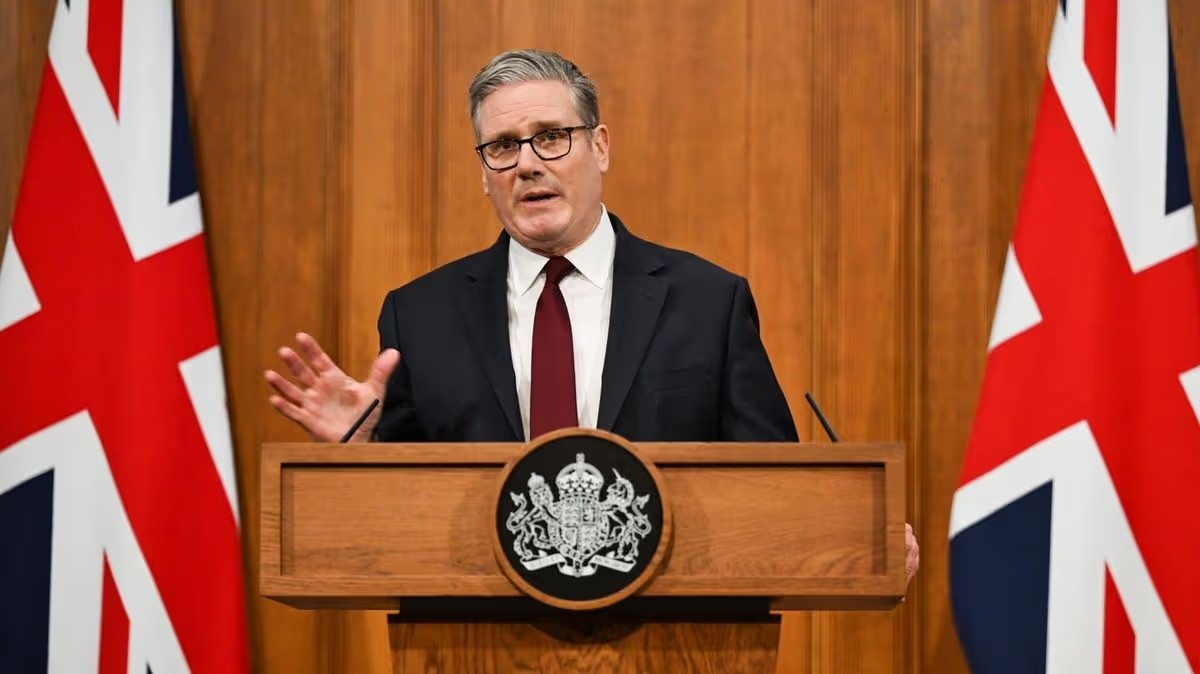
British Prime Minister Keir Starmer will travel to the Gulf on Wednesday to meet with regional leaders in an effort to bolster the ceasefire in the Middle East war, Downing Street said.
“I welcome the ceasefire agreement reached overnight, which will bring a moment of relief to the region and the world,” a statement from Starmer’s office quoted him as saying.
“Together with our partners, we must do all we can to support and sustain this ceasefire, turn it into a lasting agreement and reopen the Strait of Hormuz.”
The visit follows a virtual meeting on Tuesday of military planners from over 30 countries hosted by Britain.
The meeting explored measures for an international coalition to make the Strait of Hormuz accessible and safe after a ceasefire, according to the Ministry of Defence.
Last week, a UK-led diplomatic virtual meeting of around 40 countries also discussed the critical waterway.
Also Read: Starmer meets UK business leaders amid Trump Iran threats
It has been largely closed since the US-Israeli war against Iran started on February 28, impacting global supplies of oil, liquified natural gas, and fertiliser.
UK armed forces personnel have intercepted more than 110 drone attacks in the region during the hostilities, while the Royal Air Force has conducted more than 1600 hours of defensive operations, the Downing Street statement added.
In another development, The United Nations has urged all parties to uphold the ceasefire between the United States and Iran.
UN Secretary General António Guterres “calls on all the parties to the current conflict in the Middle East to comply with their obligations under international law and to abide by the terms of the ceasefire in order to pave the way toward a lasting and comprehensive peace in the region,” his spokesman, Stéphane Dujarric, said.
Iran and the United States agreed to the ceasefire shortly before the expiry of an ultimatum set by U.S. President Donald Trump for 0000 GMT on Wednesday.
Trump said on Truth Social that Iran’s 10-point plan provided a “workable basis” for negotiations.
AFP