Iran’s Fars News Agency, FNA, has reported that passage along the Strait of Hormuz has been halted again due to Israel’s alleged violation of the ceasefire agreement with the United States.
FNA is classified as a semi-official media outlet primarily reflecting the perspective of Iran’s Islamic Revolutionary Guard Corps reported that tanker traffic through the Strait of Hormuz came to a halt simultaneously with Israel’s airstrikes on Lebanon.
Although a two-week ceasefire came into effect the previous day following a dramatic agreement between the U.S. and Iran, allowing two tankers to pass through the strait with Iranian authorities’ permission that morning.
This appears to be Iran’s response to Israel’s continued airstrikes, described as the largest in history, targeting Hezbollah, a pro-Iranian, armed group in Lebanon, by reimposing stricter control over the strait. Iranian Foreign Minister Abbas Araghchi held a phone conversation with Pakistan’s Chief of Army Staff Asim Munir, who facilitated the ceasefire agreement, and officially raised the issue of Israel’s alleged ceasefire violation. Other Iranian media outlets even mentioned that Iran could terminate the ceasefire agreement if Israel’s attacks on Lebanon continue. In a phone interview with a British media outlet that day, U.S. President Donald Trump stated, “If negotiations do not go well, we will return at any time.”
A two-week ceasefire between the US and Iran has pulled the region back from impending escalation, leaving the world questioning ‘what comes next?’
US President Donald Trump confirmed on Truth Social on Tuesday evening: ‘I agree to suspend the bombing and attack of Iran for a period of two weeks.’
He described it as ‘a big day for world peace’ and said Iran has ‘had enough’ of the conflict, adding there would now be ‘lots of positive action’.
This came after Trump warned Tuesday morning that ‘a whole civilization will die tonight, never to be brought back again’ if no deal was reached by his 8pm ET deadline.
The ceasefire is conditional, hinging on the reopening of the Strait of Hormuz, a strategic chokepoint through which a fifth of the world’s oil supply passes.
Trump said the ceasefire would be ‘double-sided’ and justified it by claiming the US had ‘met and exceeded all military objectives’.
Also Read: Strait of Hormuz now danger zone, says Iran
Iran proposed a 10-point counter-proposal to US negotiators via Pakistani officials on Monday after the US gave Islamabad a 15-point proposal to begin a ceasefire.
Israel has also agreed to pause strikes for the same period, according to a senior White House official. However, they are continuing to fight Hezbollah in Lebanon.
The ceasefire is fragile, with the international community watching closely to see what unfolds as the Islamabad peace talks kick off this Friday.
Who is running Iran?
The ceasefire comes amid confusion over Iran’s leadership, with Iranian officials saying the agreement was approved by Ayatollah Mojtaba Khamenei, the country’s new supreme leader, despite intelligence reports suggesting he is in a coma.
President Trump has claimed to be negotiating with Iranian representatives but has been clear he does not mean the supreme leader.
Meanwhile on the diplomatic front, Foreign Minister Abbas Araghchi has been the public face of the deal.
He confirmed: ‘If attacks against Iran are halted, our Powerful Armed Forces will cease their defensive operations.’
And despite damage to its leadership and military infrastructure, Iran’s regime remains intact.
In the last few weeks, the Trump administration has sent mixed signals on regime change.
Trump initially called for a popular uprising, promising US support and even considering a Kurdish-led offensive to topple the government.
However, his aides have since softened that stance, with Defence Secretary Pete Hegseth claiming this wasn’t a ‘regime change war,’ even while boasting that the ‘regime sure did change’ for the better.
Trump previously admitted that finding a replacement for Ali Khamenei is difficult because US and Israeli ‘decapitation strikes’ have already killed off the moderate alternatives.
This has stalled plans to use the ‘Venezuela model’, used in January 2026 to swap Nicolás Maduro for a US-backed leader.
Instead of relying on exiled figures like Reza Pahlavi, whom Trump doubts has enough local support, he suggested that a more ‘appropriate’ successor would likely need to come from within the current Iranian system.
But for now, the late Ali Khamenei’s son, Mojtaba, is officially the man in charge.
However, with the severity of his condition still unknown, top regime officials are expected to continue the day-to-day work of running the country and participating in negotiations.
The control of the Strait of Hormuz is the central issue in ceasefire negotiations
What will happen with the Strait of Hormuz?
The control of the Strait of Hormuz is the central issue in ceasefire negotiations.
Trump has been fixated on forcing Iran to end its chokehold on the strait, the strategic waterway off the country’s coast through which a fifth of the world’s oil supply passes.
Iran has bombed multiple vessels that have made the dangerous decision to transit the Strait. As a result, oil prices have skyrocketed, and global markets have churned.
Under the current arrangement, Iran is allowing limited access. However, this access comes on its terms, with the plan indicating that safe passage would occur under Iranian military coordination.
Speaking on Tuesday, Foreign Minister Abbas Araghchi said: ‘For a period of two weeks, safe passage through the Strait of Hormuz will be possible via the coordination with Iran’s Armed Forces.’
Iran’s 10-point proposal explicitly demands continued control over the strait, signalling that closure remains an option if talks fail.
It also allows for potential fees on shipping of around $2 million per ship, with the funds used for reconstruction of infrastructure damaged by US-Israeli strikes.
Meanwhile, the US is unlikely to concede full control of the strait, and when asked about Tehran charging fees, Trump said on Monday: ‘What about us charging tolls? I’d rather do that than let them have them. Why shouldn’t we? We’re the winner. We won.’
Experts warn that this leverage is far from resolved, with Burcu Ozcelik from RUSI saying: ‘Right now, Iran continues to retain control of the threat of control over the Strait of Hormuz… Iran may choose to continue to threaten leverage over the strait.’
However, Ozcelik warned that whilst the Strait of Hormuz offered Iran a very compelling case to continue the conflict, every day that it did so was also incredibly costly, costly to livelihoods and to its infrastructure, to its missile and drone capabilities and its defence industry.
‘So, Iran also has suffered here, and it hasn’t been an outright victory over the strait,’ she said.
Ali Vaez, Iran project director at the International Crisis Group, who has spoken with those familiar with both sides of the negotiations, told Politico: ‘There is no military solution to this challenge.’
‘The only path is a mutually beneficial diplomatic arrangement.’
MAGA’s reaction
The ceasefire and the weeks leading up to it have exposed a growing divide within the MAGA movement.
While some supporters are praising Trump’s leadership, others are attacking him as a hypocrite, arguing that his involvement in the conflict betrays his ‘America First’ pledge.
Senator Rick Scott called the ceasefire ‘excellent news’ and described it as ‘a strong first step toward holding Iran accountable and what happens when you have a leader who puts peace through strength over chaos and weak appeasement policies.’
And Senator Lindsey Graham expressed hope that ‘we can end the reign of terror of the Iranian regime through diplomacy’.
However, he warned: ‘it is imperative Iran is not rewarded for this hostile act against the world.’
Republican congressman Zach Nunn wrote on X that he was ‘heartened by the ceasefire.’
‘A President must have the authority to act decisively in defence of the nation, consistent with the Constitution and the War Powers Resolution. This operation met that standard to stop Iran. This was achieved with overwhelming force,’ wrote the congressman from Iowa.
‘Now the mission shifts to securing a lasting agreement that ensures Iran can never threaten the world with a nuclear weapon again.’
Meanwhile, tensions are brewing between Trump’s actions and the anti-interventionist ‘America First’ platform that helped return him to power.
Conservative critics argue that the conflict contradicts those principles, even as many Republican voters continue to support him.
Former Republican Congresswoman Marjorie Taylor Greene fired back at Trump’s Tuesday post, which warned that ‘a whole civilization will die tonight’ without a deal, calling the threat ‘evil’ and declaring it was ‘not making America great again.’
She also called for the invocation of the 25th Amendment to remove Trump from office.
Even loyal allies have expressed unease, with Senator Ron Johnson saying: ‘I am hoping and praying … this really is bluster. I do not want to see us start blowing up civilian infrastructure. I do not want to see that.’
Hard-right commentator Tucker Carlson went further, condemning Trump’s threats against Iranian infrastructure as ‘a war crime’ and ‘a moral crime’.
Trump responded by dismissing Carlson, saying ‘Tucker’s a low IQ person that has absolutely no idea what’s going on.’
At the same time, while the war is broadly unpopular with the American public, Republican backing for Trump remains strong.
A CNN survey found that just 33 percent of Americans approve of how Trump is handling Iran, compared to 73 percent of Republicans.
Trump’s Republican critics have yet to share their views on the two-week ceasefire, but Pete Hegseth and Karoline Leavitt are both expected to give press conferences today criticising those who criticized Trump’s vows to annihilate Iran.
Axios reports that the Defence Secretary and the Press Secretary will argue that Trump’s threats are what made a deal possible.
The divide in the conservative party is likely to shape the next phase of the conflict, particularly as negotiations continue and speculation grows over whether the United States will make concessions to Iran.
How will negotiations go?
Pakistan’s Prime Minister Shehbaz Sharif, who helped broker the ceasefire, has invited both sides to talks in Islamabad, where they are set to begin on Friday.
Sharif had called on both Trump and the Iranian regime to accept the two-week ceasefire before the President finally relented.
‘To allow diplomacy to run its course, I earnestly request President Trump to extend the deadline for two weeks. Pakistan, in all sincerity, requests the Iranian brothers to open Strait of Hormuz for a corresponding period of two weeks as a goodwill gesture,’ Sharif said on Tuesday afternoon.
‘We also urge all warring parties to observe a ceasefire everywhere for two weeks to allow diplomacy to achieve conclusive termination of war, in the interest of long-term peace and stability in the region.’
The White House has also indicated possible face-to-face meetings, though nothing is confirmed.
White House Press Secretary Karoline Leavitt said: ‘There are discussions about face-to-face meetings between the United States and Iran, but nothing is final until it is announced by the President or the White House.’
It remains unclear whether the US will accept any core elements of Iran’s proposal.
There are major points of conflict, especially over nuclear enrichment and control of the strait.
US negotiators have demanded that Iran abandon enrichment, scale back missile and drone programs, and reopen the strait without conditions.
The President has stressed repeatedly that the objectives of the war are to ensure Iran cannot create a nuclear weapon, its proxies cannot meddle with Middle Eastern countries, and Iran’s Navy, drone, and ballistic missile capabilities are destroyed.
However, Tehran’s plans to introduce fees for ships transiting the strait and demands for ‘continued Iranian control over the Strait of Hormuz, acceptance of enrichment, lifting of all primary and secondary sanctions,’ as reported by state media, will definitely prove to be an issue during negotiations with the US.
Trump has said that the 10-point proposal ‘is a workable basis on which to negotiate,’ despite saying on Monday that the deal was not ‘good enough.’
A senior Israeli official told Axios that Israeli Prime Minister Benjamin Netanyahu was assured that the US would insist that Iran give up its nuclear material, cease enrichment, and abandon its ballistic missile threat during peace talks.
Experts have said that strikes on Iran have ravaged its export capacity and gutted its revenue streams, leaving the country desperate for help to rebuild.
Consequently, securing a peace deal as soon as possible would be imperative for Tehran’s survival.
However, ‘political and security guarantees need to be granted before the economic recovery process can commence,’ Burcu Ozcelik from RUSI said.
‘I think President Trump in the past and recently as well has indicated that there will be a massive reconstruction efforts and certainly US firms will be likely first in line and other across the region to move in and to help rebuild Iran, but we are still not there yet. We’re far from that point,’ she added.
Vice President JD Vance, along with Trump’s son-in-law Jared Kushner and Special Envoy Steve Witkoff, have been leading US negotiations to end the war, which was launched on February 28 – dubbed Operation Epic Fury.
Vice President Vance is expected to lead the US delegation at negotiations in Pakistan on Friday.
Israel’s role
Israel has aligned with the US in accepting the temporary ceasefire, but tensions remain over its role in negotiations.
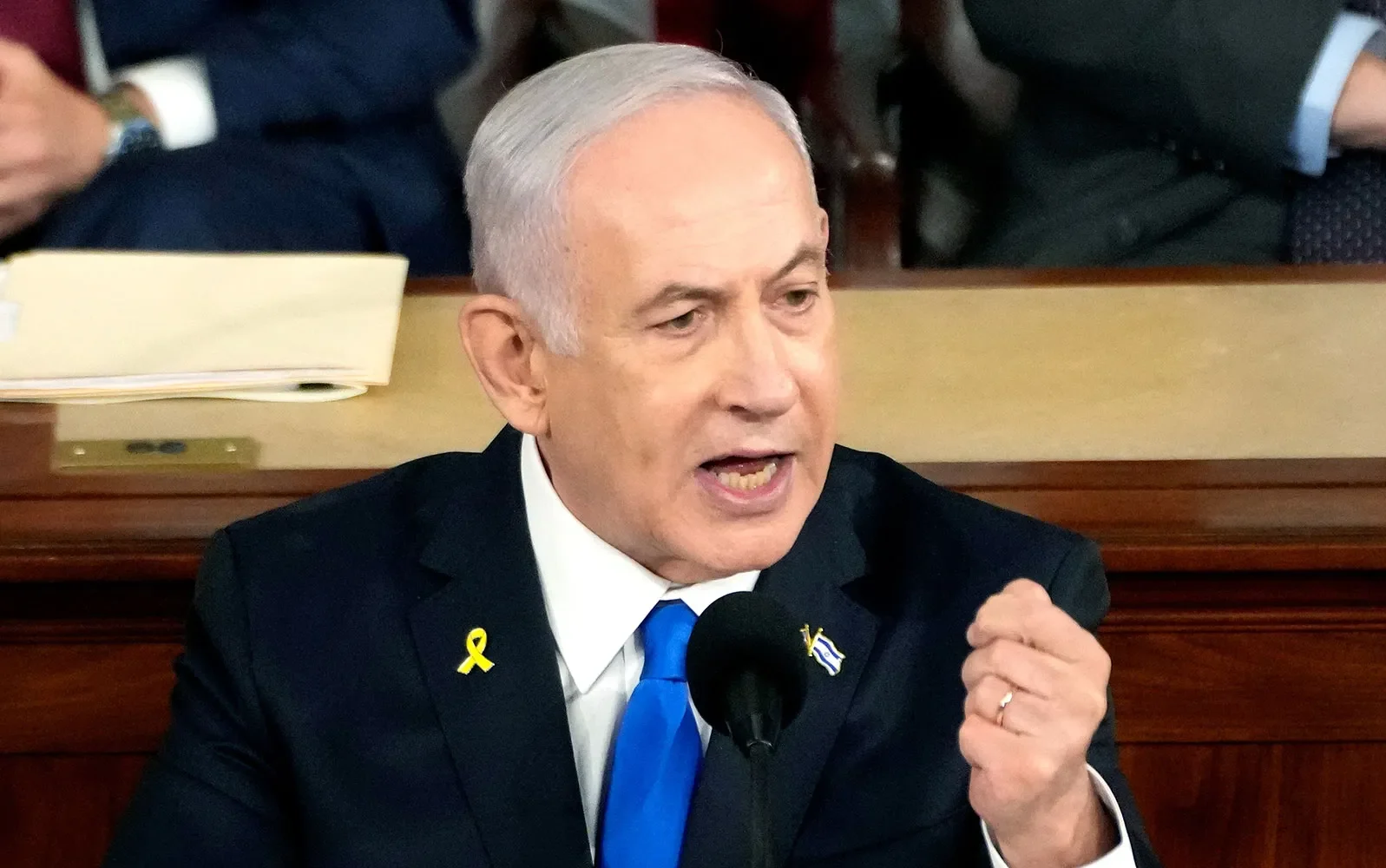
Prime Minister Benjamin Netanyahu’s government backed the pause, while insisting Iran must reopen the strait and end attacks.
Israel also said it supported US efforts to ensure Iran no longer posed a nuclear, missile or ‘terror’ threat.
The ceasefire does not, however, resolve the conflict’s spillover into Lebanon, where fighting linked to Hezbollah continues.
Meanwhile, following the reaching of the deal, Israeli politicians sharply criticised the move, accusing Netanyahu of failing to achieve the war’s objectives.
Opposition leader Yair Lapid said: ‘There has never been a political disaster like this in our entire history. Israel was not even close to the table when decisions were made concerning the core of our national security.’
He added that Netanyahu ‘failed politically, failed strategically, and did not achieve any of the goals he himself set’.
Netanyahu had set the elimination or at least severe degradation of Iran’s nuclear programme as a central goal of the war, describing it as an ‘existential threat’ to Israel.
He also called for the neutralising of Iran’s ballistic missile capabilities, the weakening or potentially toppling of the Iranian regime and the curbing of Tehran’s regional influence by targeting its network of allied groups.
‘It will take us years to repair the political and strategic damage that Netanyahu caused due to arrogance, negligence, and lack of strategic planning,’ Lapid said.
Member of parliament and opposition figure Avigdor Liberman also denounced the truce, saying it gave the Iranian regime ‘an opportunity to regroup’.
‘Any agreement with Iran that does not include renouncing the destruction of Israel, uranium enrichment, the production of ballistic missiles, and support for terrorist organisations in the region means that we will have to return to another campaign under more difficult conditions and pay a heavier price,’ Liberman said on X.
Daily Mail