The Islamic State group has claimed responsibiloty for the attack that killed 29 people in Adamawa State weekend without specifying its motive.
Authorities and local residents said the militants raided a football pitch where people had been gathering and opened fire at random, before burning houses, places of worship and motorcycles.
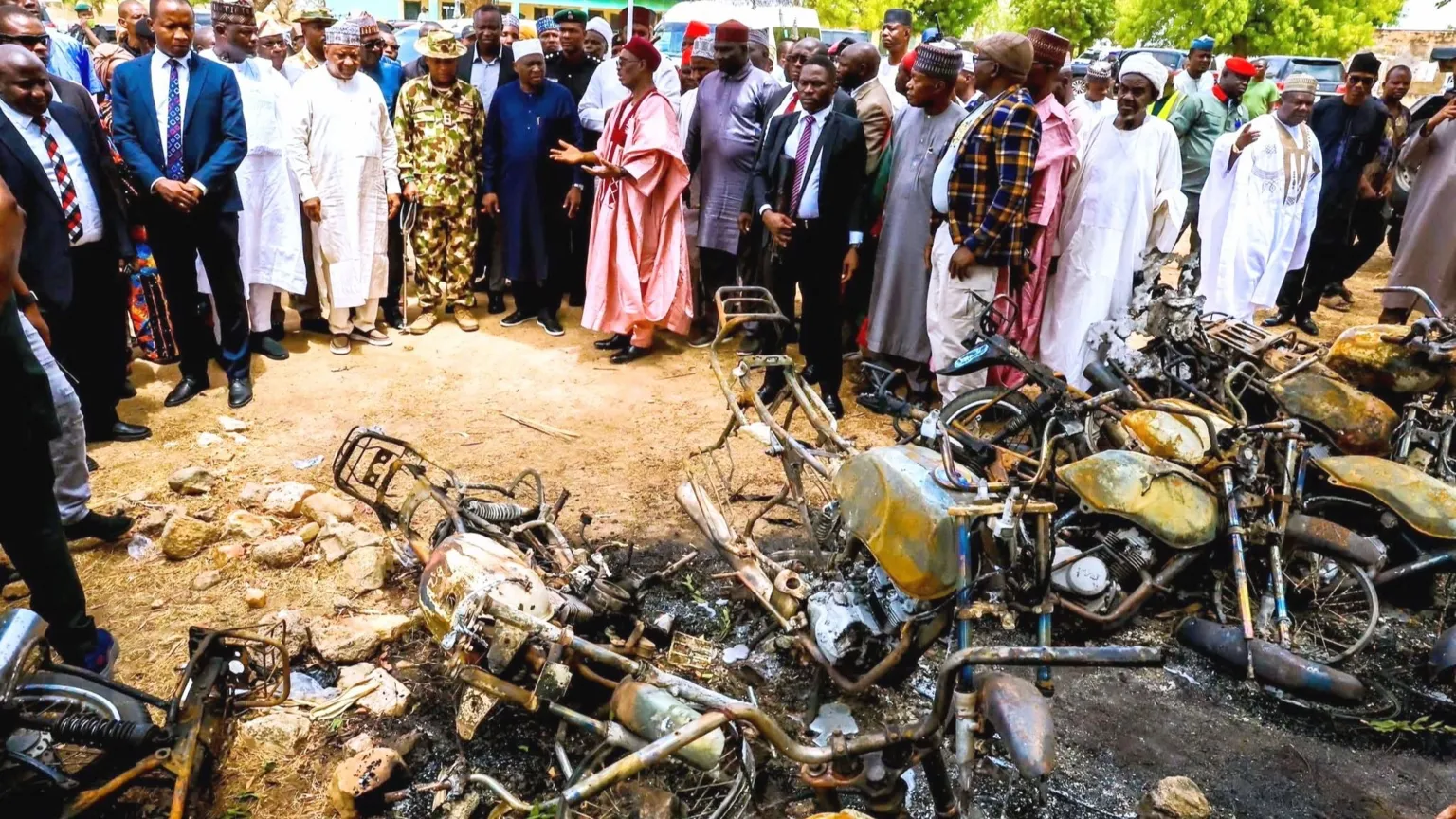
State governor Ahmadu Umaru Fintiri shared photos of himself arriving at the scene, describing the attack as an “affront to our humanity”.
The governor’s media office said the attack lasted several hours in “Guyaku community in the Gombi local government area”.
BBC Verify has geolocated the photos shared of Fintiri’s visit to a place called Sangere Mapindi, which is 4km to the south-east of the village of Guyakyu.
Surveying the damage in the area, his spokesperson wrote on Facebook that the “atmosphere in the community remains tense, with grief and fear evident”.
Many families “have abandoned their homes over concerns of further attacks”, the spokesperson added.
Fintiri posted on X: “We are intensifying security operations immediately to restore peace and ensure every resident feels safe in their home again.”
Social media videos analyzed by BBC Verify show the aftermath of the attack in Sangere Mapidni. In one verified clip officials inspect the damage to the village’s primary school and several burned-out motorbikes nearby.
Another video, filmed by Nigerian broadcaster TVC News, shows heavy damage inside Sangere Mapidni’s church, including burn marks, an overturned drum kit and an abandoned keyboard.
The TVC report also hears from people outside the church, who reported the attackers came from the direction of the school and shot at people, killing 28 men and a woman.
Among the witnesses was the church’s pastor, who said the attackers had followed people fleeing gunfire into the village, burning homes and the church.
“We are pleading, on behalf of the people here, we need security,” he added.
The restive region bordering Cameroon has seen repeated attacks by local criminal gangs and affiliates of IS in recent years.
Earlier this month, almost 400 people were sentenced during mass trials for their links with militant Islamist groups Boko Haram and its rival splinter group, the Islamic State West Africa Province.