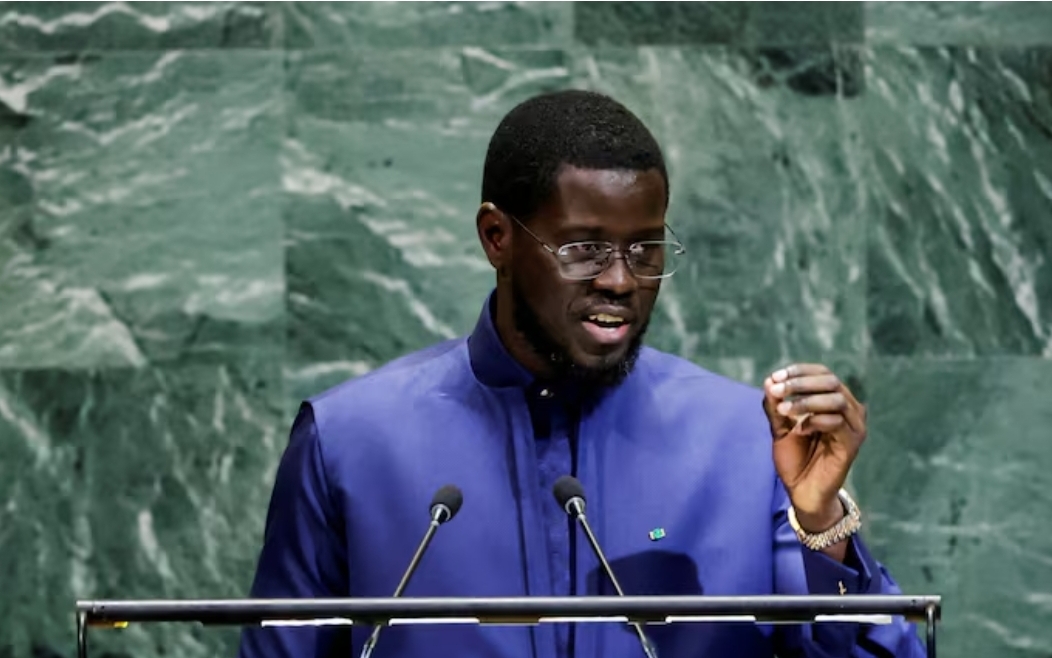
Senegal President Bassirou Diomaye Faye has named a seasoned economist as prime minister three days after dismissing the old government led by a firebrand populist who had spoken out against debt restructuring.
The new prime minister, Ahmadou Al Aminou Lo, formerly served as head of the Senegal branch of the Central Bank of West African States.
Appearing on state television for the announcement of his appointment, Lo said he wanted to reassure the local private sector and foreign investors even as he acknowledged Senegal’s difficult financial position.
“We must all be aware of the state of emergency our country currently finds itS3neself in. In particular, the state of public finances and its impact on the economy,” he said.
“Senegal is a safe and reliable country and intends to remain so.”
The International Monetary Fund froze Senegal’s $1.8 billion lending program following the discovery of misreported debt, pushing the country’s end-2024 debt level to 132% of its economic output.
Ousmane Sonko, the outgoing prime minister, had opposed any restructuring of the debt, estimated at $13 billion, which he said the IMF was advocating, while Faye has been less vocal on the issue.
Faye fired Sonko, the man who helped the president’s political rise, on Friday after months of mounting tensions.
In March, Sonko warned he could take the ruling Pastef party, which dominates the National Assembly, into opposition if the president strayed from the party’s agenda, a threat that looms over the government’s ability to pass any reforms needed to unlock IMF support.
Also Read: Senegal gets tough on same sex offence
The National Assembly is due to meet on Tuesday to discuss “reintegrating” Sonko as a lawmaker. The resignation of the National Assembly speaker on Sunday has fueled speculation Sonko himself could fill the role.
In his remarks on Monday, Lo said his appointment did not signal a retreat from Senegal’s commitment to “systemic transformation” under Faye, but instead reflected a new approach aligned with the president’s vision.
He also offered conciliatory words for Sonko, praising the record of the government he led, including an economic recovery plan announced last year that featured a heavy reliance on domestic funding.
The Speaker of parliament El Malick Ndiaye earlier resigned from his post after the country’s President Faye sacked his mentor-turned-deputy, Prime Minister Ousmane Sonko, and dissolved the government.
Some now speculate there are plans to offer the vacant speaker post to Sonko by loyalists in defiance of the president. Senegal’s current crisis follows months of tension between Sonko and Faye.
In a statement announcing his decision to resign as speaker on Sunday, Ndiaye said it came after “deep reflection” on “the sense of statehood”.
“In public responsibilities as well as in the trials of national life, there are times when the interest of the country commands to prioritise integrity, discernment and sense of duty,” he added.
MPs have now been asked to meet on Tuesday for a session aimed at bringing Sonko back into parliament and voting for a new speaker.
The former prime minister, who is also the firebrand leader of the Pastef party, was at the top of its list in 2024’s legislative elections. Although he was elected, he renounced his legislative duties to continue serving as prime minister.
“I am staying at the prime minister’s office. I submitted my resignation letter as a member of parliament,” Sonko was quoted as saying two years ago.
However, following the end of his tenure in government, he looks set to return to parliament where his supporters expect him to run for the post of speaker.
With the departure of Sonko and his possible rise to the summit of legislative power, analysts say Faye’s power could be significantly limited without parliamentary support.
Sonko’s Pastef party already enjoys an absolute majority there – a factor which many say could complicate Faye’s ability to introduce policies or reforms.
The country now awaits the appointment of a new prime minister, but uncertainty remains over whether their approval process in parliament would be smooth. Lawmakers have up to three months to approve the nominated candidate.
Meanwhile, the president cannot dissolve parliament until at least two years after the last election. That means any move to prematurely end the mandates of lawmakers before November this year would be considered invalid.
The 51-year-old ex-prime minister commands massive support across the country, especially among young people. While previously serving as a legislator in the opposition, he was renowned for fiercely challenging former President Macky Sall’s policies – a trait which he also demonstrated against his boss Faye.
However, following the end of his tenure in government, he looks set to return to parliament where his supporters expect him to run for the post of speaker.
With the departure of Sonko and his possible rise to the summit of legislative power, analysts say Faye’s power could be significantly limited without parliamentary support.
Sonko’s Pastef party already enjoys an absolute majority there – a factor which many say could complicate Faye’s ability to introduce policies or reforms.
The country now awaits the appointment of a new prime minister, but uncertainty remains over whether their approval process in parliament would be smooth. Lawmakers have up to three months to approve the nominated candidate.
Meanwhile, the president cannot dissolve parliament until at least two years after the last election. That means any move to prematurely end the mandates of lawmakers before November this year would be considered invalid.