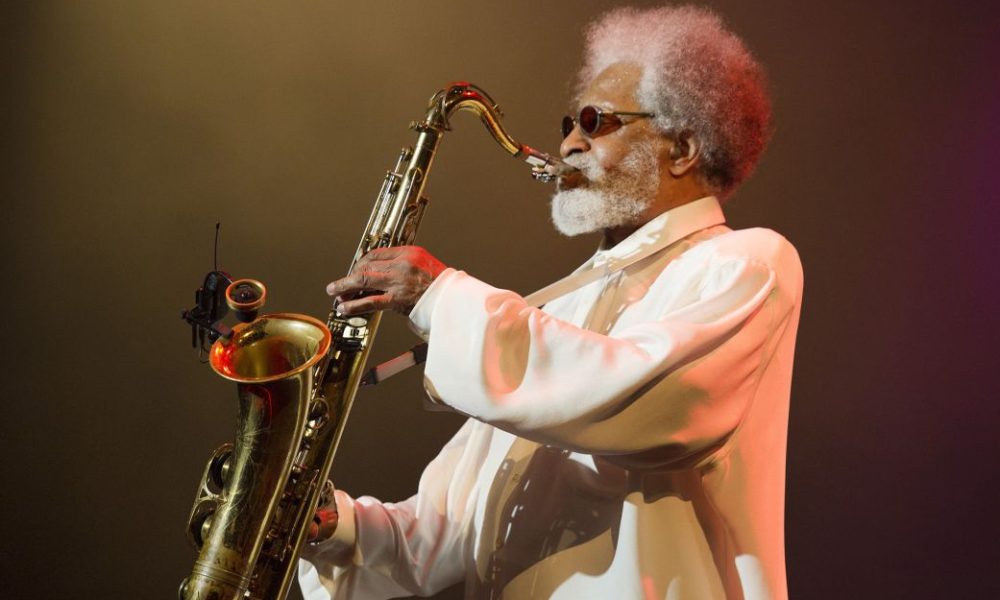
Jazz legend Sonny Rollins, one of the greatest saxophonists in history has died at the age of 95.
His death was announced through a message posted on his social media page, which confirmed that he passed away at his home in Woodstock, New York.
The statement read: “It is with deep sorrow and profound love that we announce the passing of Sonny Rollins,” adding that he “died this afternoon at his home in Woodstock, NY”.
Rollins, known as the “Saxophone Colossus,” was one of the final living links to jazz’s golden era.
His powerful yet thoughtful style helped shape modern jazz, especially the hard bop movement, and earned him a place alongside legends such as Charlie Parker, Coleman Hawkins, and John Coltrane.
Throughout his career, Rollins used music not just as entertainment but as expression, often reflecting major social and emotional moments.
His saxophone work carried themes linked to the African American civil rights struggle, national grief after the September 11 attacks, and his personal spiritual journey influenced by long retreats in countries like India and Japan.
Born in Harlem to parents from the US Virgin Islands, Rollins grew up surrounded by rich cultural influences that later shaped his sound.
One of his most famous compositions, “St. Thomas,” featured Caribbean calypso rhythms inspired by music he heard in his childhood.
As a young musician, he performed with major jazz figures including Miles Davis and Thelonious Monk. He also played on Monk’s celebrated 1957 album Brilliant Corners, a project that helped establish his early reputation.
By his 20s, Rollins was already seen as a rising force in jazz. His artistic journey later included a famous period in the early 1960s when he stepped away from public performances to practice alone on the Williamsburg Bridge in New York for hours each day.
That period of self-imposed isolation later produced his acclaimed 1962 album The Bridge.
Unlike many of his peers, Rollins enjoyed a long life and remained creatively active into his later years, even as health challenges reduced his live performances.
In a 2016 interview with AFP, he credited his longevity to discipline, yoga, and a constant desire to learn. “I’m still alive because I’m still learning,” Rollins said.
Also Read: Roy Ayers, jazz icon dies at 84
His playing style was often described as bold and intense, yet carefully structured, with a deep focus on musical meaning and exploration. He also crossed into other genres, appearing on The Rolling Stones’ 1981 album Tattoo You, showing his wide musical reach.
Rollins had a long-standing, complex relationship with fellow jazz giant John Coltrane, marked by both rivalry and respect.
While Coltrane brought a softer, spiritual tone to jazz, Rollins was known for a stronger, more forceful sound. Their only recorded collaboration appeared on Rollins’ 1956 track “Tenor Madness”.
Looking back on his career in the same 2016 interview, Rollins admitted he had regrets about his younger behaviour around fellow legends.
“I look back on my relationship with Coltrane, and my relationship with Monk – a lot of stupid things I did with those people that I would not have done if I was more mature,” he said, also describing Coltrane as “a beautiful, beautiful human being.”
Rollins’ wife and longtime manager, Lucille passed away in 2004.
GREEN WHITE GREEN