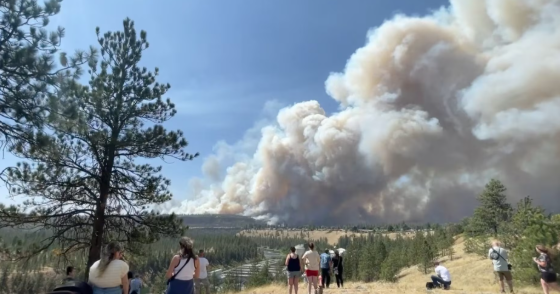
Wildfires in Washington State have forced about 60,000 people to evacuate, destroyed hundreds of buildings and left thousands of residents without electricity as firefighters battle multiple uncontained blazes.
Three major fires continued to spread around Spokane on Monday, with officials warning that containment efforts remained difficult.
The fires are among 16 large, uncontained wildfires burning across Washington state, according to the state Department of Natural Resources.
Spokane Mayor Lisa Brown described the situation as “the worst natural disaster our region has faced”, saying authorities were assessing the scale of the destruction and were “still discussing the potential for lives to be lost”. No deaths or injuries have been confirmed.
The fires have destroyed about 600 buildings, including homes and businesses, while more than 10,000 electricity customers have lost power, according to Avista Utilities.
The National Weather Service had issued an “extremely critical” fire weather warning over the weekend, citing strong winds and unusually dry conditions that contributed to the rapid spread of the flames.
Also Read: Trump says Washington will control Strait of Hormuz
Footage from Spokane, the second-largest city in Washington state, showed thick clouds of smoke and intense flames threatening homes in affected areas, as helicopters operated above the fires in efforts to slow their advance.
Washington Governor Bob Ferguson declared a statewide emergency and said he had requested federal assistance after speaking with US President Donald Trump during a news conference on Sunday.
Speaking to BBC News, Mayor Brown urged residents to remain alert and follow evacuation instructions when issued.
“The most important thing is that people need to remain vigilant and be patient and comply when we ask them to be ready to evacuate or when we say it’s time to evacuate,” she said.
She added that while residents had shown strong community support and emergency responders were working around the clock, additional assistance was needed to address the scale of displacement, housing shortages and demand for essential supplies.
Although winds are expected to ease on Monday, forecasters warned that temperatures are likely to rise again later in the week, potentially increasing the risk of further fire activity.
Scientists have linked the increasing likelihood of warm, dry conditions that fuel wildfires to human-driven climate change, which has also contributed to more frequent and intense heatwaves and prolonged summer droughts.