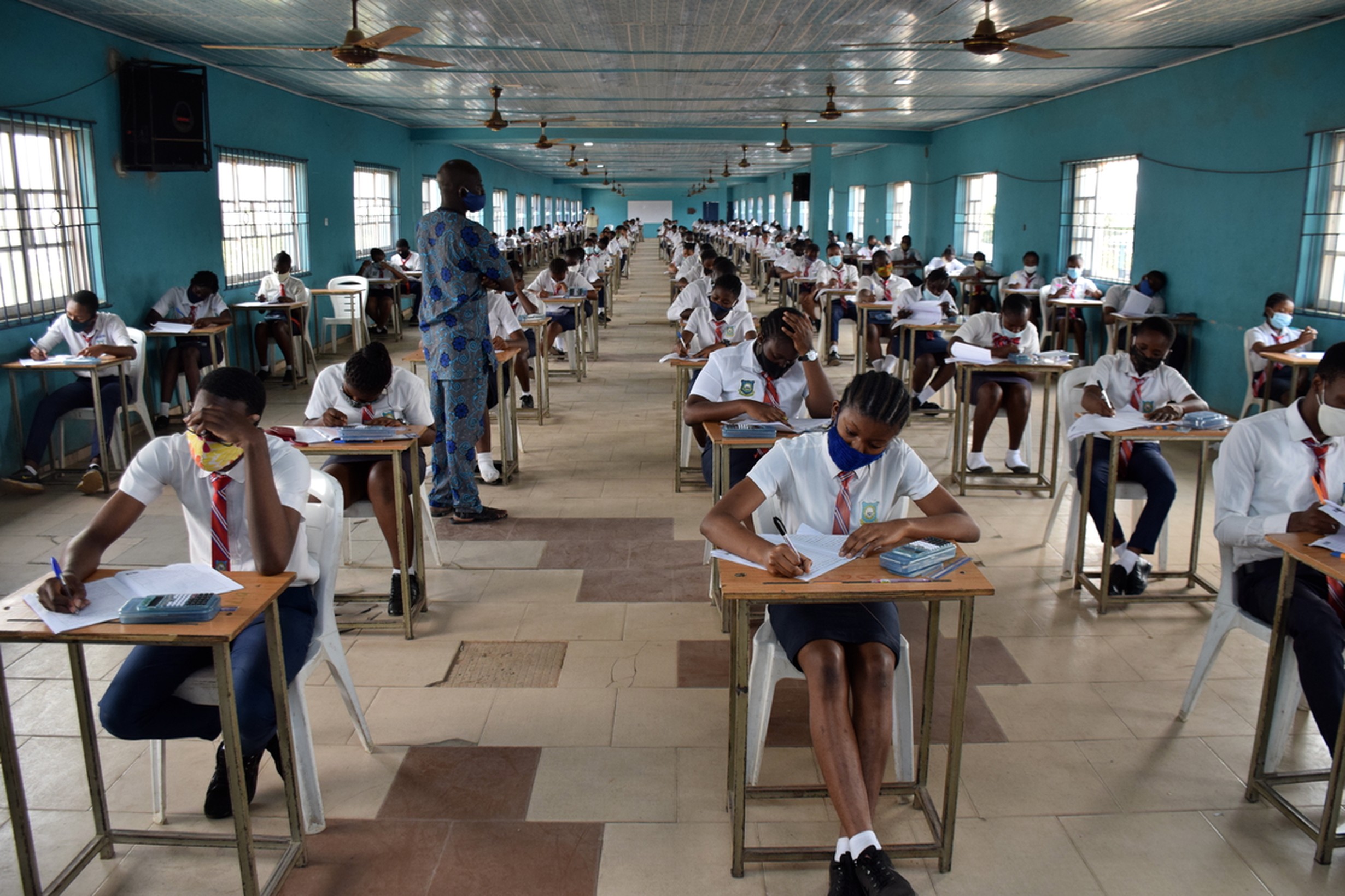
The West African Examinations Council, WAEC, has released the 2026 Computer-Based WASSCE results, with 1,200,514 candidates, representing 61.54 per cent, obtaining at least five credits, including English Language and Mathematics.
The figure represents 61.54 per cent of candidates who sat the examination and marks a 1.42 percentage-point decline from the performance recorded in the 2025 examination cycle.
Announcing the results on Wednesday at the WAEC National Office in Lagos, the Head of the Nigeria National Office, Dr. Amos Josiah Dangut, said the council successfully conducted the examination despite logistical and operational challenges, adding that the transition to the computer-based format for objective papers was largely successful.
According to Dangut, 1,959,668 candidates from 24,207 secondary schools registered for the examination conducted across Nigeria, Benin Republic, Côte d’Ivoire and Equatorial Guinea. Of that number, 1,950,726 candidates eventually sat for the examination.
He disclosed that 1,687,378 candidates, representing 86.50 per cent, obtained credits and above in at least five subjects, irrespective of whether they passed English Language and Mathematics.
However, 1,200,514 candidates, representing 61.54 per cent, achieved the benchmark widely required for admission into tertiary institutions by obtaining at least five credit passes, including English Language and Mathematics.
The WAEC boss said the council has so far fully processed and released the results of 1,834,695 candidates, representing 94.05 per cent of those who wrote the examination.
He added that the results of 116,031 candidates, accounting for 5.95 per cent, are still being processed due to issues requiring further verification and completion of administrative procedures.
Dangut assured affected candidates that the outstanding results would be released once all necessary checks had been concluded.
Also Read: Reactions trail suspension of hike in WAEC, NECO fees
The examination body also highlighted its continued commitment to providing equal opportunities for candidates with disabilities.
According to WAEC, 1,213 candidates with special needs registered for the examination. They comprised 137 visually impaired candidates, 491 candidates with hearing impairment, 55 candidates described as spastic and mentally challenged, and 41 physically challenged candidates, among others.
The council noted that special arrangements were made to ensure the affected candidates participated in the examination under conditions that accommodated their individual needs.
On examination malpractice, WAEC said it withheld the results of 167,486 candidates, representing 8.59 per cent of the total number of candidates who sat the examination, over various cases of alleged examination malpractice.
Dangut explained that the withheld results would remain under investigation and would only be released if the affected candidates were cleared by the council’s appropriate committees.
He noted that although malpractice remains a significant concern, the 8.59 per cent recorded this year represents an improvement over the 9.70 per cent recorded in 2025, reflecting a 1.11 percentage-point decline.
The WAEC boss reiterated the council’s determination to protect the credibility of its examinations by deploying improved monitoring systems, strengthening collaboration with security agencies and leveraging technology to detect malpractice.
He urged school authorities, parents and candidates to uphold honesty and integrity during examinations, stressing that examination malpractice undermines the value of educational qualifications and the nation’s education system.
Candidates can check their results through the WAEC Result Checker Portal using their examination number and the required scratch card or PIN. The council also advised candidates to verify that they access their results only through its official platforms to avoid falling victim to fraudsters.
The release of the 2026 WASSCE results marks another milestone in WAEC’s efforts to modernize examination administration, with the introduction of computer-based testing expected to improve efficiency, reduce malpractice and enhance the credibility of the examination process.
The WASSCE remains one of the most important secondary school examinations in West Africa, serving as a key qualification for admission into universities, polytechnics, colleges of education and other higher institutions within Nigeria and across the region.
OJUASHA