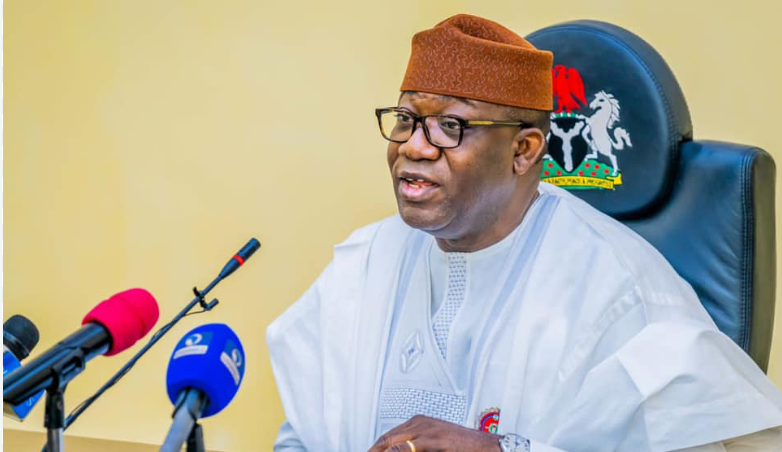
Former Ekiti State Governor, Kayode Fayemi, has described Atiku Abubakar’s proposal to restore petrol subsidy as a political strategy aimed at attracting support ahead of the 2027 presidential election.
Fayemi made the assessment during an interview on Arise TV, where he compared Atiku’s subsidy proposal with the Muslim-Muslim presidential ticket adopted by President Bola Tinubu during the 2023 election.
“My take is that Atiku’s proposal on subsidy is the political equivalent of our own Muslim-Muslim ticket in 2023. It’s a political strategy. It’s not an economic construct,” Fayemi said.
In 2023, Tinubu, the presidential candidate of the All Progressives Congress, APC, selected Kashim Shettima, a fellow Muslim from northern Nigeria, as his running mate.
The decision generated controversy, with critics arguing that the ticket did not adequately reflect Nigeria’s religious diversity.
Atiku, a former vice-president, said last month that he would restore petrol subsidy if elected president in 2027. He also accused the federal government of failing to adequately account for funds saved following the removal of the subsidy.
According to Atiku, the savings should have been channeled towards tackling poverty and funding development initiatives. He has, however, rejected criticism that his proposal amounts to a return to the previous subsidy regime.
Atiku said his plan would instead involve a targeted, capped and budgeted intervention that would be independently audited and designed to support domestic production.
Fayemi said Atiku’s proposal could resonate with Nigerians who have been affected by the economic consequences of petrol subsidy removal.
“But understandably, it is a political strategy that will sell with those who are hard done by the impact of fuel subsidy removal,” he said.
The former governor said he remained an advocate of subsidy removal and had spent years supporting efforts to end the policy.
Also Read: Atiku’s subsidy pledge is ‘outright deception’ – Shehu Sani
However, he criticized the manner in which the policy was implemented by the Tinubu administration, particularly the absence of adequate measures to protect vulnerable Nigerians from its immediate effects.
Fayemi said the Tinubu administration inherited substantial groundwork for subsidy removal from the administration of former President Muhammadu Buhari.
“What President Tinubu inherited, in fairness to him, was the work that had already been completed by that [Buhari] administration. The only challenge it had was the way it was done,” he said.
According to Fayemi, the major weakness was not necessarily the decision to remove the subsidy but the failure to sufficiently cushion the impact on vulnerable Nigerians.
He said the Nigerian Governors’ Forum had worked with the Federal Government and the World Bank to develop a safety-net strategy for people expected to be affected by the policy.
Fayemi said many Nigerians facing economic hardship were less interested in the technical arguments surrounding subsidy removal and were more concerned about meeting their basic needs.
“Frankly, they [poor Nigerians] don’t want to go into the minutiae of subsidy removal and no subsidy removal. They just want to live reasonably well, eke out a living, have one or two meals a day, be able to send their kids to school,” he said.
He argued that the continued hardship experienced by vulnerable Nigerians created an opportunity for opposition politicians to promote policies that could appeal directly to their immediate concerns.
The former governor ultimately linked Atiku’s subsidy proposal to the political calculations surrounding the 2027 presidential election.
“So I think the way we saw Muslim-Muslim ticket as a political strategy in order to maximize the vote for our party in 2023, I believe that’s what the opposition candidate is also trying to take advantage of,” Fayemi said.
His comments come as political parties and potential presidential contenders begin positioning themselves ahead of the 2027 elections, with economic hardship and the future of fuel subsidy likely to remain major campaign issues.
The Cable