The Federal Government is collaborating with the United Nations Environment Programme, UNEP, to strengthen environmentally sound and safe waste management frameworks across Africa.
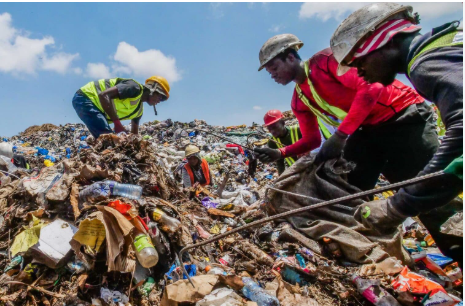
The initiative, being implemented in Nigeria, Guinea-Bissau and Sierra Leone, seeks to improve the integration of informal waste workers into the waste management value chain while protecting their health, rights and livelihoods.
Lawal, who was represented by the Director of Pollution Control and Environmental Health in the ministry, Adeola Omotunde, described the project as an important milestone in efforts to address waste management challenges across the continent.
He expressed optimism that informal waste pickers would be integrated into the formal waste management system and receive greater protection and support.
“We hope to be able to integrate the waste pickers; they are very strong in the chain, and to strengthen them and protect their interests, even in the waste management value chain. “Together we can achieve a cleaner, healthier and more sustainable Nigeria,” he said.
In a goodwill message, Sierra Leone’s Deputy Minister of Environment, Mima Sobba-Stephens, described the project as timely, noting that waste management remained a major environmental, public health and development challenge in the country.
She said rapid urbanization, population growth, changing consumption patterns and inadequate infrastructure continued to put pressure on waste management services in Freetown and other growing municipalities.
Also Read: Waste dumps raise health fears in FCT community
Sobba-Stephens also identified plastics, healthcare waste, electronic waste, used oils, chemicals and mining-related waste as emerging and hazardous waste streams requiring clearer regulations, stronger technical capacity and more effective oversight.
She stressed the need for inclusive reforms, noting that informal waste workers already played a significant role in waste collection, sorting, recycling and maintaining community cleanliness. “An equally important lesson is that reform must be inclusive,” she said.
According to her, women and young people are particularly represented in the informal waste sector, making it necessary for Sierra Leone’s reform agenda to support progressive formalization, skills development, safer working conditions and social inclusion.
She also called for measures to eliminate child labour while protecting the livelihoods of informal waste workers rather than displacing them.
Earlier, the Director-General of the National Environmental Standards and Regulations Enforcement Agency, Prof. Innocent Barikor, said the project would support necessary legislative and institutional reforms in the waste management sector in Africa and globally.
Barikor said waste management was critical to safeguarding public health, protecting the environment and improving the quality of life in communities.
He noted that despite efforts to develop policies and plans, Nigeria and other African countries continued to face challenges including inadequate infrastructure, insufficient funding and limited public awareness. He said the project was aligned with Nigeria’s drive towards a circular economy and greater resource efficiency.
In a presentation, Valentina Ricca, a UNEP representative, said the project began in 2023 with the goal of strengthening waste management systems across Africa.
She said the initiative was designed to address waste management challenges confronting many African countries, adding that effective waste management required strong governance and collaboration among stakeholders.
NAN