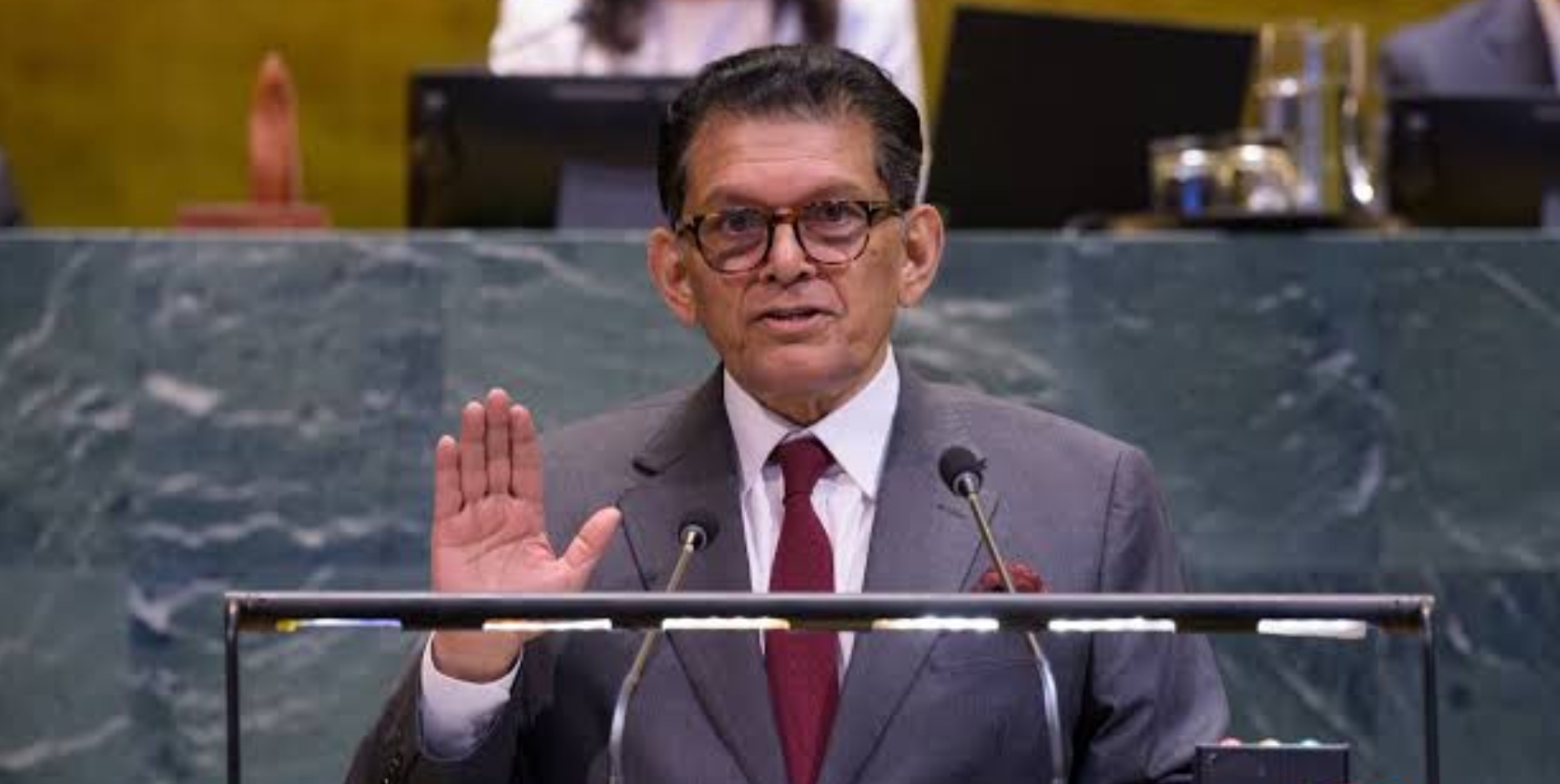
The President of the 81st session of the UN General Assembly, Khalilur Rahman, has called on the United Nations to confront its shortcomings and undertake deeper reforms to rebuild public trust in the organization.
Rahman, while opening the General Debate of the 81st session of the General Assembly in New York, said the UN’s 80-year survival, growing from 50 member states in 1945 to 193 today, was not by itself proof of success.
Rahman said people outside the UN were increasingly asking whether the organization was effective, rather than simply whether it still existed.
He cited unresolved conflicts and crises, including the Palestinian question and wars in Sudan, Gaza, Ukraine, Myanmar and parts of the Middle East, as some of the challenges confronting the organization.
The Assembly president also renewed his call for fairer representation on the UN Security Council, particularly for Africa.
He noted that Africa had remained without a permanent seat on the Security Council after eight decades, despite the continent’s role in international peacekeeping.
“Africa needs a seat at the table, not to be on the menu,” he said.
Rahman, however, pointed to areas where the UN had made progress, including the return of nearly five million people to their homes in Iraq, humanitarian assistance in Haiti and the work of UN peacekeepers.
He said rebuilding trust required active commitment from member states and other stakeholders.
Also Read: Keshi slams debate on Tinubu’s UNGA presence as irrelevant
“Trust is not given,” Rahman said. “It is earned.”
He also expressed concern over rising global military spending, which he said was approaching three trillion dollars, alongside a 23 per cent year-on-year decline in development assistance.
On artificial intelligence, Rahman called for reliable safeguards developed with scientific input, warning against an arms race over control of the technology.
He also condemned the spread of hate speech and harmful narratives targeting women and girls, minorities, migrants, refugees and persons with disabilities.
Rahman said emerging technologies were being used to amplify misinformation, manipulate public debate, spread hatred and encourage violence.
He urged member states to promote dialogue, tolerance and respect for human rights.
The Assembly president said the challenges facing the UN required deeper structural solutions rather than temporary measures.
“We cannot continue treating a chronic ailment with temporary painkillers when what we need is a deeper diagnosis and a more profound plan for transformation,” he said.
Rahman called on member states to commit themselves to rebuilding trust and confidence in the United Nations so that the organization could fulfill its potential in the years ahead.
NAN