As Nigeria marks its 66th Independence anniversary, renewed debate over political leadership, public trust and accountability is raising questions about how public officials should be judged when their decisions or comments attract criticism.
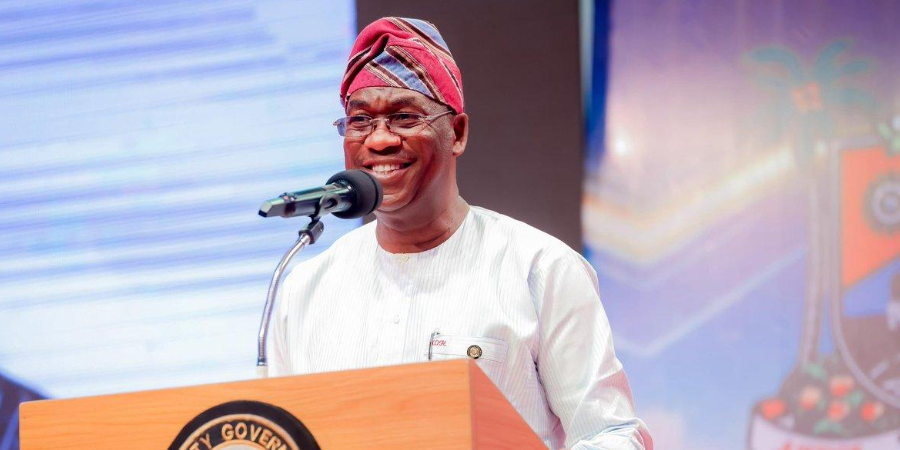
The debate has been brought into focus by recent comments from Lagos Deputy Governor and All Progressives Congress governorship candidate for the 2027 election, Dr Obafemi Hamzat, particularly on housing and traffic.
Analysts and other stakeholders say while political leaders are not expected to be flawless, they should explain their decisions, accept responsibility for their actions and remain responsive to citizens.
Mr Emmanuel Okara, a sports analyst, said leaders are human but accountability remained non-negotiable. “Once an individual offers himself or herself for public service, the person becomes subject to higher standards because citizens expect those entrusted with public responsibilities to demonstrate integrity and honesty.
“The expectation of high standards does not necessarily mean political leaders must be flawless. Rather, it requires them to explain their decisions, acknowledge mistakes and accept responsibility for the consequences of their actions,” he said.
The challenge, he said, was to distinguish between an honest mistake, poor judgement, a legitimate change of position and a failure to act in the public interest.
Mr Dipo Ishola, a retiree, similarly said politicians should be held accountable for actions taken while in office because they are custodians of public trust and resources. “They are custodians of collective trust and purse,” he said.
His position reflects a fundamental principle of democratic governance: public office is not merely a position of authority but a responsibility exercised on behalf of citizens.
Political decisions affect areas such as the cost of living, employment, education, healthcare, housing, transportation and other aspects of public welfare. Consequently, the words and actions of public officials attract greater scrutiny than those of private citizens.
Mr Taiwo Olapade, a political analyst and Lagos resident, said politicians were often held to higher standards because of the responsibilities entrusted to them and the public resources under their control.
He said government policies should ultimately improve citizens’ lives, although their effects might not be distributed equally.
According to him, leaders should be prepared to make difficult decisions when necessary but should explain the reasons for those decisions and their expected long-term benefits. He also said governments should regularly review policies to ensure they remained relevant to citizens’ needs.
“Political history offers examples of leaders whose positions on public policies have changed over time, sometimes attracting criticism and raising questions about consistency,” he said.
Nigeria’s long-running debate over fuel subsidy removal provides an example of how political positions can change over time.
In January 2012, the administration of former President Goodluck Jonathan announced the removal of the petrol subsidy, triggering nationwide protests and opposition from labour unions, civil society groups and political actors.
President Bola Tinubu, then a prominent opposition politician and former Lagos governor, was among those who criticized the policy and supported opposition to its removal.
On May 29, 2023, however, Tinubu, in his inaugural address as president, announced that the petrol subsidy was gone.
His administration subsequently defended the reform as necessary to address fiscal pressures and pursue longer-term economic changes.
The two developments occurred under different administrations and economic circumstances, but they illustrate a recurring question in politics: whether a position opposed under one administration can become justifiable under another.
Mr Lanre Adewole, a member of the Obafemi Hamzat Advisory Council, said politicians could legitimately change their positions when they gained a better understanding of an issue or were presented with compelling evidence.
“Sure, in the face of compelling superior understanding and exposure. They say only a fool will not change his mind when there is a need to,” he said.
He, however, said a change of position should neither automatically be regarded as hypocrisy nor accepted without scrutiny.
“The relevant questions include: What has changed? What evidence supports the new position? Have the reasons been clearly communicated? And who bears the consequences?” he said.
Adewole said governments should consider historical perspectives and precedents when explaining policies whose immediate effects might be difficult for citizens to bear.
He also stressed the importance of palliative measures to cushion the effects of economic reforms, including subsidy removal.
“The legitimacy of a decision depends not only on the intentions behind it but also on the evidence supporting it, its implementation and its consequences.
“Governance sometimes requires difficult choices. Governments may need to reform public spending, revise regulations, adjust subsidies or introduce measures that produce short-term discomfort in pursuit of longer-term objectives,” he said.
He nonetheless noted that describing a decision as necessary or beneficial in the long term did not, by itself, make it a sound policy.
According to Adewole, unpopular decisions could be justified where governments had credible evidence that they were likely to address a difficult problem and produce broader benefits.
He said the distinction was between a policy that was unpopular because it tackled a difficult problem and one that was unpopular because it was poorly designed, inadequately explained or unfairly implemented.
“A government proposing a difficult reform must provide credible evidence, explain available alternatives and establish how its benefits will be assessed. It must also remain open to reviewing the policy when its effects differ from expectations,” he said.
Also Read: Healthcare, oil wealth top reform agenda as Nigeria turns 66
In Lagos, where housing costs and traffic congestion are part of the daily experience of many residents, comments by political office holders on the issues can quickly generate public debate.
Hamzat’s advice to young workers struggling with high rents to consider living with parents or relatives, sharing accommodation or choosing housing they could afford attracted criticism and discussion about the realities of housing in Lagos. He was also reported to have advised residents not to spend more than 40 per cent of their income on rent.
While some may regard such advice as practical in a city with high accommodation costs, others argue that individual financial choices do not address structural challenges affecting housing affordability.
The wider issue involves housing supply, land costs, wages, transportation, urban planning and the broader cost of living.
A similar debate followed Hamzat’s description of Lagos traffic as a “lifestyle” during an appearance at Podfest Naija.
He later said the remark had been taken out of context, explaining that he was discussing how traffic had become part of the daily experience of many Lagos residents.
For commuters, however, traffic can mean late arrival at work, reduced family time, additional transport costs, fatigue and lost productivity.
The debate therefore extends beyond the choice of words to practical questions around public transportation, road infrastructure, traffic management and urban planning.
Public comments should be assessed in context, but context does not prevent citizens from questioning whether leaders adequately understand the problems they are addressing.
A politician’s choice of words may point to a communication problem without providing a complete picture of the person’s approach to governance. Conversely, a well-expressed statement does not by itself demonstrate effective leadership.
The more substantive question is whether a leader can translate an understanding of citizens’ concerns into workable policies and measurable improvements.
Mr Okara said leaders in government and business should be willing to make difficult or unpopular decisions where the long-term benefits justified them. He said such leaders must communicate with citizens and explain the expected benefits of their decisions.
“Government should, as part of its strategic planning, put palliative measures in place to cushion adverse effects of policies.
“Positions are not immutable, and a civil servant or academic may change a position where there are sufficiently cogent reasons to do so,” he said.
He added that people could change their views as they gained new experiences and should not be judged solely by past controversies.
“What should ultimately matter is the individual’s competence, integrity and ability to deliver on the responsibilities entrusted to the person,” he said.
For Toyin Onigbanjo, founder of August Secrets, governance remained a collective responsibility involving citizens, public institutions, civil society, businesses and other stakeholders.
She said citizens could contribute by asking informed questions, examining public records, participating in consultations and holding office holders accountable through lawful democratic processes.
“Collective responsibility, however, must not become an excuse for transferring the burden of government failure to the people. Those who exercise public power remain answerable for their decisions,” she said.
Onigbanjo said citizens sometimes expected political leaders to provide solutions to problems that had accumulated over many years, particularly during periods of economic uncertainty and social hardship.
She said some citizens expected leaders to be patient, compassionate, decisive and consistently correct while also demanding quick responses to competing needs and limited resources.
However, she said political leaders should be assessed against the responsibilities attached to public office rather than treated as figures beyond scrutiny. Political leadership, she said, should not depend on unquestioning admiration or personal loyalty.
The humanity of a leader may help explain a mistake, but it does not automatically remove the responsibility to account for it.
As Nigeria marks 66 years of independence, the debate over leadership is also connected to broader questions about citizens’ expectations of government and the responsibilities of public officials.
In his 2026 Independence Day address, President Tinubu described the anniversary as an opportunity to reflect on Nigeria’s journey and the difficult choices made in recent years. He said the government’s focus should be on turning economic reforms into broadly shared prosperity.
For citizens, expectations include responsive public institutions, responsible management of public resources and policies that improve living conditions. Public officials, in turn, are expected to demonstrate integrity, transparency and accountability.
The challenge is to ensure that criticism of political leaders is based on evidence rather than personal preference, while appeals for public understanding do not become a shield against legitimate scrutiny.
With the 2027 governorship election approaching, discussions about political leadership in Lagos are expected to intensify.
Hamzat has unveiled a development agenda covering areas including job creation, infrastructure, education, healthcare and security.
The debate over his public comments therefore forms part of a broader discussion about how voters assess political candidates and their records.
A single comment may not establish a candidate’s overall approach to governance, just as political support should not prevent scrutiny of a public statement.
A fuller assessment requires attention to a candidate’s public record, policy proposals, understanding of the state’s challenges, approach to accountability and plans for implementing proposed solutions.
Citizens may also consider whether candidates listen to criticism, respond to public concerns and are willing to adjust policies when evidence shows that changes are necessary.
These questions are particularly relevant in Lagos, where housing affordability, transportation, flooding, employment, waste management and access to public services remain significant concerns.
The issue is therefore not whether political leaders can avoid every mistake or satisfy every citizen. Rather, it is whether they are prepared to listen, explain their decisions, learn from criticism, correct mistakes where necessary and remain accountable to the people.
Democratic governance requires citizens to distinguish between personality and performance, promises and results, and a genuine change of position and an unexplained contradiction.
It also requires political leaders to recognize that public office carries obligations that extend beyond personal intentions or the popularity of their statements.
Difficult decisions should be supported by evidence and clearly explained. Policies that impose hardship should come with credible explanations of their purpose, expected benefits and consequences. Changes in position should also be explained, while mistakes should remain open to scrutiny.
As Nigerians reflect on 66 years of independence and Lagos residents prepare for the 2027 governorship election, the debate over leadership is likely to continue.
The focus, ultimately, is on how candidates’ records, proposals, decisions and responses to public scrutiny demonstrate their approach to the responsibilities of public office.
NAN