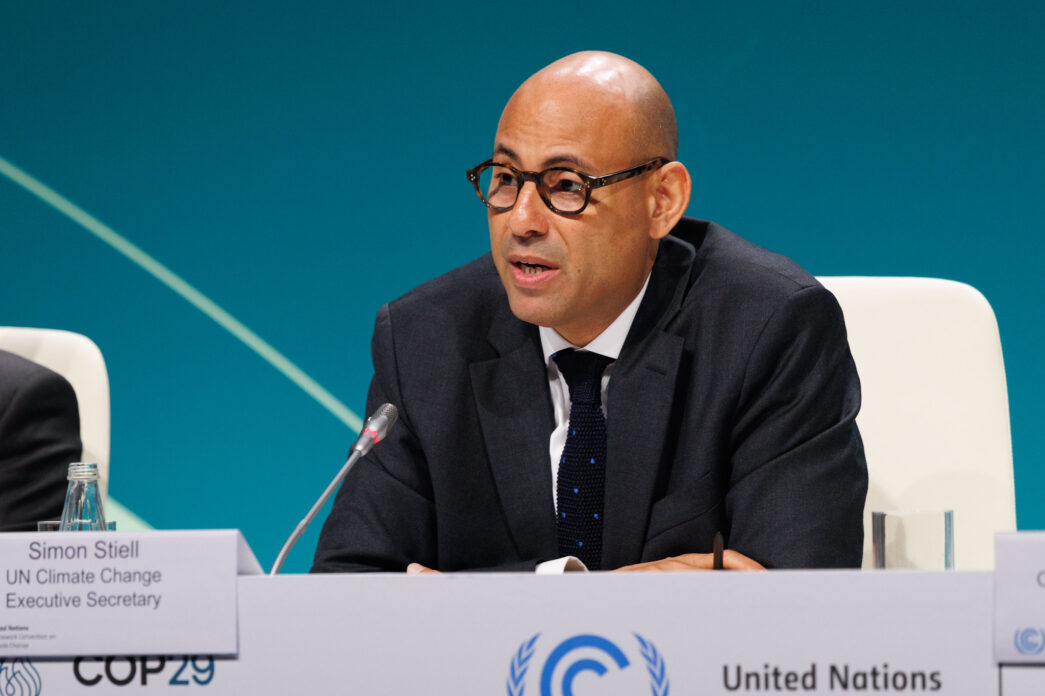
UN Climate Change Executive Secretary Simon Stiell has warned that extreme heat is becoming a potentially fatal threat to pregnant women and newborns.
Rising temperatures are increasingly linked to pregnancy complications, premature births, stillbirths and low birth weight.
“The picture is clear and very disturbing: as extreme heat worsens, pregnancy and birth are now a new faultline in the global climate crisis, and one which is potentially fatal,” he said.
Stiell’s remarks followed a new survey commissioned by Wellcome involving maternal health professionals across five countries on five continents.
The survey highlighted growing concern among healthcare professionals about the effects of extreme heat on maternal, foetal and newborn health.
It found that 73 per cent of healthcare professionals had seen heat-related cases or complications increase over the past five years.
Also, 81 per cent of respondents said they were concerned or very concerned that extreme heat would increasingly put maternal, foetal and newborn health at risk without stronger action.
Nearly all respondents, 98 per cent, said they had cared for a pregnant woman whose health they considered to have been affected by extreme heat.
Similarly, 99 per cent said they had cared for a baby affected by extreme heat.
Stiell said the figures represented more than statistics, stressing that they reflected the experiences of expectant mothers, newborns, families and healthcare workers dealing with the effects of extreme heat.
He said people living and working in vulnerable conditions could not rely on general advice to avoid heat when they lacked access to safe and cool environments.
“Someone working outdoors, living in unregulated housing, travelling far to a clinic, or relying on facilities without water, power or cooling, cannot be protected by advice alone,” he said.
“‘Staying cool’ is simply not an option when there is no cool place to go.”
Stiell warned that climate change could deepen existing inequalities in access to safe pregnancy and childbirth, particularly for women living in vulnerable communities and countries that had contributed relatively little to global warming.
He said geography, income and access to healthcare already influenced the safety of pregnancy and childbirth, while extreme heat could further widen those disparities.
“A safe birth is already too often shaped by geography, income and access to care. Without action, extreme heat will widen that injustice,” he said.
Also Read: Women get basic education on barriers to safe childbirth
The UN climate official called for maternal and newborn health to become part of climate adaptation, heat-health and broader health planning.
He said issues excluded from policy plans were often left without sufficient funding, monitoring or protection.
“What is not named in a plan is too often not funded, not measured and not protected,” Stiell said.
He identified three priorities for addressing the growing risks.
The first is to integrate pregnancy and newborn care into climate adaptation and heat-health plans.
The second is to turn available evidence into practical measures that can protect pregnant women, foetuses and newborns from extreme heat.
The third is to strengthen data collection and analysis to identify emerging risks and determine which interventions are effective.
Stiell said the required measures should include resilient health facilities, reliable water and electricity supplies, trained health workers, clearer guidance and effective heat alerts.
He also called for health systems to prepare before extreme heat emergencies occur rather than waiting until communities and healthcare facilities face severe impacts.
The UN official said stronger data was needed to identify where climate-related maternal and newborn health risks were increasing, which communities faced the greatest exposure and where finance and technology were most needed.
“Harm that is not counted is too easily ignored,” he said.
Stiell also called for the delivery of the tripling of adaptation finance agreed at COP30 in Brazil.
He urged governments and the wider financial system to work towards mobilising 1.3 trillion dollars annually for developing countries.
He said the funding was needed to strengthen systemic resilience and accelerate the transition to clean, affordable and secure energy, which he said effective health systems depend on.
The climate official welcomed the Birthright Campaign by Wellcome and the World Health Organisation’s work on maternal health and climate change.
He also pointed to the Belém Gender Action Plan and Belém Adaptation Indicators as mechanisms that could strengthen gender-responsive climate action, data collection, financing, participation and monitoring of progress towards climate-resilient health services.
Stiell said the growing threat to pregnancy and childbirth should be treated as a matter of basic human protection rather than an unavoidable consequence of climate change.
“A changing climate must never be accepted as a reason pregnancy and birth become less safe,” he said.
“A newborn’s healthy start must never depend on a family’s ability to escape the heat.”
He urged governments and other stakeholders to act before climate impacts become entrenched in maternity facilities and communities.
“This work is urgent, deeply human, and we all share the responsibility to drive it forward together,” Stiell said.
NAN