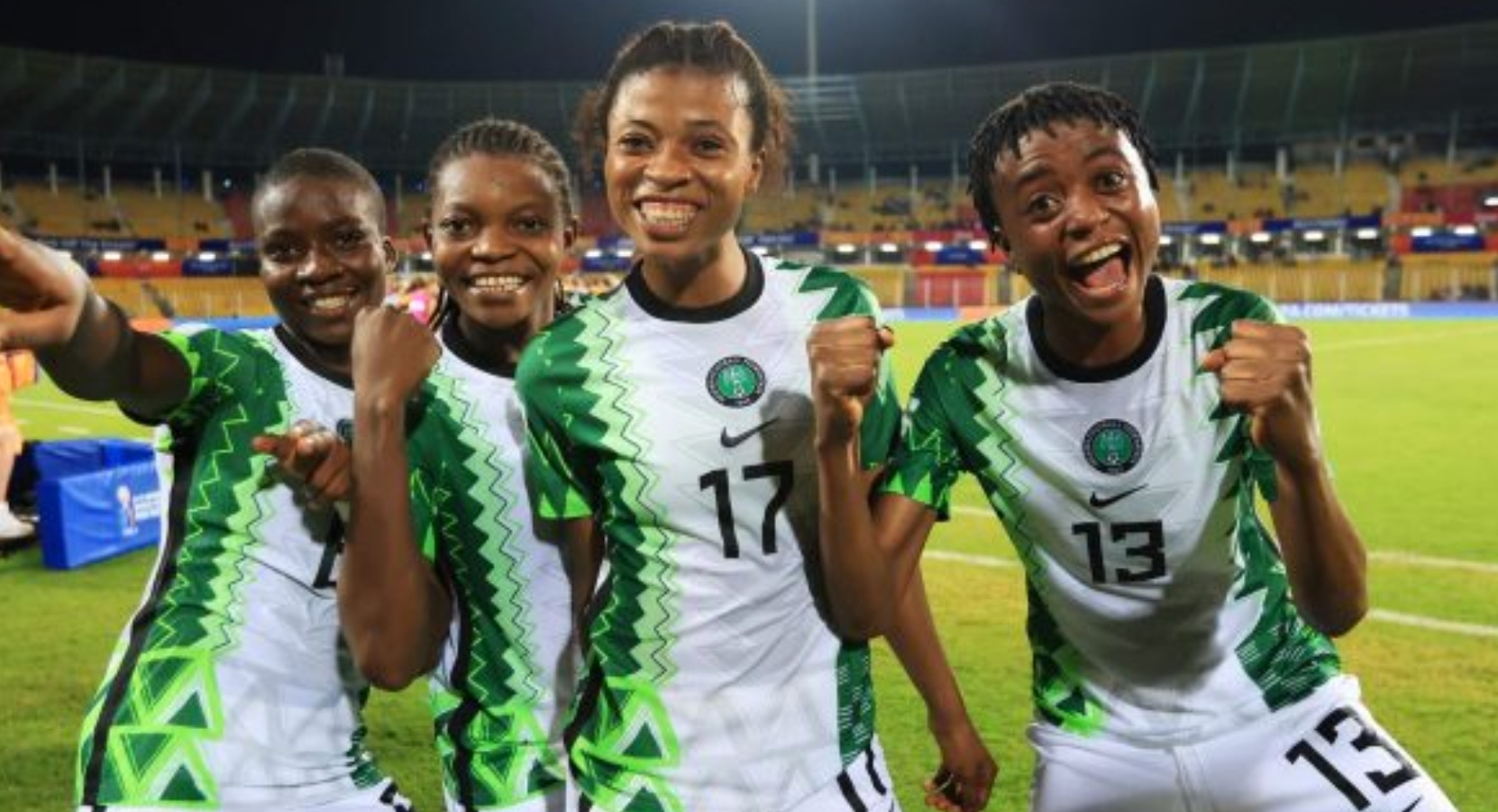
Nigeria won their first FIFA U-17 Women’s World Cup on Saturday night, beating Japan 2-1 at the Mohammed VI Football Complex, Rabat, Morocco, to become the first African side ever to lift a FIFA women’s trophy at any age level.
Goals from Awawu Bashiru on 39 minutes and Oluebube Umejiaku two minutes into the second half put Akeem Busari’s Flamingos in control. Fuki Ito pulled one back for Japan from a corner, but Nigeria — who had lost their tournament opener to Poland — held on through a nervous closing spell to complete the most improbable run of the tournament.
Bashiru’s opener was barely a chance at all: a speculative effort from the edge of the area that squirmed through the goalkeeper’s gloves and over the line. Umejiaku’s second was the opposite — a composed finish after Nigeria broke at pace, doubling a lead that Japan, the most economical side in the competition, had never looked like conceding until Saturday.
Also Read: Nigeria’s Flamingos emerge WAFU champions
Ito’s header from a set piece gave Japan hope and a flurry of late pressure, but Nigeria’s defence — which had conceded only six goals in seven matches — survived.
The long road back
Nigeria’s campaign began in the worst possible way: a 2-1 defeat by Poland in their Group B opener on 17 October, Umejiaku’s 79th-minute goal proving only a consolation. What followed was five straight wins.
They beat Puerto Rico 2-0, then produced the result that changed the tournament: a 3-1 defeat of defending champions North Korea, making Nigeria the first nation to beat the holders in regulation time at a U-17 finals. A 2-1 win over Mexico in the round of 16, a 1-0 quarter-final victory over Venezuela sealed by Azeezat Oduntan’s 89th-minute penalty, and a 3-1 semi-final dismantling of Brazil — Queen Joseph, then a Bashiru brace — took them where no African team had been.
No side had ever lost their opening match at this tournament and gone on to win it. Nigeria are the first.
Japan’s familiar heartbreak
For Japan this was a fourth final and a third defeat. They were runners-up in 2010, losing to Korea Republic on penalties, won their only title in 2014 by beating Spain 2-0 in San Jose, and lost the 2016 final to North Korea.
Sadayoshi Shirai’s side arrived as the competition’s form team: three wins from three in Group D without conceding, 14 goals scored and just two conceded in six matches, and a semi-final victory over North Korea on penalties after a 90+4 own goal forced the shoot-out. They remain the tournament’s all-time leading scorers, with more than 150 goals across ten editions.
This was the tenth edition of the U-17 Women’s World Cup and the first expanded to 24 teams, the second of five consecutive editions in Morocco through 2029. Nigeria, appearing for the ninth time and in every tournament bar 2018, had never previously gone beyond the quarter-finals except for their bronze medal run in 2022, when they beat Germany on penalties in the third-place match.
They improve on that bronze now with gold — and a first global women’s title for Nigerian football at any level.
Crediblenewsng.com