Egypt, Bahrain, Kuwait and Syria have condemned the latest Houthi missile and drone attacks on a building belonging to Saudi Arabia’s state-owned oil company, Saudi Aramco on Sunday.
The attack occurred at the King Abdullah Financial District after Saudi Civil Defense issued an early-warning alert over a potential threat to the capital.
Saudi authorities said air defence systems intercepted several missiles on Sunday, November 8, 2026, as security warnings spread across parts of the kingdom’s oil-rich Eastern Province.
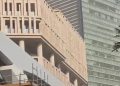
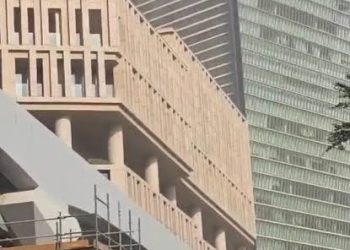
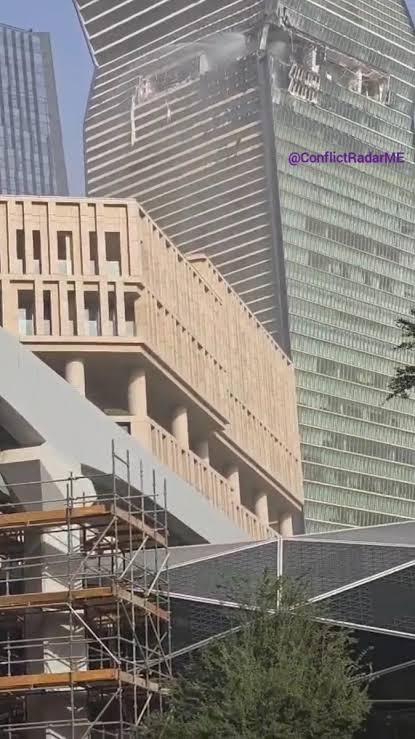
Saudi Arabia’s Ministry of Energy confirmed that falling debris damaged an administrative building of Saudi Aramco, the kingdom’s $1.7 trillion state-owned oil giant, in Riyadh’s King Abdullah Financial District, but no casualties were reported.
Houthi military spokesperson Brigadier General Yahya Saree claimed responsibility for the operation, saying the group had targeted Riyadh’s financial district in response to Saudi attacks in Yemen.
According to Saree, strikes on a village near Sanaa and a market in southwestern Yemen had left dozens dead or injured. His casualty claims could not be independently verified.
In response, Egypt’s Ministry of Foreign Affairs condemned the attacks as a “flagrant violation of international law” and Saudi Arabia’s sovereignty, warning that they posed “a direct threat to civilians”.
Cairo also expressed solidarity with Riyadh and backed measures taken by the kingdom to protect its territory and citizens.
Egypt’s position comes weeks after its parliament approved President Abdel Fattah el-Sisi’s request to provide defensive military assistance to Saudi Arabia if needed.
Also Read: Houthis kill two in latest attack on Dammam airport
Lawmakers granted the authorisation on October 26, although Cairo has not announced any deployment of troops to the kingdom.
Bahrain, an oil-rich Gulf state, also condemned the attacks, reaffirming Saudi Arabia’s right to self-defence under Article 51 of the United Nations Charter and urging the UN Security Council to address repeated strikes on the kingdom.
Fellow oil-rich Gulf nation Kuwait denounced the missile and drone attacks, warning that they endangered civilian lives and threatened regional stability.
Syria, for its part, condemned the targeting of Riyadh’s financial district and the Aramco facility, expressing support for Saudi Arabia’s sovereignty and security.
Fresh attacks raise concerns over Saudi oil facilities
Earlier on Sunday, Saudi Civil Defence issued security alerts in several areas of the Eastern Province, including Dhahran, where Aramco has its headquarters, before lifting the warnings.
The province holds most of Saudi Arabia’s oil and gas reserves. Aramco’s headquarters in Dhahran had already suffered extensive damage in a separate attack in October.
Saudi coalition forces also reported intercepting a ballistic missile aimed at the kingdom’s southern region, near the Yemeni border.
Footage verified by CNN showed damage to several floors of the building, with windows blown out. However, Saudi authorities described the impact as minimal, confirming that no casualties were recorded.
The attack came amid reports of multiple explosions in Riyadh early Sunday. The Saudi-led coalition said its air defence systems intercepted and destroyed two cruise missiles over Riyadh and the southern region.
Coalition spokesman Turki al-Maliki also disclosed that two ballistic missiles launched towards the capital by Yemen’s Houthi militia had been intercepted and destroyed.
The Houthis, who have launched repeated missile and drone attacks against targets across Saudi Arabia in recent months, had not claimed responsibility for the latest incident at the time of reporting.
The development followed reports by Yemen’s Houthi-run Health Ministry that Saudi airstrikes had killed at least 33 people near the capital, Sanaa, including women and children.
A senior Houthi official, Mahdi al-Mashat, subsequently threatened retaliation against Saudi Arabia over the reported casualties.
The Houthis have repeatedly warned that attacks against Saudi targets would continue as long as the Kingdom maintains its military operations in Yemen and the blockade of Houthi-controlled territories.
Saudi Arabia, which spent approximately 83 billion dollars on defence in the previous year, has invested heavily in advanced military equipment, including US-made fighter jets and Patriot and THAAD missile defence systems.
Despite its extensive military capabilities, the Kingdom faces security threats across several borders, including from Iran, Iranian-backed armed groups in Iraq and the Houthis in Yemen.
CNN/ Business Africa