Nigeria’s air traffic controllers have threatened to withdraw their services nationwide if the Federal Government fails to provide a clear plan to overhaul the country’s deteriorating communication and surveillance systems.
The National Air Traffic Controllers Association, NATCA, said persistent infrastructure deficiencies were making it increasingly difficult for controllers to perform their duties effectively, warning that government approvals and procurement announcements had yet to translate into significant improvements in operational equipment.
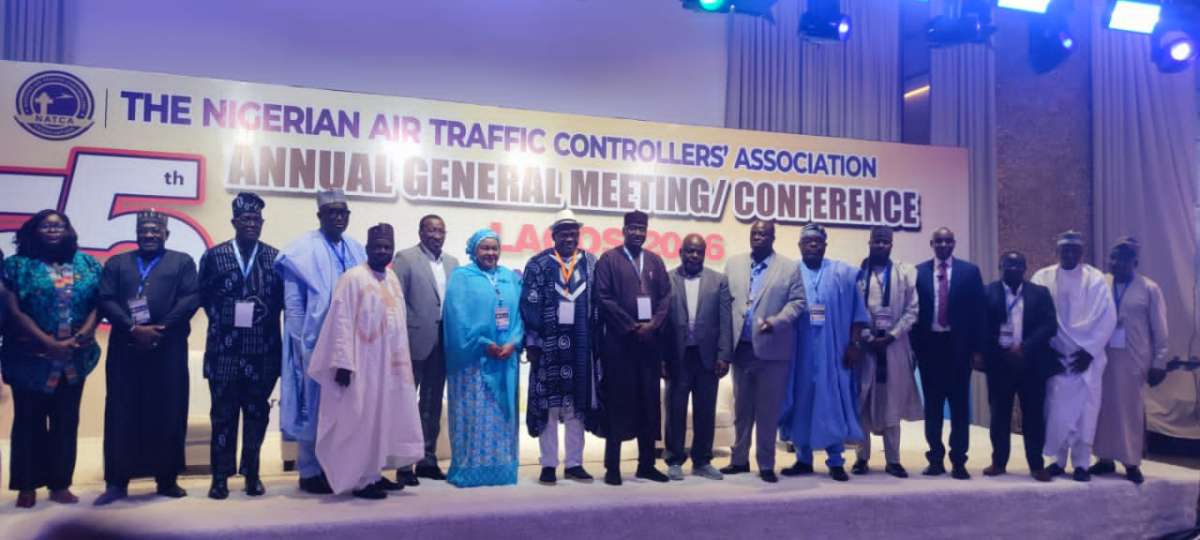
The association’s National President, Edino Amos, issued the warning on Tuesday at NATCA’s 55th Annual General Meeting, themed, “Beyond Silos to Synergy: Shaping the Future of Nigerian Air Traffic Management.”
According to PUNCH, Amos described 2026 as a particularly difficult year for air traffic controllers, citing the lack of meaningful improvements in the communication and surveillance systems used to coordinate aircraft movements and maintain safe distances between flights.
He acknowledged government approvals and procurement developments but said the expected improvements had yet to reach air traffic control centres.
“Despite the considerable challenges faced by ATCOs across the length and breadth of the country, there has been no significant improvement in our communication and surveillance infrastructure,” he said.
Amos disclosed that NATCA had engaged several government institutions over the situation, including the Minister of Aviation and Aerospace Development, the National Counter Terrorism Centre, the Office of the National Security Adviser and the management of the Nigerian Airspace Management Agency, NAMA.
Also Read: NAMA deploys mobile control tower at Lagos airport
However, he expressed frustration over the slow pace of intervention, insisting that critical aviation infrastructure should not be subjected to funding uncertainties and prolonged procurement procedures.
He warned that the association might consider withdrawing its services if the government failed to present a comprehensive strategy for replacing or upgrading the faulty systems.
“It is with a deep sense of responsibility that I state that this frustrating engagement is pushing the Association towards considering the withdrawal of our services, should there be no clear strategic plan for the total overhaul of communication and surveillance infrastructure in Nigeria,” Amos said.
The NATCA president said investing in modern communication and surveillance equipment would improve aviation safety, strengthen national security and boost government revenue.
He added that reliable infrastructure would enhance aircraft monitoring, reduce operational inefficiencies and prevent unnecessary financial losses for airlines.
Amos also identified increased air traffic, improved airline profitability and a stronger international reputation for Nigeria’s aviation industry as some of the benefits of addressing the infrastructure challenges.
Appealing to the Minister of Aviation and Aerospace Development, he described the association’s position as a patriotic effort to protect the country’s airspace rather than a threat to the government.
“Honourable Minister, we make this call not as a threat, but as patriots who sit daily before screens and failing frequencies to keep this country safe,” he said.
A nationwide withdrawal of air traffic control services could disrupt domestic and international flight operations, with significant consequences for airlines and passengers.
However, NATCA has not announced a definite strike date, indicating only that it is considering industrial action if the government fails to address its concerns.
The Federal Government and NAMA had yet to respond to the latest warning in the report.
Centuryherald