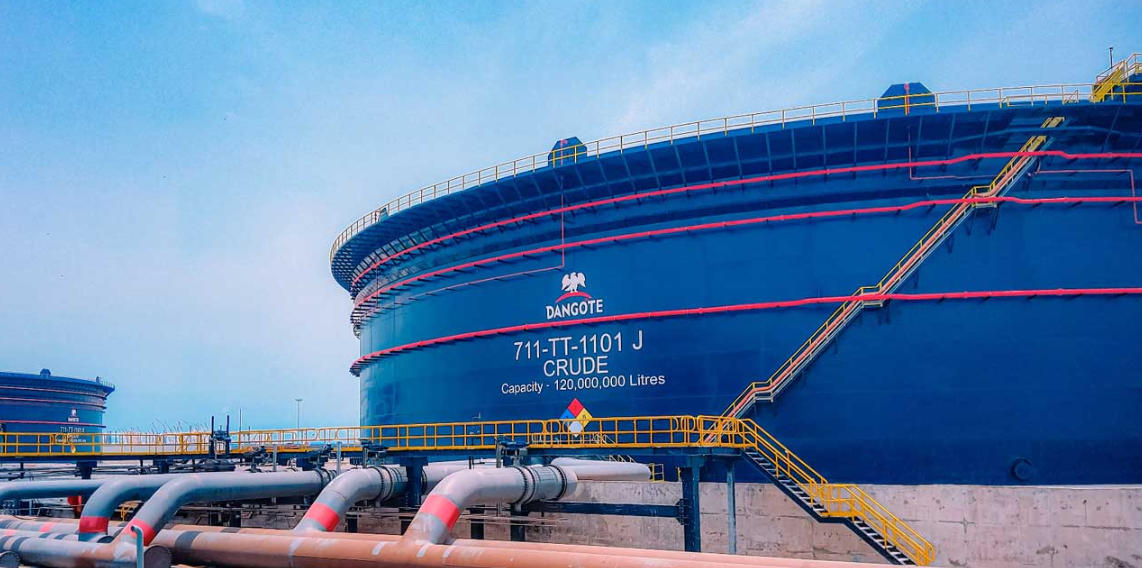
Dangote Petroleum Refinery has reduced its petrol gantry price by N51 per litre, bringing the cost down from N1,210 to N1,159 amid renewed expectations of lower fuel prices across Nigeria.
The latest adjustment, representing a 4.21 per cent reduction, affects the price at which the 700,000-barrel-per-day refinery in Lekki, Lagos State, supplies Premium Motor Spirit, commonly known as petrol, to petroleum marketers.
A market survey on Monday showed that the new price could trigger further reductions in the wholesale and retail prices of petrol as filling station operators adjust to the lower supply cost.
The development comes days after MRS filling stations reduced their pump price to N1,399 per litre, following a downward review of ex-depot prices by a consortium of depot owners and petroleum marketers sourcing products from the Dangote Refinery.
The marketers had reportedly reduced their ex-depot price to N1,215 per litre from as high as N1,290, bringing their rates closer to the refinery’s earlier pricing.
With the latest adjustment, marketers purchasing directly from the refinery could have more room to review their selling prices, potentially providing some relief to motorists and other petrol consumers.
Also Read: Dangote willing to do business with only 37 petrol marketers
However, the refinery’s new gantry price remains N96 higher than the reported N1,063 per litre price of imported petrol, highlighting the price competition between locally refined and imported petroleum products.
Despite the latest reduction, petrol prices at filling stations currently range between N1,325 and N1,420 per litre in different parts of the country.
The difference between the refinery’s gantry price and retail pump prices reflects additional costs associated with transportation, distribution, storage and marketers’ operating margins.
Consequently, a reduction in the refinery’s selling price does not automatically translate into an equivalent reduction at filling stations.
The latest price adjustment is expected to intensify competition among fuel suppliers and petroleum marketers, particularly as imported petrol remains cheaper at the reported landing price.
Motorists will, however, be watching for corresponding adjustments by filling station operators to determine how quickly the latest reduction translates into lower prices at the pump.
Daily Post