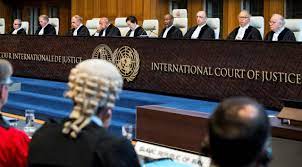
The International Court of Justice, ICJ, has ruled that Myanmar committed genocide against the Rohingya Muslim minority during a 2017 military crackdown that killed thousands and involved widespread sexual violence.
The landmark ruling, delivered on Thursday, marks the first time the UN’s highest court has held a state responsible for genocide.
It follows a case filed by The Gambia in 2019, accusing Myanmar of violating the 1948 Genocide Convention through its military operations against the Rohingya population in Rakhine State.
Presiding Judge Yuji Iwasawa said Myanmar’s security forces killed thousands of Rohingya civilians, perpetrated widespread sexual violence, committed extreme acts of violence against children and attacked people fleeing the military operations.
The 15-member panel found that Myanmar’s military carried out mass executions of men and boys, raped Rohingya women, and burned or destroyed hundreds of villages during so-called clearance operations. The judges also noted that the military actively spread hate speech targeting the minority group.
The court concluded that Myanmar’s actions demonstrated an intention to destroy a substantial part of the Rohingya population in northern Rakhine State, meeting the legal threshold for genocide.
The decision, delivered seven years after the case was filed, is only the fourth time an international court has established that genocide occurred since the Holocaust.
Previous rulings recognised genocide in Rwanda in 1994, Srebrenica in Bosnia in 1995, and Cambodia under the Khmer Rouge in the late 1970s.
Also Read: ICJ orders Israel to halt military assault on Rafah
In a major legal victory for The Gambia, the court also ordered Myanmar to compensate the Rohingya for the violations, with the amount to be determined at a later date.
It further said Myanmar must facilitate the safe and dignified return of Rohingya displaced by its actions and support the reunification of separated families. The ruling is final and cannot be appealed, although the ICJ has limited powers to enforce its decisions.
The judgment is expected to have implications beyond Myanmar, particularly for South Africa’s 2023 case accusing Israel of committing genocide in Gaza.
It is the ICJ’s first major ruling in more than a decade on the application of the 1948 Genocide Convention. Legal experts are expected to examine the decision for guidance on how the court determines state responsibility for genocide and other international crimes.
Both Myanmar and Israel have denied allegations of genocide, maintaining that their military operations were legitimate responses to attacks by armed groups.
The case against Myanmar followed a 2017 military offensive in Rakhine State that forced at least 700,000 Rohingya to flee to neighbouring Bangladesh.
Genocide remains difficult to establish before international courts because prosecutors must prove that perpetrators acted with the specific intention of destroying, in whole or in part, a national, ethnic, racial or religious group.
The ICJ, also known as the World Court, settles legal disputes between states and rules on alleged breaches of international treaties.
It is separate from the International Criminal Court, which prosecutes individuals for genocide, war crimes and crimes against humanity and can impose prison sentences. Myanmar’s government did not immediately respond to requests for comment.
REUTERS