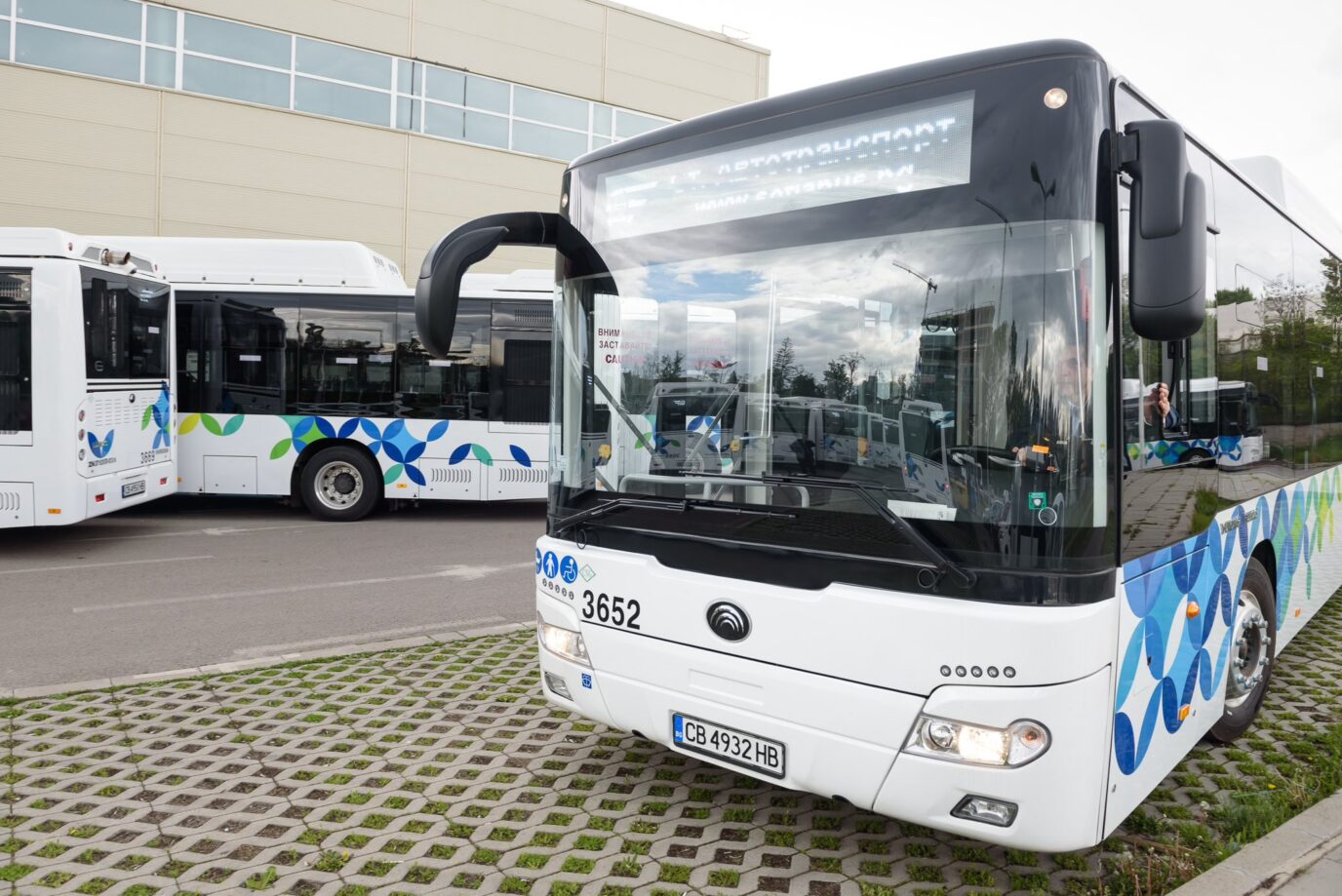
President Bola Tinubu has welcomed plans by Chinese automotive giant Yutong to establish a Compressed Natural Gas, CNG, bus assembly plant in Nigeria towards expanding affordable mass transportation and boosting local manufacturing.
The investment follows Tinubu’s invitation to the company to support efforts to improve access to affordable public transportation across the country.
The National Affordable CNG Transit Programme, being implemented in collaboration with state governments, targets a 40 per cent reduction in transport fares on participating routes.
The initiative aligns with the President’s Renewed Hope Agenda 2.0 for 2027–2031, said Presidential Spokesperson, Bayo Onanuga, on Thursday in Abuja.
Under an agreement with the Presidential Initiative on Compressed Natural Gas and Electric Vehicles, Pi-CNG & EV, Yutong will supply an initial 300 CNG-powered buses.
The first 100 buses are expected to arrive in Lagos by the end of December 2026, while subsequent units will be assembled locally.
The local assembly will be handled by YP Automobiles Bus Assembly at the former Leyland Automotive plant in Ibadan, Oyo State.
The project is expected to revive local industrial capacity, reduce dependence on imported vehicles and create employment opportunities for Nigerian engineers, technicians and other workers.
Yutong, which sold 49,518 buses globally in 2025, has extensive experience in mass transit manufacturing, with operations across several international markets.
Also Read: Tinubu campaign eyes 8.9 million sports lovers
Tinubu said the investment came amid growing adoption of CNG across Nigeria, supported by the expansion of refueling infrastructure.
He attributed the development to interventions by Pi-CNG & EV, the Midstream and Downstream Gas Infrastructure Fund and private sector investors.
The interventions include the deployment of Mobile Refueling Units and the President’s directive for 1,000 additional CNG refueling infrastructure units nationwide.
Tinubu stressed that reducing daily transportation costs for Nigerians remained the central objective of the investments.
He noted that millions of Nigerians relied on commercial transportation for their daily activities, with transport expenses taking up a significant portion of household earnings.
The President maintained that the lower operating costs of CNG-powered vehicles must translate into reduced fares for passengers.
According to him, the savings would allow workers, traders and families to retain more of their income for food, education and other essential needs.
Tinubu reiterated his administration’s commitment to working with state governments and transport operators to extend affordable CNG transportation to more routes nationwide.
He also welcomed Yutong’s decision to establish local assembly capacity, noting that it would promote technology transfer, create skilled employment and strengthen Nigeria’s automotive industry.
The President said the success of the CNG programme would ultimately be measured by the savings it delivers to Nigerians.
NAN