A Reuters analysis of satellite imagery has revealed a significant undercount of Ebola deaths in eastern Democratic Republic of Congo, with the number of new graves in affected communities far exceeding official death figures.
The analysis of four major cemeteries in Bunia and Mongbwalu found that excess deaths remained substantially higher than recorded Ebola fatalities months into the outbreak, raising concerns about gaps in disease surveillance, testing and reporting.
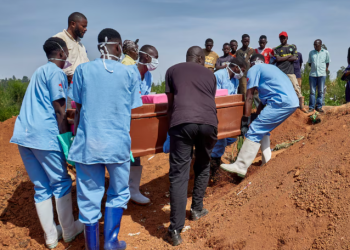
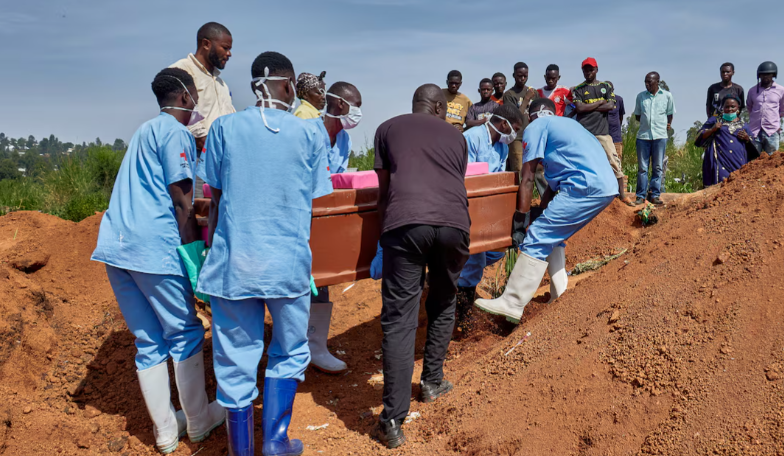
Gravedigger Salomon Mugisa said burials at Nyamurongo cemetery in Bunia increased sharply from late April, when the outbreak began spreading through the city.
According to Mugisa, the cemetery previously recorded two or three burials daily, but the number rose to between five and 15 a day as the epidemic worsened.
When Reuters visited the cemetery in July, Mugisa estimated that about 600 people had been buried there since the surge began.
However, health authorities had recorded fewer than 200 Ebola deaths in Bunia at the time, highlighting the gap between official figures and the number of burials.
Reuters compared satellite images of Nyamurongo and two other major cemeteries in Bunia, as well as the largest cemetery in Mongbwalu, to estimate excess deaths.
The analysis compared the number of new graves recorded in 2026 with burial rates during the preceding year, when there was no Ebola outbreak.
By early November, Bunia had recorded more than 1,000 excess deaths, over 50 per cent higher than the official Ebola death toll of 707.
The analysis found that the gap was widest during the outbreak’s early months, before narrowing as testing, surveillance and reporting improved.
By late June, Bunia had recorded more than 580 excess deaths, seven times the official toll at the time. By September, the figure had risen to about 950, roughly twice the recorded Ebola fatalities.
In Nyamurongo, the largest cemetery in Bunia, the average number of new graves increased from 2.4 daily before the outbreak to more than nine in June. The rate had declined to 4.5 daily by early November.
Reuters noted that not all excess deaths could be directly attributed to Ebola. Some may have resulted from indirect effects of the outbreak, including patients with other illnesses avoiding hospitals for fear of infection.
Also Read: Nigeria contains Ebola as NCDC urges vigilance
The findings are consistent with estimates by the World Health Organisation, WHO, which suggested in July that the outbreak was two to four times larger than available data indicated.
Jean-Jacques Muyembe, head of Congo’s National Institute for Biomedical Research, said the initial discrepancy between recorded deaths and the actual toll was understandable because the outbreak was detected late.
However, he cautioned that excess mortality estimates needed to be verified through investigations into the precise causes of death.
Yap Boum, head of emergency preparedness and response at the Africa Centres for Disease Control and Prevention, said the findings were broadly plausible, noting that excess deaths are often highest early in an outbreak when surveillance and response systems are not fully operational.
WHO epidemiology and analytics chief Olivier Le Polain said evidence continued to indicate that some Ebola cases and deaths had gone undetected.
In Mongbwalu, a gold-mining town north of Bunia where health authorities believe the outbreak began, cemetery growth also exceeded official death figures.
Reuters found that excess deaths at the town’s largest cemetery were 25 per cent higher than the official Ebola toll for the town and surrounding villages by August.
During a visit in July, cemetery workers and local officials identified several hundred graves across seven other burial sites that they said also contained Ebola victims.
Richard Lokudu, head doctor at Mongbwalu Hospital, said the facility was overwhelmed in early May as patients arrived with symptoms resembling malaria and typhoid fever.
Many deteriorated rapidly and died before health workers understood the cause of the illness. “We knew there was a problem, but we didn’t know what it was,” he said.
The outbreak was initially difficult to identify because samples were tested for the wrong Ebola species. It was not until mid-May that results confirmed the Bundibugyo strain, a rare variant for which there is no approved treatment or vaccine. Lokudu attributed the high number of deaths to the delay in detection.
By the time authorities formally declared the outbreak in mid-May, local health officials had already recorded 100 unexplained deaths in Mongbwalu over the preceding six weeks, according to a health ministry situation report obtained by Reuters.
Many victims were buried without being tested, said Jean-Leonard Binziliese Goite, the town’s civil registrar. He added that the death toll was particularly difficult to establish because Mongbwalu’s gold mines attract workers from across the country, many of whom have no relatives locally to report their deaths.
Following the outbreak declaration, the health ministry introduced testing and surveillance programmes, while stricter burial controls were implemented to ensure authorities were informed of deaths.
However, surveillance challenges persisted, with health workers facing vehicle shortages, difficult terrain and widespread misconceptions about the disease.
Some residents also avoided health facilities because they associated them with deaths, while others sought treatment from traditional healers. The situation was further complicated by reduced overseas aid from the United States.
Health experts warned that undetected cases and deaths could undermine efforts to contain the outbreak by making it harder to identify infected people and trace their contacts.
Reuters could not establish whether the level of underreporting recorded in Bunia and Mongbwalu was also occurring elsewhere in eastern Congo.
However, WHO’s Le Polain said under-detection was likely to be worse in remote communities, where insecurity and limited access could delay response efforts.
Data presented by Africa CDC on November 5 indicated that the outbreak remained uncontrolled six months after it began.
More than 60 per cent of Ebola deaths were still occurring outside health facilities, while fewer than 15 per cent of newly confirmed cases came from known contact lists, suggesting that several chains of transmission remained unidentified.
Richard Larozulo, an official responsible for registering deaths in Mongbwalu’s Saio neighbourhood, said some burials were still taking place without being reported to local authorities. “We don’t even know their names,” he said.
REUTERS