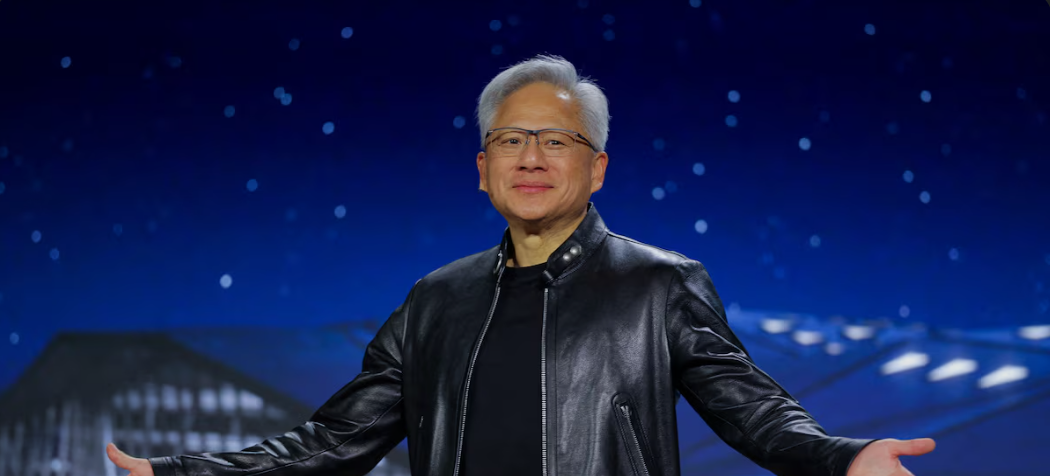
Nvidia has reinstated Jensen Huang as chief executive officer with immediate effect, reversing its earlier decision to keep him out of the position following revelations of alleged extramarital affairs, including one involving a woman accused of spying for China.
The decision follows calls by US President Donald Trump for Huang’s return and comes amid mounting scrutiny of the chipmaker over national security and corporate compliance concerns.
Nvidia’s board unanimously approved his reinstatement, saying it found no national security risk associated with his return. The company’s shares subsequently surged 33 per cent.
Trump, who last week urged Nvidia to reconsider its position after the board initially ruled out Huang’s return, described the reversal as the “correct and proper decision”.
In a post on Truth Social, Trump said the US government had no reason to believe Huang’s reinstatement posed a national security risk and had no evidence that he had engaged in unlawful conduct.
However, he urged Nvidia to continue investigating its compliance with US export controls to ensure it met its obligations to protect national security.
“There were definitely a lot of people who wanted him back. The extent that the administration intervened, the extent that shareholders intervened, it will be impossible to know. But it tells us to some extent that Jensen Huang was too big to be fired,” said Steve Sosnick, chief strategist at Interactive Brokers.
Nvidia said its board voted unanimously on Monday to reinstate Huang after concluding that it was satisfied with his candour and leadership abilities.
The board added that, following consultations with senior US government officials, it found no national security concerns associated with his return.
The reversal highlights Huang’s considerable influence over Nvidia and raises questions about the company’s dependence on its co-founder.
Just last week, Nvidia Chairman Harvey Jones said the company would not rehire Huang following disclosures about personal conduct that allegedly violated its code of conduct, standards and corporate culture.
Also Read: Huang resigns as Nvidia CEO amid growing controversy
The board had subsequently appointed Chief Financial Officer Colette Kress as interim CEO, despite growing calls for Huang’s reinstatement.
Huang resigned on November 12 following revelations of the alleged extramarital affairs, dealing a significant blow to the artificial intelligence industry, where he has become one of its most prominent figures.
His return triggered a strong reaction across the technology sector, with Nvidia poised to add approximately $900 billion to its market value. The company’s rally also lifted broader markets, boosting semiconductor and neocloud stocks exposed to the AI boom.
Huang transformed Nvidia from a video game chip designer into the world’s dominant supplier of artificial intelligence processors, playing a central role in its product development, major customer relationships and engagement with the US government.
“I am honoured to return to NVIDIA and lead one of the most consequential technology companies in the world at the beginning of a new industrial revolution,” Huang said in a statement on Monday.
His departure had reverberated across Silicon Valley, Taipei and Washington, with a petition calling for his reinstatement attracting more than 180,000 signatures.
Among those who signed was Elon Musk, highlighting the unusually strong support for the executive despite the controversy surrounding his resignation.
Huang, 63, has led Nvidia with a hands-on management style, overseeing approximately 60 direct reports and involving himself in issues across the company.
He has also used Nvidia’s growing cash reserves to invest in businesses across the AI ecosystem, including cloud providers CoreWeave and Nebius, as well as suppliers Marvell and Corning. Musk, the head of SpaceX and Tesla, reacted to the announcement in a post on X, writing: “It is done.”
Meanwhile, Nvidia’s board has established a committee to investigate whether foreign intelligence agencies targeted Huang. The company is also beginning the search for a new chief compliance officer. Kress will retain her position as chief financial officer, Nvidia said.
The developments come as the chipmaker faces increased scrutiny in Washington over the movement of advanced AI chips to China.
US authorities have tightened licensing requirements for certain chip shipments and overseas data centres serving Chinese companies. Lawmakers are also preparing to question Huang, who has advocated greater access to the Chinese market.
Last week, Nvidia established another committee focused on national security and export controls. The company also raised its annual sales-growth target and forecast fourth-quarter revenue above Wall Street estimates.
REUTERS