Credible News
  • Home
  • Conflict
  • Crime
  • Education
  • Economy
  • Entertainment
  • Foreign
  • Health
  • ICT
  • Legal
  • Politics
  • Security
  • Sports
No Result
View All Result
  • Home
  • Conflict
  • Crime
  • Education
  • Economy
  • Entertainment
  • Foreign
  • Health
  • ICT
  • Legal
  • Politics
  • Security
  • Sports
No Result
View All Result
Credible News
No Result
View All Result

Nigeria requires efficient economic model, says Agbakoba

Argues that country must move from stabilisation to a working economic model

Credible News by Credible News
November 26, 2026
in Development, Economy, News
0
Dr Olisa Agbakoba, SAN, has urged the Federal Government to adopt a defined economic model, deepen Nigeria's engagement with the BRICS bloc

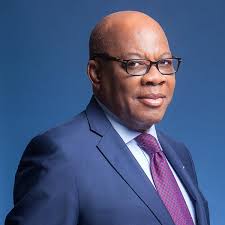
Olisa Agbakoba (SAN). [PHOTO CREDIT: Olisa Agbakoba Legal Official website]

0
SHARES
1
VIEWS
Share on FacebookShare on TwitterShare on Whatsapp

Dr Olisa Agbakoba, SAN, has urged the Federal Government to adopt a defined economic model, deepen Nigeria’s engagement with the BRICS bloc and strengthen the rule of law, arguing that none of the country’s recent stabilisation gains will hold without them.

He made the case during the discussion and question-and-answer sessions at the 2026 Parthian Economic Discourse, held at the Civic Centre, Victoria Island, Lagos, on 19 November under the theme “Beyond Stabilisation: Positioning Nigeria for Long-term Competitiveness.”

The forum, now in its fourth edition, opened with a keynote and 2027 macroeconomic outlook from economist Bismarck Rewane, and drew bankers, policymakers and investors to a single question: what comes after the pain of reform.

Agbakoba’s first recommendation was a clear economic model — one that is adopted, funded and implemented rather than announced. Nigeria, he argued, has run a sequence of policies without a governing framework to order them, and Africa more broadly has industrialised on paper while exporting its raw materials.

He pointed to Rwanda and Burkina Faso as examples of leaders deliberately moving up the value chain, processing raw materials into finished goods instead of shipping them out unprocessed.

Also Read: BRICS aims at digital agriculture to boost farmers’ income

The reference is timely. Burkina Faso’s military government opened the country’s first gold refinery in Ouagadougou on 28 September, a plant with capacity to process 164 tonnes of gold a year — more than the country currently produces. “Our ambition is no longer simply to be a country that extracts its raw materials and ships them abroad. We want to refine all our metals here,” President Ibrahim Traoré said at the opening, according to The Africa Report.

Second, Agbakoba called for a stronger relationship with BRICS. Nigeria should study the bloc’s operating framework and ecosystem, he said, and consider deepening its engagement as part of positioning itself in a shifting global economic order.

Nigeria became a BRICS partner country on 17 January 2025, the ninth country admitted to a tier created at the group’s Kazan summit in October 2024 — a looser arrangement than full membership, but one that gives Abuja a seat in conversations about trade, development finance and global governance reform that it would otherwise watch from outside.

Third, he placed the rule of law at the centre of competitiveness: contract enforcement, investor confidence and credible institutions, the same themes that ran through the rest of the day’s proceedings.

That convergence was the forum’s clearest signal. Rewane, managing director of Financial Derivatives Company, told the room that Nigeria’s problem is no longer the design of policy but the machinery that delivers it.

“Policy reforms are not institutional reforms. We need institutional reforms. We must decide whether to be here, there or nowhere,” he said, describing a 2027 outlook in which the power sector, refining, telecoms, healthcare, agriculture and fintech carry the strongest linkages — and in which the stock market could more than double by 2028.

Olusegun Alebiosu, managing director of First Bank of Nigeria, was blunter about the binding constraint. “The biggest problem we have in Nigeria is trust. If we don’t fix the trust problem, we are going nowhere,” he said, listing the legal system, contract enforcement and infrastructure as the factors investors weigh before committing capital.

Parthian Group’s group managing director, Oluseye Olusoga, framed the theme in the metaphor that set the tone for the day: “Being discharged from hospital is not the same as running a marathon. Stabilisation means the patient is no longer dying. Competitiveness means the patient can win the race.”

He warned that a weak naira or protective tariffs can make Nigerian goods cheap or unavoidable “for a while,” but neither makes them competitive — and that investors heading into the 2027 election cycle are less concerned with who wins than with whether “the rules will still be the same on Monday.”

The debate lands at an inflection point. Headline inflation eased to 14.06 per cent in October from 14.63 per cent in September, the lowest reading in more than six years, according to the National Bureau of Statistics. Real GDP grew 4.43 per cent in the second quarter of 2026, after 3.89 per cent in the first.

Those numbers are the payoff of a reform sequence that began in 2023 with the removal of the petrol subsidy and the unification of the exchange rate, followed by monetary tightening and a tax overhaul — measures that steadied the macroeconomy while squeezing households and businesses.

But the structural questions Agbakoba raised are older than the reforms. Nigeria has spent decades exporting crude, cocoa, sesame and solid minerals while importing the finished goods made from them, capturing a fraction of the value of its own resources. Successive industrialisation plans have foundered on power supply, port delays, access to long-term capital and, repeatedly, policy reversal.

Contract enforcement remains one of the weakest links. Nigerian courts are slow, arbitration is expensive and the gap between a judgment and its enforcement is wide enough that lenders price the risk into every facility — which is why Agbakoba’s third recommendation is arguably the load-bearing one. Without enforceable contracts, neither an industrial policy nor a BRICS partnership produces the investment either is meant to attract.

Whether the recommendations become more than a conference talking point will be tested in the 2027 budget and the election cycle that follows it. The forum closed with a broad agreement that the stabilisation phase is over. What replaces it, no one in the room claimed to have settled.

Crediblenewsng.com


Tags: 2026 Parthian Economic DiscourseBRICSOlisa Agbakoba
Previous Post

NUC mulls four-week break by universities ahead 2027 polls

Next Post

Afreximbank to advise on $1.5bn financing for new LNG scheme

Credible News

Credible News

Next Post
The African Export-Import Bank, Afreximbank, has agreed to advise a Nigerian company on raising US$1.5bn for a proposed gas liquefaction plant in Akwa Ibom State

Afreximbank to advise on $1.5bn financing for new LNG scheme

Leave a Reply Cancel reply

Your email address will not be published. Required fields are marked *

NRS Advertisement

ADVERTISEMENT
  • Trending
  • Comments
  • Latest
Kwara State university campus in Osi ready for first lectures

Kwara State university campus in Osi ready for first lectures

November 18, 2024
Police warn Lagosians against economic disturbance during NLC protest

Police in Kano urges caution as Muslims begin Ramadan

March 11, 2024
Bandits kidnap students of Federal University of Gusau

Gunmen kill nine in Plateau State

October 2, 2023
Methodist Church seeks FG’s support on mission schools

Methodist Church seeks FG’s support on mission schools

September 11, 2025
Corper recounts ordeal of Agunechemba attack, seeks prosecution

Corper recounts ordeal of Agunechemba attack, seeks prosecution

2

ADC begins online membership registration

2
Biden arrives Israel

Biden visits Israel amidst killing of more Palestinians

1
handcuffs

Police arrests 34-year-old man for raping 90-year-old woman

1
⁠⁠⁠⁠⁠The Nisa Medical Group has acquired a Misso-Ni Robotic System to enhance precision and improve outcomes in knee replacement surgeries.

Nisa Medical Group acquires robotic system for precision knee surgery ⁠⁠⁠⁠⁠⁠

November 26, 2026
The African Export-Import Bank, Afreximbank, has agreed to advise a Nigerian company on raising US$1.5bn for a proposed gas liquefaction plant in Akwa Ibom State

Afreximbank to advise on $1.5bn financing for new LNG scheme

November 26, 2026
Dr Olisa Agbakoba, SAN, has urged the Federal Government to adopt a defined economic model, deepen Nigeria's engagement with the BRICS bloc

Nigeria requires efficient economic model, says Agbakoba

November 26, 2026
The National Universities Commission, NUC, has proposed a break of up to four weeks in Nigerian universities’ academic calendars to prevent campus activities from clashing with the 2027 general election .

NUC mulls four-week break by universities ahead 2027 polls

November 26, 2026

Recent News

⁠⁠⁠⁠⁠The Nisa Medical Group has acquired a Misso-Ni Robotic System to enhance precision and improve outcomes in knee replacement surgeries.

Nisa Medical Group acquires robotic system for precision knee surgery ⁠⁠⁠⁠⁠⁠

November 26, 2026
The African Export-Import Bank, Afreximbank, has agreed to advise a Nigerian company on raising US$1.5bn for a proposed gas liquefaction plant in Akwa Ibom State

Afreximbank to advise on $1.5bn financing for new LNG scheme

November 26, 2026
Dr Olisa Agbakoba, SAN, has urged the Federal Government to adopt a defined economic model, deepen Nigeria's engagement with the BRICS bloc

Nigeria requires efficient economic model, says Agbakoba

November 26, 2026
The National Universities Commission, NUC, has proposed a break of up to four weeks in Nigerian universities’ academic calendars to prevent campus activities from clashing with the 2027 general election .

NUC mulls four-week break by universities ahead 2027 polls

November 26, 2026
Credible News

At Credible News we seek, process and serve news, opinions and analyses that are verifiable and reliable.
We also provide readers with authentic and credible facts and figures, news, opinions and analyses to make informed choices.

Follow Us

Browse by Category

  • Accident
  • Agriculture
  • Banking
  • Conflict
  • Crime
  • Development
  • Economy
  • Education
  • Entertainment
  • Fashion
  • Features
  • Foreign
  • Global Trade
  • Health
  • Human Interest
  • ICT
  • Interviews
  • Legal
  • Life Style
  • News
  • Oil & Gas
  • Opinion
  • Politics
  • Religion
  • Security
  • Sports
  • Travel
  • Trending
  • Women

Recent News

⁠⁠⁠⁠⁠The Nisa Medical Group has acquired a Misso-Ni Robotic System to enhance precision and improve outcomes in knee replacement surgeries.

Nisa Medical Group acquires robotic system for precision knee surgery ⁠⁠⁠⁠⁠⁠

November 26, 2026
The African Export-Import Bank, Afreximbank, has agreed to advise a Nigerian company on raising US$1.5bn for a proposed gas liquefaction plant in Akwa Ibom State

Afreximbank to advise on $1.5bn financing for new LNG scheme

November 26, 2026
  • About
  • Advertise
  • Privacy & Policy
  • Contact

© 2024 Credible News - The place for all factual stories. Designed by VintoICT Solutions.

No Result
View All Result
  • Home
  • Conflict
  • Crime
  • Education
  • Economy
  • Entertainment
  • Foreign
  • Health
  • ICT
  • Legal
  • Politics
  • Security
  • Sports

© 2024 Credible News - The place for all factual stories. Designed by VintoICT Solutions.