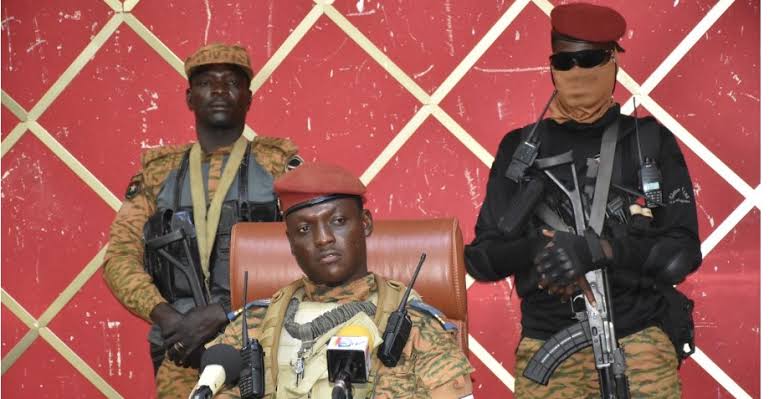
Burkina Faso’s ruling junta will remain in power for another five years after participants in national talks on Saturday proposed extending the transition back to democracy by 60 months from July.
The military authorities seized power in a 2022 coup and promised to hold elections in July this year to restore civilian rule, but also said that security considerations would take priority.
“The duration of the transition is fixed at 60 months from July 2, 2024,” Colonel Moussa Diallo, chairman of the organizing committee of the national dialogue process, said after the talks.
He added that coup leader and acting president Ibrahim Traore can run in any elections at the end of the transition period.
What was supposed to be a two-day national dialogue began earlier Saturday, ostensibly to chart a way back to civilian rule for the West African nation beset by jihadist violence.
The army has governed Burkina Faso since 2022, carrying out two coups that it justified in large part due to the country’s persistent insecurity.
READ ALSO: Burkina Faso suspends BBC, Voice of America for two weeks
Jihadist rebels affiliated with Al-Qaeda and the Islamic State group have waged a grinding insurgency since 2015 that has killed thousands and displaced millions.
An initial national dialogue adopted a charter that installed Traore as president, and put in place a government and a legislative assembly.
Under the new charter agreed Saturday, quotas will no longer be used to assign members of traditional parties seats in the assembly. Instead, “patriotism” will be deemed the only criteria for selecting deputies.
The initial charter set the duration of the transition to civilian rule at 21 months with the deadline due to expire on July 1, but Traore had repeatedly warned that holding elections would be difficult given the perilous security situation.
Civil society representatives, the security and defence forces and lawmakers in the transitional assembly were taking part in this weekend’s talks but most political parties boycotted the talks.
Violence in West Africa’s Sahel region fuelled by a decade-long fight with Islamist groups linked to al Qaeda and Islamic State has worsened since respective militaries seized power in Burkina Faso and neighbouring Mali and Niger.
Burkina Faso experienced a severe escalation of deadly attacks in 2023, with more than 8,000 people reportedly killed, according to U.S.-based crisis-monitoring group.
Credible News.ng