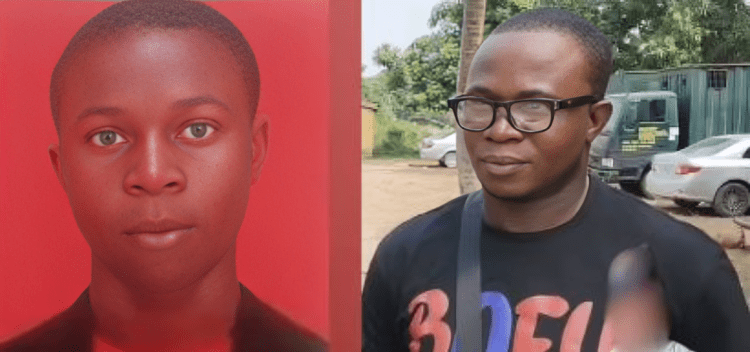
Segun Olowookere, a 31-year-old man recently released from Kirikiri prison after spending 10 years on death row for armed robbery, has shared his difficult experience while incarcerated.
Olowookere and his co-accused, Sunday Morakinyo, were apprehended in November 2010 in Oyan, Odo-Otin Local Government Area of Osun State, for armed robbery involving the theft of hens and eggs.
READ ALSO: Adeleke intervenes over death sentence for chicken thief
On December 17, 2014, the Osun State High Court, Ikirun Division, sentenced them to death. The case, which has recently gained widespread attention, sparked debates over the severity of the sentence for stealing hens and eggs.
However, on December 26, the Osun State judiciary defended the death penalty. Through a statement by the Chief Registrar, F.I. Omisade, the judiciary clarified that the case details had been misrepresented.
According to court records, both convicts had a history of armed robbery. “They were going about in Oyan town and its neighbourhood robbing innocent and unsuspecting people at gunpoint,” the chief registrar stated.
Public Outcry and Clemency
The case gained further attention after a podcast featuring actress Biola Adebayo highlighted the emotional appeal of Olowookere’s parents, who pleaded for their son’s release. In response, Governor Ademola Adeleke granted him a pardon.
Olowookere’s Journey to Prison
Olowookere detailed the events leading to his arrest.
He explained, “The total number of years I spent in prison is 14 years. I was on death row for 10 years and waiting for trial for four years. From the beginning, what happened on that fateful day is something I always feel bad about whenever I remember it.
“I had just returned from school and dropped my bag at home. Once I finished, I went to meet my dad at his shop. We sat and started discussing my admission to the school I planned to attend.
“While we were talking, I suddenly heard two gunshots. I realised the police had parked their vehicle in front of my dad’s shop, and the gunshots came from there. Everyone in the area, including some young boys and elders, started running, trying to figure out what was happening.”
Olowookere claimed he was wrongly targeted by the police, who initially detained his father. “The police came and arrested my dad, taking him to their vehicle. However, from my perspective and based on my dad’s reaction, it seemed there was someone in the police vehicle pointing at me, indicating that I was the person they wanted to arrest.
“As soon as my dad heard that, he started shouting my name, telling me to run because I was their target. But I decided not to run. I thought, ‘This is our town, our community. Where would I run to? And why would the police be after me when I hadn’t committed any crime? Neither do I have any issue with anyone.’”
Torture and Questioning
Olowookere recounted being detained overnight despite his parents’ efforts to intervene. The following day, he was transferred to the police headquarters, where he saw several young boys from his community.
“After dropping me there, they left, and I had no idea what they discussed. The following day, at 7 o’clock, they transferred me from there. That night, despite my parents’ efforts, pleas, and others in the community trying to intervene, the police refused to respond or provide any information. An order had come from the headquarters to detain me,” he said.
“At the headquarters, I saw some young boys from my village, aged 12, 13, and 14, sitting there. They were eating rice and drinking pure water. The police asked those boys if they knew me. Most of them said yes. When asked how they knew me, they replied that we were from the same place.
“The police asked if they, the boys, were sent by me to steal fowls, eggs, and other items. Most of the boys said ‘yes,’ but one of them, Morakinyo Sunday, said ‘no.’ Morakinyo claimed he hadn’t stolen anything and had no connection to me. The police, however, didn’t believe us.
“That was how they started beating both of us mercilessly, accusing us of lying and not telling the truth. The police began beating us so severely that I thought I might not survive. It was only by God’s grace that my life was spared. I was 17 years old then. My second, Morakinyo, was already bleeding from the nose, his ear, and anus in the police cell to the extent that I had to clean it up. The beating was because they wanted him to attest to the boys’ claim.”
Trial and Conviction
In 2014, the case reached the Osun State High Court, where Olowookere and Morakinyo were charged with conspiracy, armed robbery, and theft.
Justice Jide Falola sentenced them to death for conspiracy, life imprisonment for robbery, and three years for theft. Olowookere said, “The moment I heard the death sentence, it felt like the end of my life. I was devastated and fell into depression.”
He maintained his innocence throughout the trial, saying the police accused him of using a wooden gun to rob his uncle’s poultry farm. “The woman who allegedly saw me rob her house could not identify me,” he added.
Life After Prison
After 14 years, Olowookere expressed gratitude for his release. “Prison is not a place for anyone. Gaining my freedom is enough for me. I value it deeply and plan to rebuild my life. I want to be a voice for others, contribute to my community, and create a meaningful future,” he said.
Reflecting on his journey, he attributed his survival to divine intervention. “I believe my life is in God’s hands. Perhaps He placed me in prison for a purpose I’m yet to understand,” he shared.
Olowookere hopes to use his experience to support others facing injustice. “I am seeking help to rebuild my life and support my family. I’m determined to turn this experience into something positive and meaningful,” he concluded.
Crediblenewsng.com