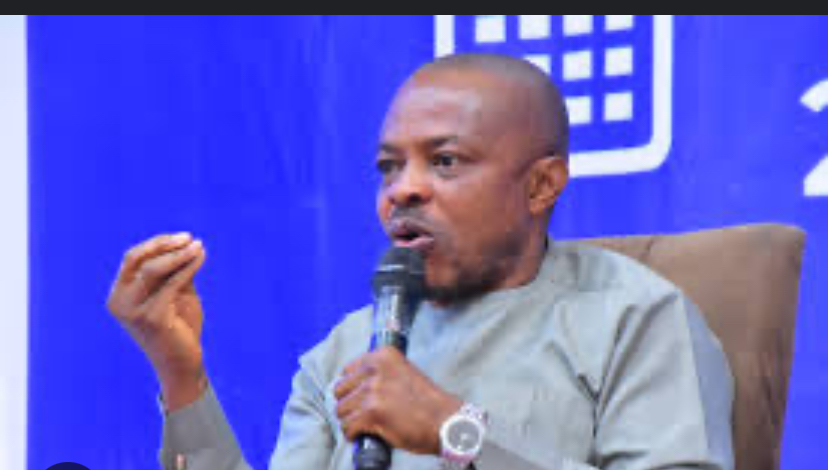
The President of the Nigeria Labour Congress, Joe Ajaero has criticized the Minister of Power over the disparity in electricity tariff and migration process.
He described these practices as fraudulent and insincere.
Before assuming leadership at the NLC, Ajaero had a long career in the power sector, where he served for decades as the General Secretary of the Electricity Workers Union.
In a recent interview on Channels TV, Ajaero voiced his concerns about the practice of classifying electricity consumers into different bands based on the amount of power they receive.
He argued that the system is not only discriminatory but also ineffective, labeling it as “the highest level of 419.”
The banding system, as stated by Minister Adelabu, categorizes electricity consumers into five groups.
Band A is for those who enjoy a minimum of 20 hours of electricity per day, Band B for those receiving at least 16 hours, Band C for 12 hours, Band D for 8 hours, and Band E for 4 hours.
During a budget defense session at the National Assembly, Adelabu claimed that 90 percent of those in Band A were benefiting from the higher level of service, and that more consumers would be moved to Band A in the future to receive longer hours of electricity.
READ ALSO : Vandals provoke power outage at presidential villa
However, Ajaero questioned the fairness and transparency of the banding process.
He strongly opposed the idea of migrating consumers from one band to another, particularly from Band B to Band A, calling it “the highest level of 419 one can think of.”
He expressed skepticism about how the bands are determined, asking whether the classification is based on geographical areas or the whims of the power providers.
He also questioned why a country aiming for 24-hour power supply would continue with a system that categorizes consumers in this way.
“What are the conditions to be in Band A? What are the conditions to be in Band B? Why discriminate?” Ajaero asked.
He further suggested that the migration of consumers from one band to another is merely a financial maneuver to extract money under the pretense of improving service.
Additionally, Ajaero criticized the federal government for allocating funds to private power distribution companies in the 2025 budget.
He argued that these companies, being privately owned, should be financially self-sufficient and should not rely on government support.
Instead, he suggested that the money earmarked for the power sector should be used for other purposes, with private companies using the revenues they generate to fund their operations and improve service delivery.
Reported by Channels