Nigeria’s headline inflation rate skyrocketed to 24.23% in March 2025, marking a 1.05% increase from the 23.18% recorded in February.
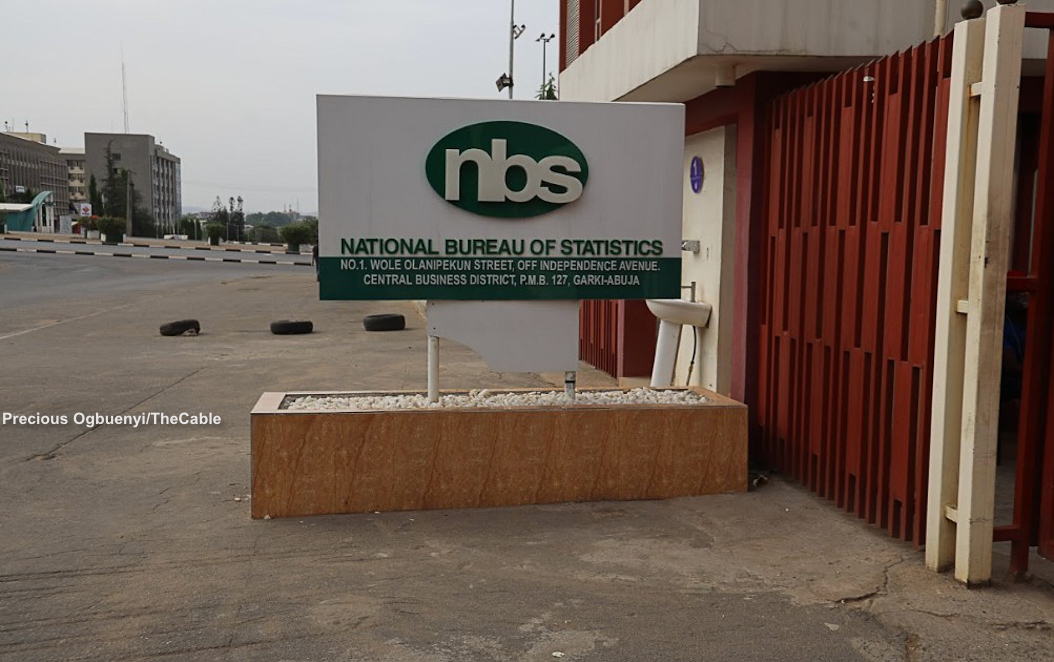
This is contained in the Consumer Price Index, CPI, and Inflation Report for March 2025 released by the National Bureau of Statistics, NBS, in Abuja. The report attributes the uptick to rising prices across several key divisions including food, housing, energy, and transportation.
On a month-on-month basis, the general price level stood at 3.90% in March, a significant rise of 1.85% compared to February’s 2.04%. This, the NBS stated, indicates a higher rate of increase in the average cost of goods and services.
The sharp climb was driven largely by higher costs in food and non-alcoholic beverages, restaurants, accommodation, transport, housing, electricity, gas, education, health, and clothing.
Food prices, a key driver, rose to 21.79% year-on-year in March, while the monthly figure hit 2.18%, up by 0.50% from February’s 1.67%. Notable increases were recorded in fresh ginger, yellow garri, Ofada rice, natural honey, potatoes, plantain flour, crabs, periwinkle, and fresh pepper.
Core cost pressures—excluding agricultural produce and energy—stood at 24.43% year-on-year and 3.73% month-on-month, reflecting broader cost pressures beyond food.
The NBS said farm produce costs rose to 2.64% in March from 1.77% in February. Energy costs made a dramatic leap, hitting 9.21% after a negative -0.99% in February. Service-related prices dipped slightly to 3.344% from 3.38%.
READ ALSO: Food prices surge, as Nigeria’s inflation rate rises to 34.6%
Goods saw a sharp rise to 3.89% compared to February’s 1.29%, reflecting growing consumer expenses on physical items.
Urban areas continued to experience higher cost increases than rural areas. Year-on-year, the urban inflation stood at 26.12%, while rural areas posted 20.89%. Monthly figures were 3.96% for urban and 3.73% for rural regions.
State-level data showed Kaduna had the highest annual rate at 33.33%, followed by Osun at 32.08% and Kebbi at 30.74%. Akwa Ibom (12.81%), Bayelsa (14.02%), and Sokoto (14.83%) recorded the slowest annual increases.
Kaduna also led the monthly chart with 18.85%, trailed by Osun (16.49%) and Oyo (14.44%). Sokoto (-8.66%), Nasarawa (-4.38%), and Kwara (-3.69%) had the lowest changes.
Oyo topped the food inflation year-on-year at 34.41%, ahead of Kaduna (31.14%) and Kebbi (30.85%). The slowest increases came from Bayelsa (9.61%), Adamawa (12.41%), and Akwa Ibom (12.60%).
On a month-to-month basis, food prices rose fastest in Oyo (19.74%), Kaduna (17.24%), and Kebbi (14.03%). Sokoto, Nasarawa, and Edo saw notable drops at -14.10%, -9.91%, and -5.78%, respectively.
Meanwhile, the NBS recalled its recent rebasing of the CPI, with the new base year—2024—taking effect in January. Statistician-General Adeyemi Adeniran noted the move was intended to align the indicator with Nigeria’s evolving economy by updating the consumption basket, capturing emerging sectors, and refining methodology.
NAN