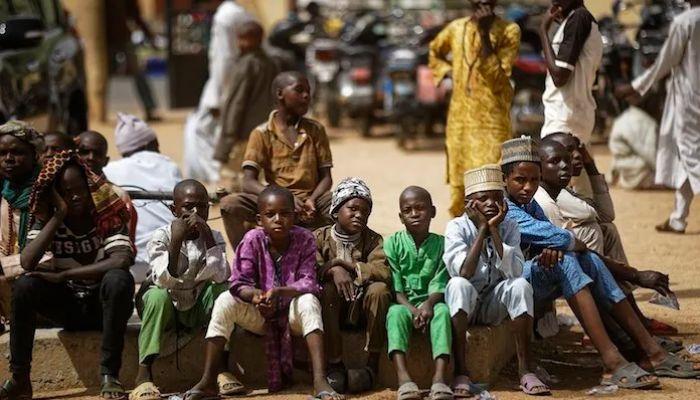
Nigeria’s poverty rate is projected to rise by 3.6 percent by 2027, highlighting deepening economic challenges despite recent growth.
The latest Africa Pulse report released during the Spring Meetings of the International Monetary Fund and World Bank in Washington DC painted a grim outlook for Nigeria, highlighting that despite moderate economic growth in late 2024, challenges linked to the country’s heavy reliance on natural resources and its fragile governance structure could worsen living conditions.
Nigeria, alongside other resource-rich but fragile nations, was identified as the only group in Sub-Saharan Africa where poverty levels are expected to rise between 2022 and 2027.
This trend defies the overall poverty decline projected for the rest of the continent, especially in countries not reliant on natural resources.
The World Bank noted that the poverty rate in resource-rich and fragile nations like Nigeria and the Democratic Republic of Congo is expected to climb to an average of 46 percent by 2024 — 13 percentage points higher than their non-fragile counterparts.
READ ALSO: IMF advocates broader tax net in Nigeria
While Nigeria experienced better-than-anticipated growth in its non-oil sector during Q4 of 2024, the broader picture remains troubling.
The report emphasized that such economic improvements are insufficient to counteract the structural issues affecting poverty reduction efforts.
In contrast, non-resource-rich countries are projected to witness faster poverty reduction, buoyed by agricultural commodity price increases and stronger overall growth.
These countries have also managed to significantly reduce poverty since 2000, effectively closing the gap by 2010.
The World Bank suggested that for countries like Nigeria to reverse this worrying trend, they must prioritize sound fiscal management, establish a robust fiscal social contract with citizens, and adopt inclusive economic policies.
With Sub-Saharan Africa housing nearly 80 percent of the world’s extreme poor in 2024 — and half of them in just four countries — Nigeria’s case underscores the urgent need for policy reforms that foster inclusive, broad-based growth and social stability.
Crediblenewsng.com