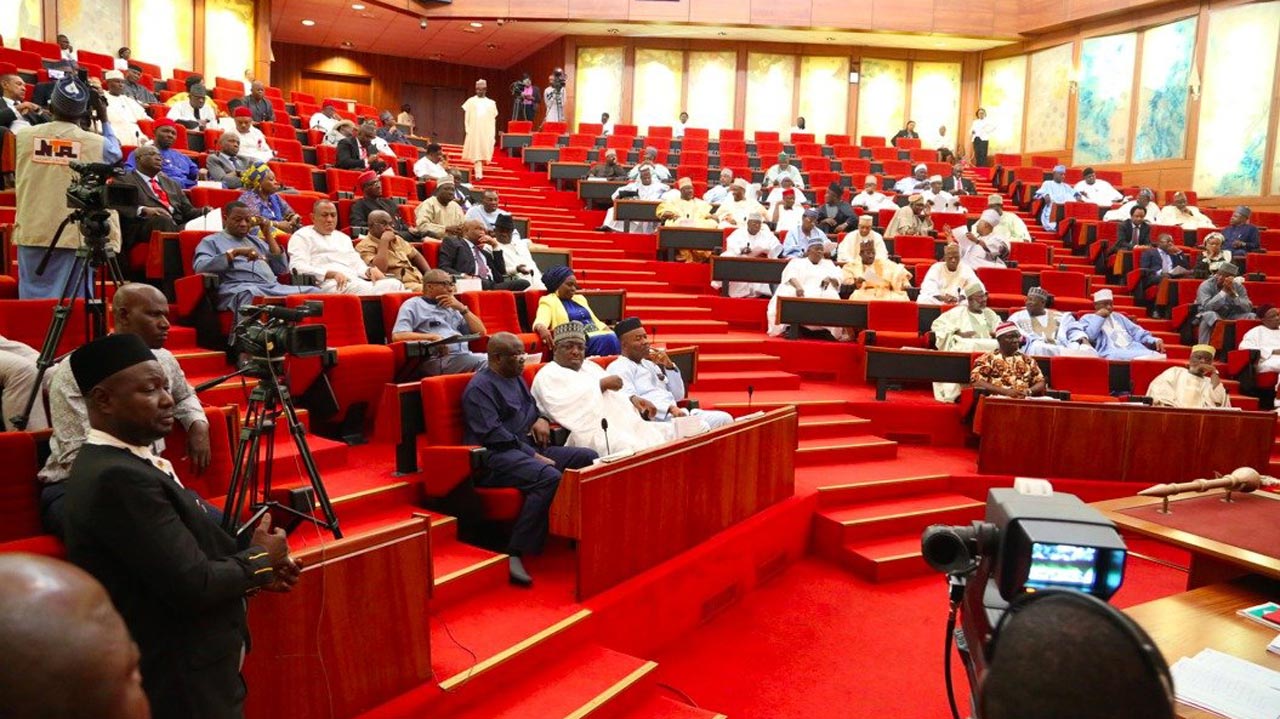
The Nigerian Senate on Thursday passed two significant tax reform bills that are expected to reshape the country’s tax structure and boost fiscal revenue.
The bills—titled the Taxation Consolidation Act and the Federal Revenue Harmonization Bill—were passed after extensive deliberations and amendments aimed at aligning Nigeria’s tax regime with global best practices.
According to Senate President Godswill Akpabio, the passage of the bills marks a new chapter in Nigeria’s efforts to create a sustainable and transparent fiscal environment.
“These reforms are vital for closing loopholes, increasing compliance, and fostering a fairer tax system,” Akpabio said during the plenary session.
The Taxation Consolidation Act seeks to unify various tax-related statutes under one comprehensive law. It aims to simplify the tax code by consolidating fragmented tax laws, reducing ambiguities, and promoting clarity for both citizens and investors.
Among the key features of the act are streamlined processes for personal income tax, corporate tax, and value-added tax. The act also introduces new digital tax protocols to account for Nigeria’s fast-growing e-commerce and digital services market.
In contrast, the Federal Revenue Harmonization Bill focuses on the equitable distribution of tax revenue among federal, state, and local governments.
It proposes a new revenue-sharing formula that allocates 40% of total tax revenue to the federal government, 35% to the states, and 25% to local governments.
The bill also provides for an independent Fiscal Revenue Monitoring Committee, which will ensure accountability and compliance across the three tiers of government.
Senator Ibrahim Yahaya (APC, Kaduna North), who chairs the Senate Committee on Finance, said the bills were informed by the country’s need to improve non-oil revenue streams amid fluctuating oil prices and declining global demand.
“We can no longer rely solely on oil to fund our budgets. These bills are part of a broader strategy to diversify the economy,” Yahaya said.
He added that the bills were developed in collaboration with the Ministry of Finance, the Federal Inland Revenue Service, and several international fiscal advisory bodies. “We engaged stakeholders extensively to ensure these reforms meet both domestic needs and international standards,” he noted.
However, not all lawmakers supported the bills. Senator Enyinnaya Abaribe (PDP, Abia South) expressed concern that the harmonization formula might place an undue burden on state governments already struggling with limited resources.
READ ALSO: Senate may probe NNPC, others over federal character abuse
“While the idea of reform is commendable, we must ensure that these changes do not over-centralize control and reduce the autonomy of states,” Abaribe argued.
In response, Senator Yahaya assured that there would be room for periodic reviews of the revenue-sharing formula to accommodate emerging economic realities.
Reactions to the passage of the bills have been mixed among stakeholders in the business and civil society sectors. The Nigeria Employers’ Consultative Association lauded the reforms as a positive step toward improving Nigeria’s Ease of Doing Business rating. “A simplified and harmonized tax system will encourage compliance and reduce the cost of doing business,” said NECA Director-General Wale Oyerinde.
On the other hand, the Civil Society Legislative Advocacy Centre called for increased public education and transparency in implementation. “Many Nigerians do not fully understand the tax system. The government must invest in awareness campaigns to ensure smooth adoption,” said CISLAC Executive Director Auwal Musa Rafsanjani.
The bills now await assent from President Bola Tinubu. If signed into law, implementation is expected to begin in the 2025 fiscal year, with pilot testing in selected states before nationwide rollout.
Meanwhile, economic analysts have praised the reforms as a long-overdue shift from reliance on oil revenues. Dr. Maryam Jibril, an economist at the Centre for Fiscal Studies, believes that the bills, if implemented effectively, could add up to ₦3 trillion annually to the national treasury.
“We’ve been calling for tax reforms for years. This could be a game changer if accompanied by strong institutional reforms,” she said.
The Senate has urged relevant agencies, including the FIRS and the National Economic Council, to begin sensitization campaigns immediately to prepare Nigerians for the changes. Public hearings and workshops are also being planned across the six geopolitical zones.
With Nigeria currently facing mounting external debt, inflation, and high unemployment rates, the tax reform bills represent a crucial part of the government’s strategy to stabilize the economy and promote long-term growth.
Crediblenewsng.com