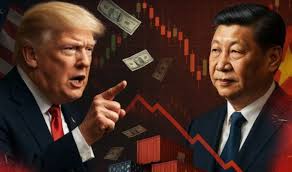
China has strongly rebuffed recent economic accusations from the United States, dismissing them as politically motivated tactics aimed at coercion and economic bullying.
This latest salvo comes amid ongoing disputes over tariffs, trade practices, and access to critical resources, highlighting the persistent friction in Sino-American economic relations.
In response to recent United States’ claims concerning China’s economic policies and practices, Beijing has categorically rejected what it terms as politically driven accusations. A spokesperson from China’s Ministry of Commerce condemned U.S. remarks linking China to issues such as the fentanyl crisis, describing these allegations as pretexts to justify heightened tariffs on Chinese goods. “Intimidation does not intimidate us. Bullying is ineffective,” the spokesperson declared, emphasizing that coercion and threats are not appropriate means to engage with China.
The dispute is set against a broader context of tariff escalations and retaliatory measures that have significantly strained trade relations in 2025. The U.S. recently imposed some of the highest tariffs in decades, including a controversial 145% tariff rate on certain Chinese imports a combination of multiple tariff layers introduced since early 2025. These tariffs are part of American efforts to address trade imbalances and alleged unfair trade practices by Beijing, including accusations of industry subsidization, currency manipulation, and restrictions on foreign business operations.
READ ALSO:US, China resume trade talks for amicable tariff regime
China, for its part, has positioned itself as resilient and prepared to endure the economic pressure from prolonged trade tensions. Chinese officials argue that the United States has miscalculated by expecting rapid concessions and negotiations. Instead, China has leveraged its strategic control over essential minerals critical to U.S. industries as a bargaining chip while advocating for dialogue based on equality, mutual respect, and reciprocity.
The Chinese government has also called on Washington to reconsider its unilateral tariff policies, warning that such measures harm not only bilateral trade but also global economic stability. Beijing officials have reiterated their willingness to continue negotiations, but they reject any framework that amounts to coercion or economic blackmail. Furthermore, China has signaled a limit to its tolerance, stating it would no longer retaliate to future U.S. tariff hikes, underscoring a stance against further escalation.
Trade experts observe that both nations remain locked in a complex dance of diplomacy and economic strategy, with the U.S. intent on curbing China’s growing influence and China seeking to protect its economic sovereignty. While some de-escalation efforts are underway, including temporary tariff reductions and ongoing high-level talks, no substantive resolution appears imminent, with both sides maintaining firm positions.
As this high-stakes economic and geopolitical confrontation continues, global markets and international trade observers watch closely how the interplay of tariffs, negotiations, and national interests will shape the future of the world’s two largest economies.
This unfolding U.S.–China economic standoff reflects a deep-rooted rivalry that extends beyond trade to broader strategic and security concerns, signaling that the dispute is unlikely to be resolved swiftly.
NAN