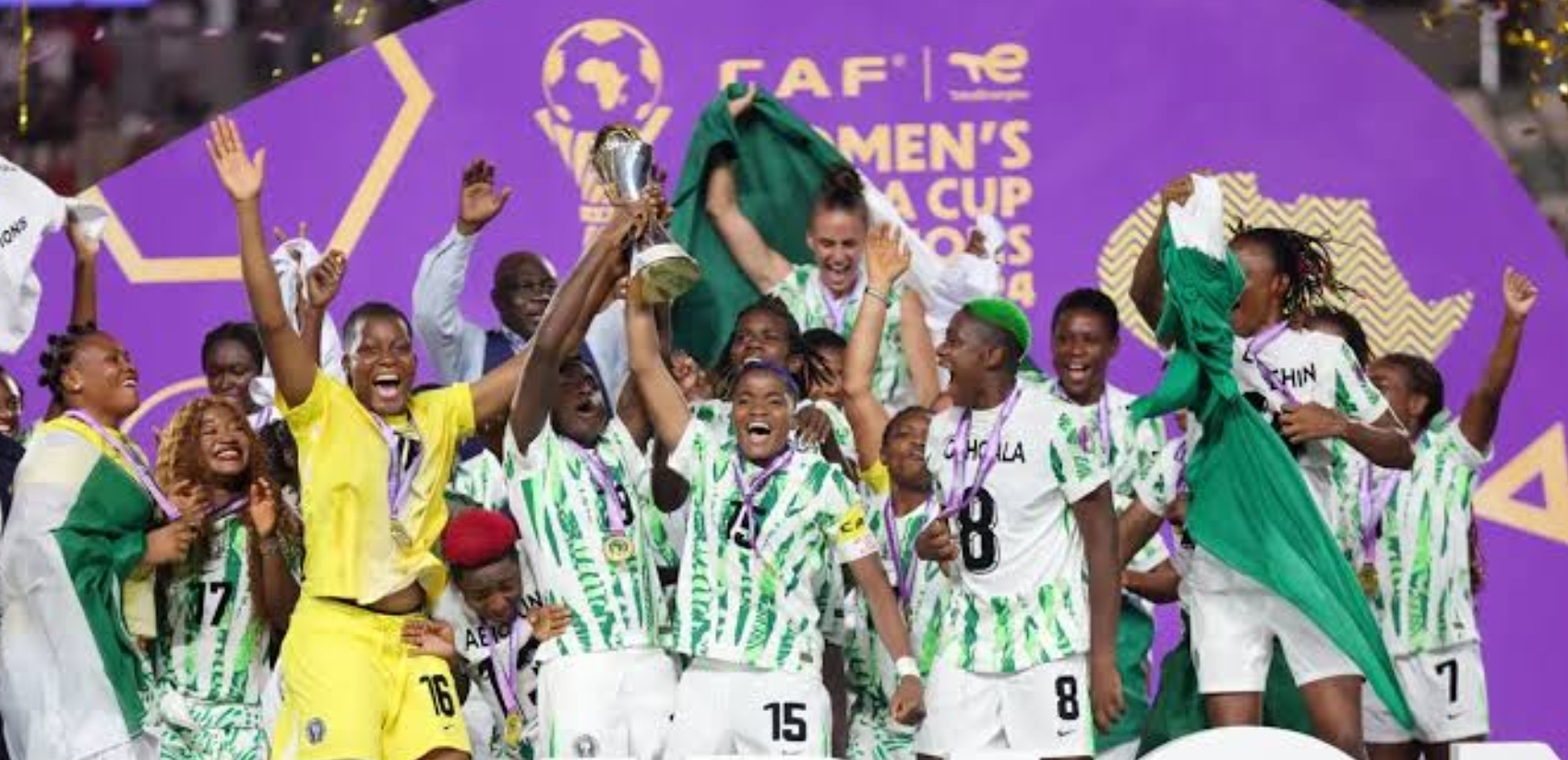
Nigeria’s Super Falcons are ranked the best team in Africa and 36th in the world with 1630 points, according to the latest FIFA Rankings released on Thursday.
Spain maintains its ranking as top in the world with 2066 points, followed by the U.S with 2065 points. In third place is Sweden with 2025 points, while Euro Champions England is fourth with 2022 points.
In Africa, South Africa is ranked second place and 54th in the world with 1,465 points.
Women’s Africa Cup of Nations finalists and hosts, Morocco are third place with 1,407 point and 64th place in the world while Zambia are fourth with 1,402 points, and 65th at the global stage.
The next edition of the rankings will be published on Dec. 11.
Rise to Prominence
The Super Falcons’ continental dominance has been matched by individual recognition on an unprecedented scale. Nigerian players have claimed 13 of the 20 African Women’s Player of the Year awards since the honour’s inception, with Barcelona striker Asisat Oshoala leading the way with a record six victories.
Also Read: Falcons return with WAFCON trophy, Nigerians celebrate
The current squad represents the perfect blend of experience and youth. Goalkeeper Chiamaka Nnadozie, named the tournament’s best shot-stopper, embodies the new generation’s technical excellence, while veterans like defender Onome Ebi provide the championship experience that has become synonymous with Nigerian football.
“What makes this team special is how the older players pass down not just skills, but the winning mentality,” explained sports analyst Tobi Adepoju. “Each generation understands they’re custodians of something bigger than themselves.”
Global Recognition and Growing Influence
The Super Falcons’ success has transcended continental boundaries. Their participation in all nine FIFA Women’s World Cups since the tournament’s inception makes them one of only seven teams to achieve this feat, putting them in elite company with the likes of the United States, Germany, and Brazil.
Their best World Cup showing came in 1999 when they reached the quarterfinals, but their 2023 campaign in Australia and New Zealand perhaps best demonstrated their evolution. Taking eventual runners-up England to penalties in the Round of 16, the Super Falcons proved they belonged among the world’s elite, with their dynamic style of play winning admirers globally.
At the Olympic level, their quarterfinal appearance in 2004 – where they defeated Japan 1-0 to become the first African women’s team to beat an Asian powerhouse at the Games – remains a watershed moment for African women’s football.
Presidential Recognition and National Pride
The magnitude of the Super Falcons’ latest achievement was underscored by the reception that awaited them back home. President Bola Tinubu, in an unprecedented gesture, conferred national honours of Officer of the Order of the Niger on all 24 players and technical staff, while also awarding each player $100,000 and a three-bedroom apartment.
“They understood the assignment,” President Tinubu declared during the team’s reception in Abuja. “The Super Falcons have not just won a tournament; they have elevated our nation’s standing in the global football community.”
The reception reflected the special place the Super Falcons hold in Nigerian hearts. In a country where football is religion and success is measured in trophies, the women’s team has consistently delivered when it mattered most.
The current generation of Super Falcons has embraced modernity in ways their predecessors couldn’t. Players like Michelle Alozie, the team’s social media queen, have built massive online followings, bringing the team closer to younger fans and expanding their appeal beyond traditional football audiences.
“We’re not just football players anymore; we’re role models and influencers,” said Alozie, whose celebratory posts from the WAFCON final went viral. “That comes with responsibility, but also opportunity to inspire the next generation.”
This digital engagement has coincided with increased investment in the women’s game across Africa, creating a more competitive landscape. Morocco’s rise to the final, backed by significant government investment and home support, exemplifies the growing challenges the Super Falcons face in maintaining their dominance.
Crediblenewsng.com