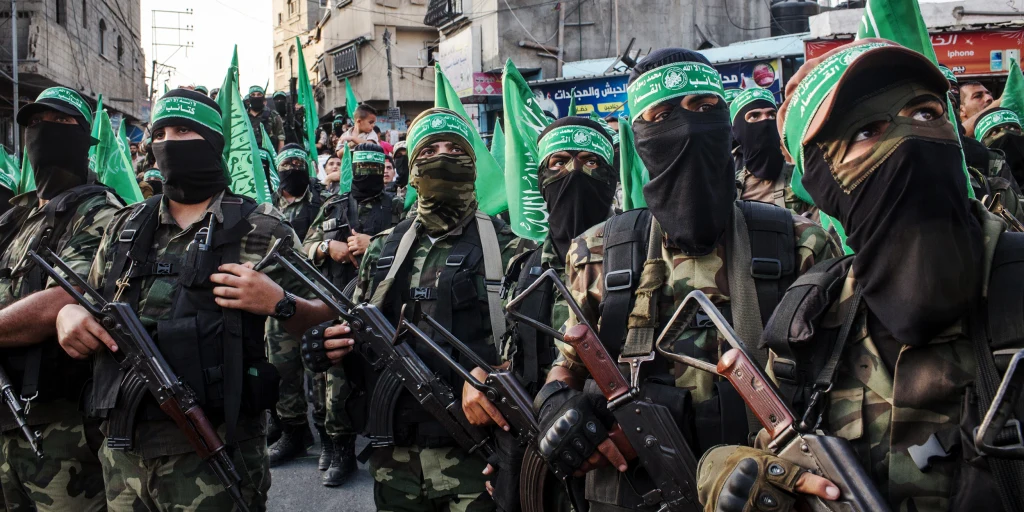
Hamas has issued its most forceful warning yet regarding the fate of Israeli hostages in Gaza, declaring that Prime Minister Benjamin Netanyahu’s decision to launch a full-scale offensive on Gaza City has effectively ended all chances of securing their release.
In a statement written in Hebrew and directed at Israeli leadership, Hamas’ armed wing, the Al-Qassam Brigades, said the ground incursion was a “death sentence” for the hostages still in captivity.
“Your prisoners are distributed within the neighborhoods of Gaza City, and we will not be concerned for their lives as long as Netanyahu has decided to kill them,” the group said.
It added that neither living nor dead hostages would be returned, comparing their fate to that of Ron Arad, an Israeli Air Force officer who disappeared in Lebanon in 1986 and was never recovered.
The warning comes at a time of deepening public anger inside Israel. Weekly protests in Tel Aviv have swelled, with families of hostages taking center stage in demanding a ceasefire and prisoner exchange deal.
Einav Zangauker, mother of hostage Matan Zangauker, was filmed outside Netanyahu’s residence shouting in anguish: “Come out and tell me how you lied to my face and told me that you were going to bring an agreement and bring everyone back.”
According to Israeli authorities, 48 hostages remain in Gaza. Of these, around 20 are believed to be alive. Many relatives fear that Israel’s escalating assault on Gaza City could doom their loved ones.
Israel Defense Forces spokesperson Effie Defrin attempted to reassure families, saying, “The hostages are always in our thoughts. We will do everything to avoid harming them.”
However, this reassurance has not eased the fears of many who believe military action will further endanger the captives.
The offensive marks one of the largest ground operations since the war began on October 7, 2023.
Israeli tanks, supported by heavy airstrikes, pushed deeper into Gaza City, striking residential towers and prompting mass displacement.
ALSO READ: Hamas suspends prisoner swap talks after Israeli attack on Doha
Satellite imagery showed armored vehicles positioned just 1.5 kilometers north of Al-Shati Camp, signaling the assault’s intensity.
Gaza City, home to about one million people before the war, has become the focal point of the conflict.
The IDF estimates roughly 450,000 residents remain, though CNN could not independently verify the figure.
Many Palestinians are attempting to flee southward by foot, car, or even fishing boats, carrying what belongings they can to escape the bombardment.
The humanitarian toll continues to worsen. The Palestinian Ministry of Health reported that four people, including a child, died of malnutrition in the past 24 hours.
This brings the total number of famine-related deaths in Gaza to 435 since the conflict began. International agencies have declared parts of Gaza to be in famine, warning that the ground incursion will worsen food shortages, limit medical aid, and increase civilian casualties.
According to Palestinian officials, more than 65,000 people in Gaza have been killed since the war erupted nearly two years ago.
Aid groups describe the situation as catastrophic, with water, food, and electricity supplies critically low.
Global reaction has also intensified. The European Union, Israel’s largest trading partner, has proposed sanctions in response to the offensive.
Meanwhile, a United Nations Commission report accused Israel of committing genocide, a charge Israel firmly rejects.
Despite the mounting international pressure, Netanyahu’s government has remained resolute in pursuing its military campaign.
Hamas has vowed that “Gaza will be a graveyard for your soldiers,” framing the defense of Gaza City as pivotal in its resistance.
For Israel, officials argue the assault is necessary to dismantle Hamas’ military infrastructure. Yet for hostage families and international observers, the risks appear increasingly dire.
As the conflict enters this critical phase, the competing pressures on Netanyahu’s government are intensifying.
Domestically, the demand for a negotiated settlement grows louder, while internationally, Israel faces increasing isolation.
For the hostages still in Gaza, the path forward remains perilously uncertain, with the threat from Hamas and the dangers of ongoing military action colliding in deadly consequence.
CNN