President Bola Tinubu on Wednesday marked Nigeria’s 65th Independence Day with the inauguration of the newly renovated National Arts Theatre now known as Wole Soyinka Centre for Culture and the Creative Arts.
He assured Nigerians that the country would remain united and committed to building a strong economy under his watch and urged citizens to stop painting a negative image of the country and instead project Nigeria positively with pride and unity.
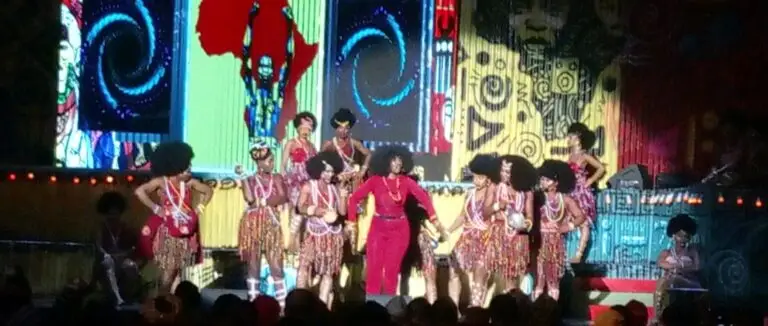
He described the National Theatre as a monument that once showcased the nation’s cultural glory and reminded the audience of its role in hosting FESTAC 77, a historic festival that brought the world to Nigeria.
The president had renamed the edifice in July 2024 as the Wole Soyinka Centre for Culture and the Creative Arts in honour of the Nobel Laureate.
At the ceremony, he praised Soyinka as one of the most creative and courageous minds of Nigeria, deserving of such recognition for his contributions to nation-building and freedom.
Tinubu also called for the establishment of an endowment fund to sustain the facility, pledging to personally contribute.
He commended the Central Bank of Nigeria, the Bankers’ Committee, the Lagos State Government, and the Federal Government for partnering to restore the complex.
He noted that the project symbolized not only independence celebrations but also a new chapter in preserving and promoting Nigeria’s cultural heritage.
Central Bank Governor, Olayemi Cardoso, highlighted that the project, first approved in 2020, was transformed into a vision of national renewal under Tinubu’s directive.
He said the Bankers’ Committee alone committed N68 billion to the project and stressed the importance of cultural identity in strengthening Nigeria’s place in the world.
READ ALSO: 90th Birthday: Tinubu renames National Theatre after Wole Soyinka
“Beyond economics, culture is about identity, pride, and the very soul of a nation. With this restoration, we are investing in our youth, in our stories, and in Nigeria’s rightful place on the global stage,” Cardoso said.
Governor Babajide Sanwo-Olu of Lagos State described the theatre as the heartbeat of the nation’s creative growth.
e recalled the spirit of unity that FESTAC 77 inspired in the same hall nearly five decades ago, stressing that the newly refurbished facility would once again serve as a beacon of national cohesion.
Minister of Arts, Culture and Creative Economy, Hannatu Musawa, described the occasion as a turning point for Nigeria’s cultural identity.
She noted that ongoing reforms—including the Creative Economy Development Fund, the Creative and Tourism Infrastructure Corporation, and the Motherland Initiative—would empower Nigerian youth, attract investment, and build bridges with the African diaspora.
Nobel Laureate Wole Soyinka, in his remarks, said he accepted the honour of renaming the theatre with mixed feelings, recalling his history of criticising public monument appropriations.
He, however, praised the restoration effort, saying the edifice must serve as a platform for artistic excellence so that Nigerians would no longer need to travel abroad to enjoy African plays.
Chief Executive Officer of the National Theatre, Mrs Tola Akerele, described the reopening as the dawn of a new era. She said the facility, now equipped to host world-class events and productions, would become a hub for culture, fashion, film, music, and the arts.
Renovations included the main auditorium, banquet hall, exhibition halls, cinemas, artists’ changing rooms, offices, VIP lounges, sanitary facilities, industrial kitchen, concession spaces, car park, and basement areas.
Upgrades also featured perimeter fencing, CCTV surveillance, solar panels, street lighting, and fire safety installations.
The restored edifice is expected to host major cultural events, international collaborations, and Nigeria’s golden anniversary celebration of FESTAC in 2027, positioning it once again as a global cultural landmark.
Crediblenewsng.com