Ballot boxes closed across Syria on Sunday in the country’s first parliamentary elections since the fall of the Assad regime, with counting continuing late into the night.
Officials described the vote as a turning point in Syria’s long and uncertain transition from years of war and authoritarian rule.
Election spokesman Nawar Najmeh told state television al-Ikhbariya that all polling centers had shut down nationwide, with ballot counting underway in several provinces.
Results are expected on Monday. Early tallies from Idlib, Deir Ezzor and the Damascus countryside showed no female candidates securing seats, meaning the 20 percent quota for women will likely be met through the one-third of seats directly appointed by President Ahmad al-Sharaa.
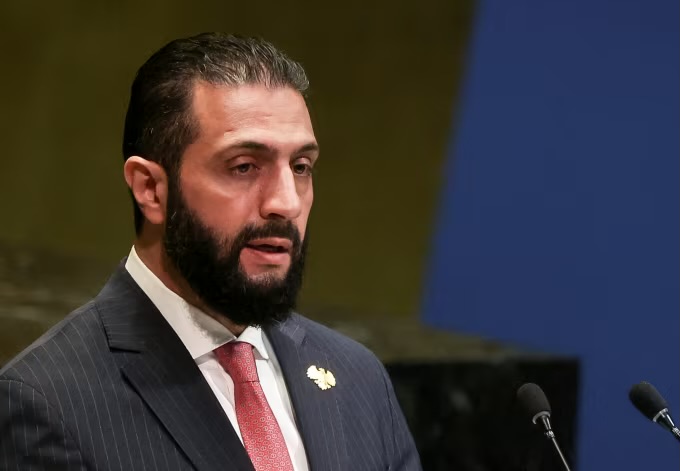
Speaking from the National Library polling center in Damascus, al-Sharaa described the vote as “a historic moment for Syrians,” praising the country’s ability to organize an electoral process “suited to the realities of this phase” just months after a change of leadership.
He urged citizens to see the new parliament as a platform to “rebuild our nation together,” stressing that several suspended laws on reconstruction and development required an active legislature.
The vote was held under a temporary electoral framework issued by presidential decree earlier this year. The system creates a 210-seat parliament, with two-thirds of lawmakers elected by local bodies and one-third appointed by the president.
Seats are distributed by population and social representation. A 10-member national election committee supervised the process.
Not all provinces participated. Voting in large parts of Raqqa and Hasakah was postponed due to what officials described as “security and logistical challenges.” Suwayda, the Druze-majority province rocked by months of violence, also did not hold elections, leaving all constituencies vacant until “conditions permit.”
The excluded regions underscore the limits of central government control. Raqqa and Hasakah remain dominated by Kurdish-led YPG forces, while Suwayda is under the influence of Druze factions loyal to cleric Hikmat al-Hijri.
These gaps have fueled concerns that the new parliament may struggle to represent Syria’s diverse population.
READ ALSO: Egypt hosting talks on Gaza ceasefire peace deal
The campaign period lasted ten days, with 1,578 candidates approved to run, including 14 percent women. Authorities said individuals with ties to the former Assad regime were barred from contesting.
Political observers noted that while the campaign was more open than in past decades, it remained tightly managed under the transitional framework.
One of the incoming parliament’s main responsibilities will be to draft a new constitution and set the stage for the country’s first direct national elections.
Al-Sharaa has promised that the next term will “reflect the voice of the people in its entirety,” though analysts say much will depend on how inclusive the political process becomes.
The issue of representation has grown more urgent in recent months amid worsening sectarian violence.
Hundreds of civilians from Syria’s Alawite and Druze communities have been killed, many reportedly at the hands of fighters aligned with pro-government factions.
Human rights monitors warn that continued exclusion of minority groups could deepen instability.
Despite these challenges, officials in Damascus insist the election marks the beginning of a new chapter.
For al-Sharaa, who has sought to present himself internationally as a leader of reconciliation, the vote offers an opportunity to consolidate his authority at home and show progress toward political normalization abroad.
As counting continues, Syrians await results that will shape the country’s fragile transition — and test whether this first attempt at post-Assad parliamentary democracy can pave the way for lasting stability.
BBC News