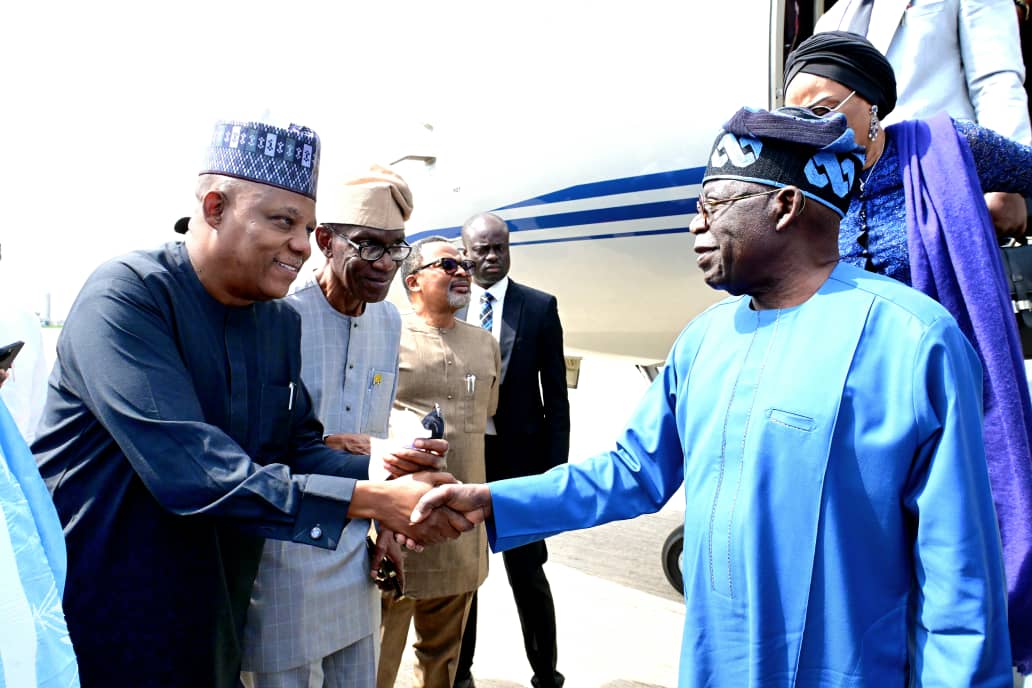
President Bola Tinubu will depart Abuja on Sunday for Rome, to participate in the Aqaba Process Heads of State and Government Level Meeting, with special focus on the security crisis in West Africa.
Presidential Spokesperson, Mr Bayo Onanuga disclosed that the high-level summit begins on Tuesday, bringing together African leaders, top intelligence and military officials, and representatives of key intergovernmental and non-governmental organisations.
The Aqaba Process, initiated by Jordan’s King Abdullah II in 2015, is a global counter-terrorism platform co-chaired by Jordan and the Italian Government.
It addresses the complex security challenges in West Africa, especially the rise and spread of terrorist networks across the region.
Discussions will cover the growing link between land-based terror groups in the Sahel and maritime piracy in the Gulf of Guinea.
Participants will share intelligence assessments and explore stronger regional and international collaboration to tackle cross-border threats.
The summit will also focus on developing joint strategies to fight terrorism on land and at sea.
Another key agenda is countering online radicalisation and dismantling digital channels used for extremist propaganda and recruitment.
Tinubu will also engage in bilateral talks with fellow leaders on improving security coordination across the subregion.
The Nigerian leader will be accompanied by Minister of State for Foreign Affairs, Bianca Odumegwu-Ojukwu, and Minister of Defence, Badaru Abubakar.
Also on the delegation are National Security Adviser, Nuhu Ribadu, and NIA Director-General, Mohammed Mohammed, alongside other senior officials.
The Aqaba Process Meeting is a counter-terrorism initiative launched by King Abdullah II of Jordan in 2015. It is co–chaired by the Hashemite Kingdom of Jordan and the Italian Government.
It recognises the complex security challenges confronting West Africa, including the expansion of terrorist networks, the growing crime-terror nexus and the increasing overlap between land-based terrorism in the Sahel and the maritime piracy in the Gulf of Guinea.
Also Read: West African military leaders offer visa free travel to ECOWAS citizens
At the meeting, participants will exchange assessments of the current security landscape in West Africa and foster collaboration between regional and international partners to address cross-border security challenges. Participants will also develop strategies to counter the terror threat on land and the sea.
The meeting will discuss ideas on how to coordinate efforts to combat online radicalisation and disrupt digital networks that facilitate terrorist propaganda and recruitment.
STATE House