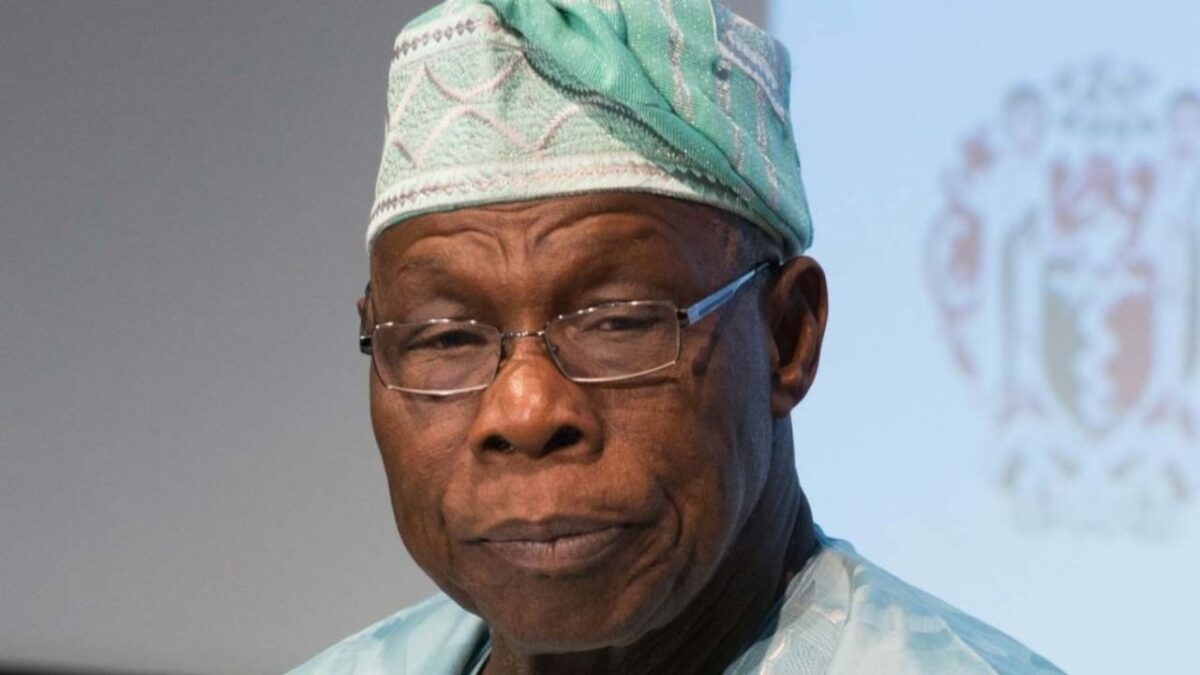
In a rare glimpse into the political past, former President Olusegun Obasanjo revealed a pivotal moment that shaped his political trajectory.
Speaking at a high-level consultation in Abeokuta, Obasanjo recounted how the Peoples Democratic Party ,PDP, lost a crucial local government election in Ogun State in 1998 because he adamantly rejected plans to bribe officials of the Independent National Electoral Commission ,INEC.
Obasanjo’s narrative unfolded against the backdrop of a meeting where party leaders proposed allocating funds for the police and INEC. However, he stood firm, refusing to endorse what he deemed a corrupt practice. His rationale was straightforward – INEC officials and policemen were government workers receiving monthly salaries.
The seasoned politician, addressing a diverse audience of politicians and professors during the debate themed ‘Rethinking Western Liberal Democracy in Africa,’ expressed discomfort with the term ‘Nigerian factor.’ He associated this phrase with a momentous event in the early days of his political journey.
In 1998, during the first local government election, party leaders urged financial provisions for INEC and the police. Obasanjo’s rejection of this proposal had significant consequences – PDP lost all local governments in the election. Party members later lamented, suggesting that adherence to the ‘Nigerian factor’ would have secured victory.
Reflecting on these events, Obasanjo conveyed a sense of guilt for the party’s loss. Subsequently, during the State Assembly election, he took a hands-off approach, refusing to participate. However, the outcome remained unchanged, emphasizing the complex dynamics at play.
In a candid admission, Obasanjo acknowledged the impact of poverty on the democratic process. He underscored the vulnerability of individuals in the face of hunger, stating that a hungry person might sell their vote for as little as N1000. The former President delved into the broader challenges facing democracy, pointing out poverty and ignorance as formidable adversaries.
As Obasanjo revisited this chapter from 1998, his narrative not only highlighted a crucial moment in Nigeria’s political history but also showcased a leader’s commitment to integrity, even in the face of electoral complexities. The echoes of that decision reverberate through the years, adding a layer of nuance to the intricate tapestry of Nigerian democracy.
Crediblenews.ng