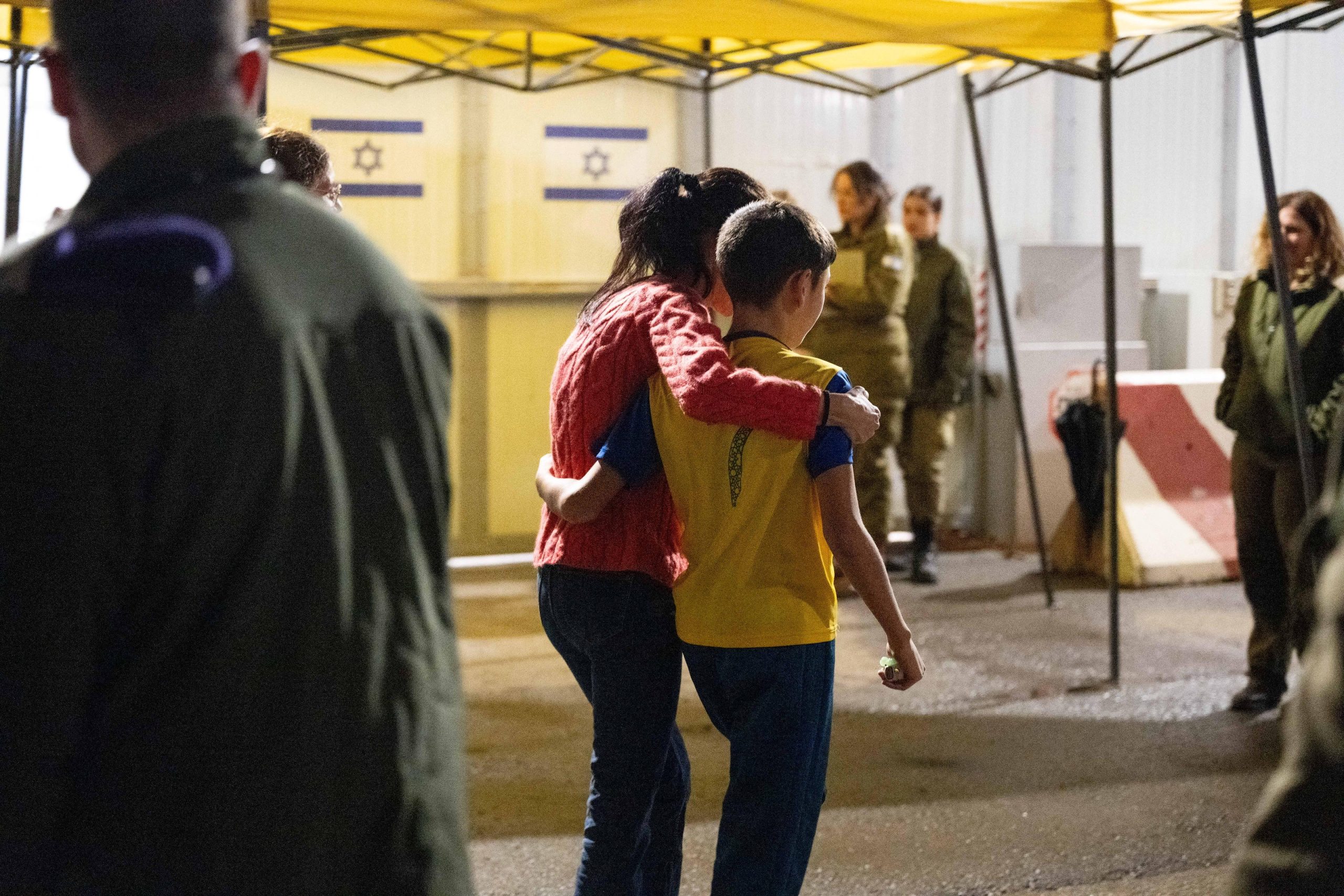
In a last-minute agreement, Israel and Hamas have extended their ceasefire for a seventh day, offering a brief respite in the conflict that has plagued the region for the past seven weeks.
Mediators are diligently working towards a further extension to not only maintain the peace but also facilitate the release of more hostages and allow much-needed aid to reach Gaza.
The ceasefire, which has already allowed for the delivery of humanitarian aid to Gaza, is a crucial development after weeks of relentless Israeli bombardment and a deadly retaliation by Hamas. The coastal territory, home to 2.3 million people, witnessed widespread devastation, making the truce a lifeline for the beleaguered residents.
Despite this temporary reprieve, the underlying tensions are evident with a recent deadly shooting in Jerusalem, highlighting the fragility of the situation and the potential for violence to erupt once again.
Israel, insisting on the daily release of at least 10 hostages by Hamas to sustain the ceasefire, received a last-minute list of individuals slated for release on Thursday. This development averted plans to resume hostilities at dawn, underscoring the delicate balance that the mediators are navigating.
Hamas, having released 16 hostages the day before, is also committed to continuing the truce for a seventh day. The ongoing negotiations, spearheaded by Egyptian and Qatari mediators, are actively working towards securing a further two-day extension to the ceasefire.
The release of hostages has been a pivotal aspect of the negotiations, with 97 individuals having been freed during the truce. This includes Israeli women and children exchanged for Palestinian women and teenage detainees, as well as foreign hostages released through parallel agreements with their respective governments.
U.S. Secretary of State Antony Blinken, currently in Israel, acknowledged the positive developments facilitated by the ceasefire. The release of hostages and the increased flow of humanitarian assistance to Gaza are tangible outcomes of the truce, providing a glimmer of hope amid the long-standing conflict.
As the delicate negotiations continue, the prospect of a sustained ceasefire hangs in the balance, with both parties navigating the complexities of their demands and commitments. The international community watches with bated breath, hoping for a lasting resolution that brings stability to the region.
TWO PEOPLE WERE KILLED IN THE JERUSALEM ATTACK
Shortly after the agreement, two Palestinian attackers opened fire at a bus stop near the entrance to Jerusalem during morning rush hour, killing at least three people. According to police, both attackers were “neutralized.”
“This event proves once again that we must not show weakness, that we must speak to Hamas only through (rifle) scopes, only through war,” said hard-right National Security Minister Itamar Ben-Gvir at the scene of the attack.
The attackers, according to Hamas, were acting “naturally in response to unprecedented crimes committed by the occupation,” but they did not explicitly claim to have directed the attack. There were no signs that the attack would disrupt the truce in Gaza or the planned release of hostages and detainees.
In response to the militant group’s Oct. 7 rampage, which Israel claims killed 1,200 people and took 240 hostages, Israel has vowed to annihilate Hamas.
Israel bombarded the territory for seven weeks prior to the truce. According to Palestinian health officials deemed reliable by the UN, over 15,000 Gazans have been confirmed killed, with approximately 40% of them being children. Another 6,500 people are missing, many of whom are believed to be buried beneath the rubble.
According to the UN, up to 80% of Gazans have been displaced, including nearly all residents of the northern half, which Israel has ordered to be completely evacuated. When the truce expires, Israel is expected to resume its ground campaign in the south.
Gazans have been able to take advantage of the week-long cease-fire to venture out, visit abandoned and destroyed homes, and recover scores of bodies from the rubble. However, residents and international organizations say the aid that has arrived thus far is insignificant in comparison to the besieged enclave’s vast humanitarian needs.
Those who fled the Gaza Strip’s north, including Gaza City, are still barred from returning. Thousands of families are sleeping rough in makeshift shelters, with only what they can carry.
“What good is a truce if it doesn’t lead us back home?” “When we tried to return to our homes in Gaza City after hearing it had been bombed, Israeli soldiers on tanks fired at us,” said Mohammad Joudat, 25, a displaced business administration graduate, speaking in Deir al-Balah in the southern Gaza Strip.
To avoid a repeat of the massive death toll so far, the United States is urging Israel to narrow the zone of combat and clarify where Palestinian civilians can seek safety during any Israeli operation in southern Gaza, according to US officials on Wednesday.
On Wednesday, United Nations Secretary-General Antonio Guterres said the Gaza Strip was in the grip of a “epic humanitarian catastrophe,” and he and others called for a full ceasefire to replace the temporary truce. Israel opposes a permanent ceasefire as benefiting Hamas, a position supported by the US.
Crediblenews.ng