Nosmot Gbadamosi/ Africa Brief
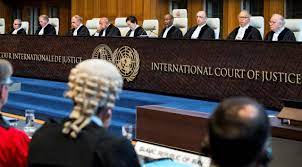
Algeria, a non-permanent member of the U.N. Security Council, has requested a council meeting to enforce an International Court of Justice, ICJ, ruling regarding Israel.
The U.N. meeting on Wednesday would discuss how to legally implement—“give a binding effect”—to the court’s emergency measures, Algeria’s Foreign Affairs Ministry said in a statement. Algeria has not yet indicated whether it intends to draft a Security Council resolution to enforce the ICJ’s order, but it is likely to call for a cease-fire. If the U.S. government blocks any attempt to enforce the court’s order through the Security Council, South Africa has said it will approach the U.N. General Assembly.
Among other measures, Israel must take steps to prevent genocidal acts, prevent and punish incitement to genocide, immediately enable humanitarian relief in the Gaza Strip, and report back within a month on its actions, according to the historic interim ruling by the ICJ.
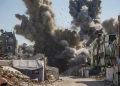
The court did not order a cease-fire in Gaza, a key request in South Africa’s application. It also ordered Hamas to hand over all hostages taken in its Oct. 7 attack. However, it rejected Israel’s request to throw out the genocide case and found there is a plausible “imminent risk” that Palestinians require protection. It concluded that Gaza’s population was “extremely vulnerable” and that at least some of the emergency measures sought by South Africa were “aimed at preserving” Palestinian rights. The war has displaced about 1.9 million people of Gaza’s 2.3 million population and killed at least 26,000 people, according to local health authorities.
Egypt’s foreign minister, Sameh Shoukry, said Israel should remove “all impediments” to aid delivery following the ICJ ruling. He also demanded an end to what he called the “unjustified” suspension in funding for United Nations agency for Palestinian refugees by several nations in response to accusations that a dozen U.N. workers were involved in the Oct. 7 Hamas attack.
Israeli Prime Minister Benjamin Netanyahu said the ICJ’s decision to proceed with the case was “outrageous” and that Israel would continue to defend itself.
The ruling could be consequential and definitely creates bad optics for U.S. officials, who derided South Africa’s case as “meritless, counterproductive, and completely without any basis in fact whatsoever.”
In bringing the case, South Africa put not only Israel in the dock, but also Western claims of support for a rules-based order that equally protects all human lives. Had the court simply dismissed the case, it would have deepened cynicism that the ICJ and International Criminal Court are tools for Western powers to punish mainly African nations, but not Western allies.
A final decision on whether Israel is committing genocide could take years to reach. The ICJ does not have any power to enforce its decisions, but the emergency ruling puts further pressure on Washington as the only global power with significant leverage over the Israeli government.
Thus, how the U.S. votes on a possible Algerian-led U.N. resolution based on the ICJ ruling will be crucial. Algeria began its two-year term as a non-permanent member earlier this month and has vowed to “bring the voice of Africa” to the council. The ICJ ruling is an important victory for the continent and for Pretoria, which has continued to argue that on global issues, African nations deserve a seat on the world stage. It follows Gambia’s groundbreaking ICJ case against Myanmar.
The ruling was a defining moment for many South Africans. “South Africa stepped up. It showed what we can be, how groups that have faced oppression and violence can stand up confidently for one another on the world stage,” wrote Sean Jacobs in the New York Times.
“Some have told us we should mind our own business and not get involved in the affairs of other countries, and yet it is very much our place as the people who know too well the pain of dispossession, discrimination, state-sponsored violence,” said South African President Cyril Ramaphosa.
South Africa’s ruling African National Congress has projected itself as a moral champion of the global south, but in spotlighting Western double standards, it has not escaped criticism of its own selective morality when it comes to wars in Ukraine and Sudan.
Pretoria ignored an International Criminal Court arrest warrant against then-Sudanese President Omar al-Bashir in 2015 and faced a similar dilemma over its decision to invite Russian President Vladimir Putin to last summer’s BRICS summit, although Putin later chose to stay at home. Earlier this month, Ramaphosa received Sudanese rebel leader Gen. Mohamed Hamdan Dagalo, known as Hemeti, who heads the nation’s paramilitary Rapid Support Forces; he has also been accused by rights organizations of overseeing mass rape and executions both now and two decades ago in Darfur.