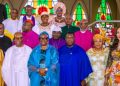
The Chief Justice of Nigeria, Justice Olukayode Ariwoola, swore in 11 new Justices of the Supreme Court, bringing the number of Justices on the apex court bench to 21.
The swearing-in of the 11 Justices comes over two months after they were screened and confirmed by the Senate, acting on the recommendation of President Bola Tinubu, and the development was hailed by Senior Advocates of Nigeria, who expressed the hope that it would translate to the clearing of the huge backlog of cases at the Supreme Court.
Before now the number of Justices on the Supreme Court bench went down to an all-time low of 10, as opposed to 21 recommended by the Constitution.
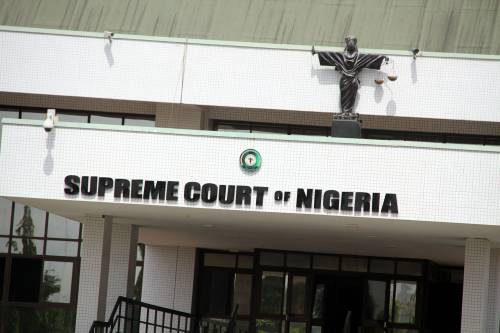
At the swearing-in ceremony, which took place at the Main Courtroom of the Supreme Court in Abuja on Monday, the CJN noted that the 11 new Justices were joining the apex court bench “at a time when the rank had been grossly depleted to an all-time low of 10 Justices for several reasons, mainly retirement, and deaths.”
“The inability of the court to meet up the statutory full compliment of 21 Justices had lingered on for too long,” the CJN remarked.
In an interview with The PUNCH, a former Attorney General of Abia State, Chief Awa Kalu, SAN, said with the Supreme Court now having its full complement of Justices, “we expect them to crack down on the backlog of cases in that court. That is the expectation of everybody, and it is a legitimate expectation.”
Also, Human Rights Lawyer, Mr Ebun-Olu Adegboruwa, said, “it is commendable that we have 21 Justices, but I believe it goes just beyond numbers.”
Adegboruwa said the appointment of the 21 Justices must be complemented with the provision of necessary equipment that would aid justice delivery at the apex court.
He said, “it’s important that there is a paradigm shift that will focus on equipping the Justices with the needed infrastructure and personnel to perform.
“Then limit the number of interlocutory appeals that go to the Supreme Court so that it can properly focus on policy decisions that will give a guideline on serious legal matters.
“Then the quality of the judgment. To avoid matters in which we have conflicting judgments, there’s a need for the Supreme Court to sit down and to exert its previous decisions with the purpose of harmonising seemingly contradictory views that have been expressed by the apex court.”
The CJN at the swearing-in of the Justices, charged them to brace up for the work ahead and to be prepared to face criticisms from the public.
He said they must discharge their duty in fairness and uprightness, knowing that they were representatives of God on earth.
READ ALSO: Protest: Lagos CP, NLC meet, Labour submits notification letter
Justice Ariwoola said, “see yourselves as the representatives of God on earth because any judgment given at this level can only be overturned in heaven.
“There is no way you can please human beings, especially litigants. The easiest way to fail in life is by trying to please everyone. The only deity you can fear is the Almighty God. Once your judgment agrees with what God expects from you and is also under the Constitution, you should consider yourself the happiest and freest person on earth.”
The CJN also cautioned the Justices against allowing their ambition to cloud their sense of judgment.
“Your moral uprightness, integrity, and respect for the constitution and other extant laws in operation must be unwavering and unassailable,” he added.
The new Supreme Court Justices are Justices Jummai Sankey, Chidiebere Uwa, Chioma Nwosu-Iheme, Haruna Simon Tsammani, Moore Adumein, Obande Ogbuinya, and Stephen Adah.
Others are Habeeb Abiru, Jamilu Tukur, Abubakar Umar, and Mohammed Idris.