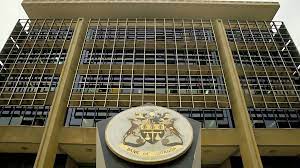
Uganda’s central bank has announced that its policy rate would be raised to 10 per cent, up from 9.5 per cent.
The decision was made due to the depreciation of the country’s local currency and the expected rise in inflation.
The Bank of Uganda Deputy Governor, Michael Atingi-Ego, made a monetary policy statement on Wednesday, saying the depreciation, which started in November 2023 and became steeper in February 2024, was caused by the outflow of some offshore investors’ funds from the domestic market. He noted that a weaker shilling could drive up inflation.
“Inflation is projected to rise above the medium-term target of five per cent by quarter one, of financial year 2024/2025 and stay above five per cent throughout 2025 unless monetary policy is tightened”.
“The projected economic growth rate of six per cent for the financial year 2023/2024 will remain unchanged,” Atingi-Ego said.
READ ALSO: South Africa’s current account deficit widens in fourth quarter
While stating that economic growth in the outer years was projected in the range of 5.5 to 6.5 per cent, compared to an earlier projection of 6.5 to 7.0 per cent, he said, “the downward revision of growth in the outer years largely reflects the likely impact of tighter monetary policy, which is required to stabilize inflation around the medium-term.”
He warned of a higher Central Bank Rate to bring inflation down and anchor inflation expectations.
“High inflation rates hurt economic growth, leading to significant and permanent reductions in the per capital income.
“Therefore, tightening monetary policy in the current circumstances is consistent with supporting sustainable growth, which is a prerequisite for social-economic transformation,” Atingi-Ego added.