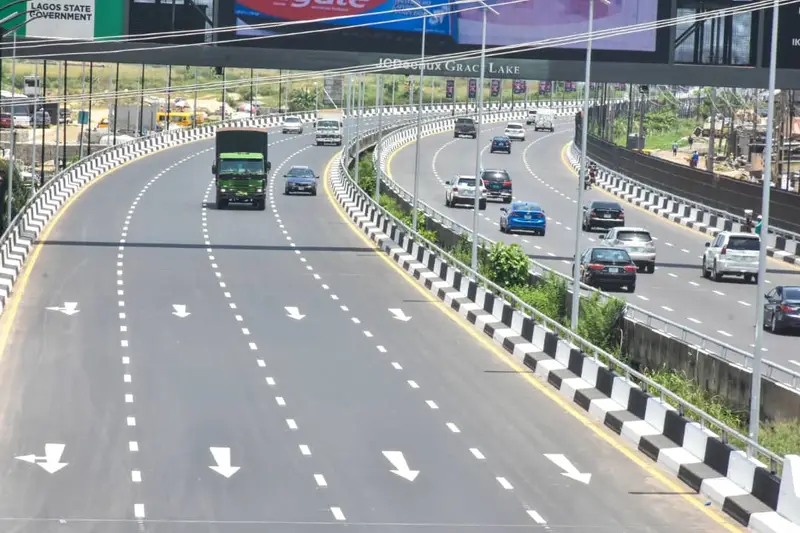
The full reopening of the Third Mainland Bridge in Lagos has been welcomed by residents and stakeholders, who believe it will stimulate business activities and foster overall economic growth in Lagos State and Nigeria.
Speaking in separate interviews with the News Agency of Nigeria, NAN, on Friday in Lagos, they expressed optimism about the positive impact of the bridge’s reopening on transportation and commerce.
The bridge, which underwent months of rehabilitation work by the federal government, was fully reopened to traffic on Thursday after the completion of the renovation project aimed at improving its condition.
Previously, the bridge had been partially closed, with restricted hours for travel, causing inconvenience to commuters traveling between the mainland and the island, the commercial hub of the state.
With the bridge now fully operational, residents anticipate smoother transportation and increased business activities, as it serves as a vital link between different parts of Lagos.
Conversely, from noon to midnight, motorists were able to access the bridge from the Island to the Mainland, while motorists from the Mainland heading towards the Island had to use Eko Bridge.
The timings, according to the authorities, were selected to match the peak period flow of traffic and reduce travel stress.
READ ALSO:Israel opens 3 aid corridors to Gaza after Biden’s call to Netanyahu
The measures resulted in congestion on the routes, despite deployment of traffic officers to the areas.
Many expressed relief at the full reopening on Thursday, saying it would create a more favorable economic environment for businesses and residents alike.
The Federal Controller of Works, Lagos, Mrs Olukorede Keisha, told NAN that the reopening would benefit both businesses and residents.
She said that it would facilitate ease of doing business as traffic congestion would be reduced. This can attract investment and stimulate economic growth.
Keisha said that there would be less travel time and reduced vehicle costs.
She noted that with smoother traffic flow, businesses could save on fuel and vehicle maintenance expenses associated with stop-and-go traffic.
The controller emphasised the impact the reopening would have on people’s health, saying that less time spent stuck in traffic congestion would mean less stress and fatigue for Lagosians.
She stressed that this could contribute to a more predictable and relaxing commute that would improve the residents’ well-being.
In the same vein, Dr Muda Yusuf, Chief Executive Officer, Centre for the Promotion of Private Enterprise, noted that reopening of the bridge would bring numerous positive impact on the economy.
Yusuf said, “First is the travel time between the Lagos mainland and the Island which will now be significantly shorter. This will impact productivity positively.
“Second is flexibility in mobility between the island and the mainland. During the bridge partial closure, such movements would be determined by the schedule of opening and closing.
“The opening would also ease traffic congestion on major roads connecting Lagos mainland and island.
“Many businesses recorded declines in patronage on both sides of bridge because of physical connectivity issues experienced by customers. The reopening of the bridge will restore such patronage.”
Sheriffdeen Tella, Professor of Economics, Olabisi Onabanjo University, Ago-Iwoye, said the reopening of the bridge would also promote the ease of doing business.
“The Third Mainland Bridge is the main connecting link to the main hub of commercial activities in Lagos , Nigeria.
“The Lagos Island, Victoria Island, Ikoyi, and Lekki are the main areas of commerce and headquarters of financial, industrial and telecommunication giants in Nigeria.
” To that extent, the closure of the bridge had hindered physical business transactions and its reopening should aid or promote the ease of doing business in Lagos, Tella said.
Iheanyi Achilefu, a merchant, who sells suit cases at Balogun Market, said that the reopening of the bridge would likely make his business operations more efficient and profitable, while also improving his quality of life.
He said, ” I want to really thank the government for finally opening the bridge for people to use.
“If not for anything, this will help to increase my business sales. Although, the economy is not favorable to Nigerians.
” It will also allow me to reach a wider customer base and the time I spend stuck in traffic will be reduced.”
Prior to the reopening, traffic congestion on alternative routes led to increased commuting times and transportation costs.
Businesses experienced delays in deliveries and employee commutes, potentially affecting productivity and sales.
Residents in Lagos are optimistic the reopening will bring about positive changes.
Credible news.ng