Stakeholders have called on the State Governments to prioritize budgetary allocation to the agricultural sector to ensure increased food production and reduce hunger and poverty in the country.
They also advocated for adequate budget provision to support organic farming, such as the provision of eco-friendly inputs in order to adapt the state agricultural system to eco-friendly practices and operations.
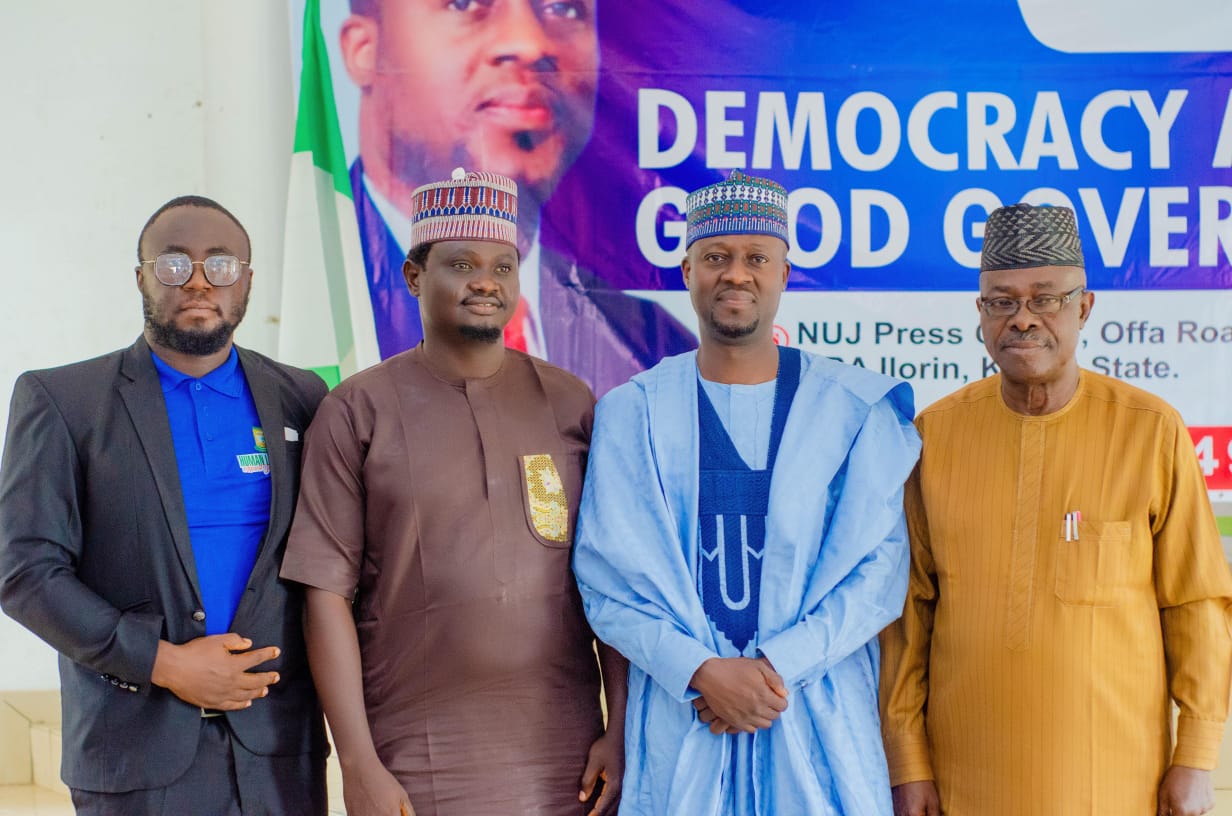
This was the focus of the annual colloquium organized by an Associate Professor of Business Administration of Lincoln University, USA, Dr. Abdulmumin Yinka Ajia recently held at the NUJ Press Centre, Ilorin, Kwara state capital.
Themed: ‘Democracy and Good Governance’, the colloquium aimed at facilitating conversations amongst key Nigerian stakeholders connecting the nation’s present socioeconomic and political situation and development with past happenings.
This, according to a communique by the organizers was in view of future development and growth as well as expected level of participation of stakeholders in nation building.
During the colloquium, it was observed that Nigerian youth, with their energy and numbers, seemed unaware of their capability and capacity to turn things round for better and cause change for the country by utilizing their attributes.
“Political opposition lacks seriousness deserving of causing the ruling government to perform admirably for people’s welfare and economic prosperity.
READ ALSO: Obi calls for urgent action over Nigeria’s current economic crisis
“It was also observed that religion is not our problem as we are made to know that since countries like Qatar and Saudi Arabia spend their financial resources externally on such aspects of development they could not readily achieve locally.
“Present administration lacks an organizing principle to make things right for the country and its people. Poor political arrangements and distorted systems and unharnessed human and natural resources are some of the reasons for the regrettable Nigerian situation,” the communique partly read.
However, Dr. Ajia asserted that the remedy for the nation’s regrettable situation lies not within any political party but in the hands of the electorate and the youth, who have yet to awaken from their political slumber.
“There is no difference between the Peoples Democratic Party and the All Progressives Congress. Even APC is worse.
“This does not mean that we should go back to PDP because even the PDP is not ready to improve. Rather, we should go spiritual to God to give us good leaders; we should stop hoping on one person because of their political antecedents, ” he said.
Dr. Sanusi Lafiagi, a lecturer of the department of Islamic Studies at Al-Hikmah University charged the youths to be ready to seize political power from the elites who have dominated the political scene for over 60 years.
“The youth represents hope, resilience, power, ambition, dynamism and power. The youth should harness all these and more to participate effectively in the political process.
“Advocacy/education, awareness campaign, structured organization, social media, and collaboration among the youths are some of the ways to take the country to the desired level.
He called on the youths to go for grassroots mobilizations during the electoral process and recruitment of leadership, rather than waiting for moneybag politicians that would give them financial inducement for their votes, after which they leave them to their plights
“We should always put Nigeria first in our thinking and actions. Those calling for revolution are shortsighted; no country will absorb our population of over 200 million.
“We may criticize but not take up arms. We must come out in unison and chart the way forward collectively to have desired political leaders of our choice,” he noted.
The state chairman, guild of public affairs analysts, Mr. Shola Muse said “the kind of leadership we recruit is affecting our daily lives. Those who can change the narrative are not allowed into office; the process of recruiting our leaders is faulty and corrupt.”
The colloquium provided stakeholders, especially the youth, the opportunity to know current information on good governance and their expected roles at bringing about more desired change in the nation.
In attendance were academics, university students, public analysts, media professionals, as well as audience of diverse backgrounds.
Credible News.ng