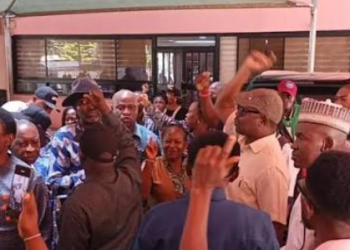
The High Court of the Federal Capital Territory, FCT, in Abuja has declined to lift a court order confining anti-hunger protesters to the National Stadium, opting instead to return the case file to the Chief Judge for reassignment to a regular court for further adjudication.
The case was brought by FCT Minister Nyesom Wike against the #Endbadgovernance movement, led by Omoyele Sowore and others. The July 31 order restricted the protesters to the National Stadium from August 1 to 10 to prevent disruption and protect public order. However, the order has since been extended due to procedural delays and the absence of the defendants.
During Wednesday’s proceedings, Justice Sylvanus Oriji inquired whether the suit still warranted attention given that the initial protest period had ended. The minister’s counsel, George Ibrahim, pointed out that the protesters had indicated a possible extension of their demonstration beyond August 10, and new filings suggested ongoing plans for further protest actions.
READ ALSO : Court restricts protesters in Abuja to MKO Abiola stadium
While the court had originally issued the order for the specific protest period, the FCT Minister’s legal team argued for the restriction to remain in place until the full hearing of the motion. The defense, led by Inibehe Effiong, requested that the restraining order be lifted, contending that its validity had expired.
Justice Oriji acknowledged the challenge of resolving the matter before the end of the court vacation on September 13 and decided it would be best to refer the case to the Chief Judge for reassignment to a regular court.
The restriction order was put in place to avoid disruption of public services and to prevent damage to property, based on concerns raised by the minister regarding potential threats and the capacity of security agencies to manage the protest effectively.
The protestors, including Sowore, Adama Ukpabi, and Tosin Harshiogbe, have been involved in a broader dispute with the FCT government over their right to demonstrate and the conditions under which they can do so. The court’s decision reflects ongoing tensions between the authorities and the protesters, highlighting the complexity of balancing public order with the right to protest.
Credible News.ng