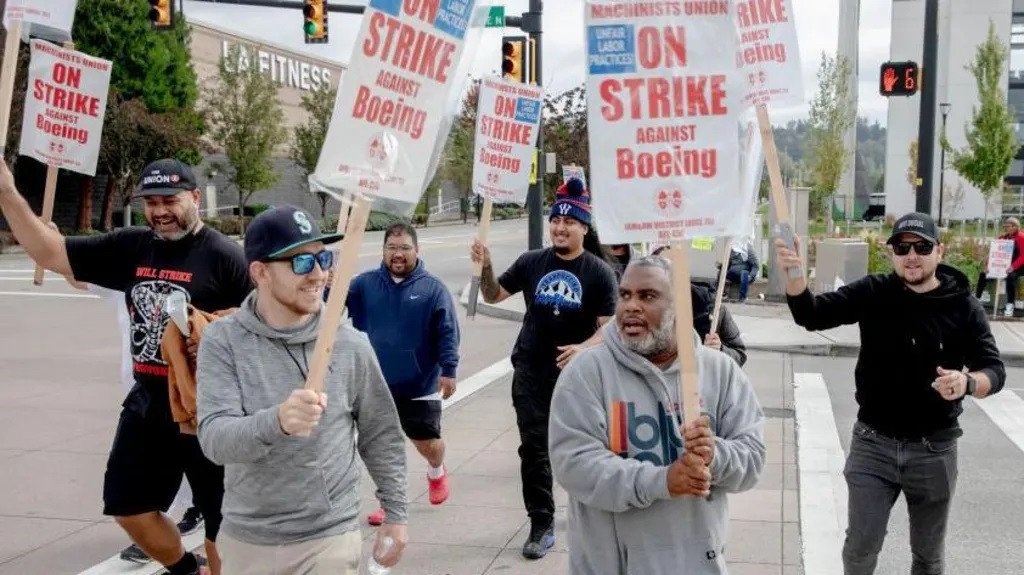
Boeing’s recent proposal for a 30% pay increase over four years has not resonated with striking workers. The International Association of Machinists and Aerospace Workers ,IAM, representing approximately 33,000 employees, stated that their members overwhelmingly find the offer insufficient and believe it does not adequately address their concerns regarding wages and benefits.
The strike, which began on September 13, was initiated after union members rejected an earlier contract proposal that included a 25% wage increase. Workers are demanding a more substantial wage hike of 40%, citing years of stagnant pay and rising living costs as key motivators for their action. Many employees have voiced frustrations over the loss of bonuses and pensions in previous negotiations, which they argue have significantly impacted their financial stability.
Boeing’s latest offer, described as its “best and final,” includes a revival of performance bonuses, enhanced retirement benefits, and an increased signing bonus of $6,000. However, the IAM criticized the proposal for being presented without prior negotiation with union representatives, leading to accusations of disrespect towards the bargaining process. The union has indicated that it will not conduct a membership vote before Boeing’s deadline of September 27, further complicating the situation.
READ ALSO: Boeing workers strike, halting 737 MAX production
Union leaders have emphasized that the current offer does not meet the expectations of their members. In a message to workers, they stated, “This proposal does not go far enough to address your concerns,” highlighting that many responses from members indicated dissatisfaction with Boeing’s approach. The IAM has called for further discussions to explore more favorable terms that would better reflect the needs of its workforce.
The implications of this strike extend beyond just worker dissatisfaction; Boeing is facing significant financial risks as production halts at key facilities in Washington and Oregon. Analysts estimate that the ongoing strike could cost the company upwards of $100 million per day, exacerbating existing challenges related to debt and regulatory scrutiny following safety issues with its aircraft.
As negotiations remain stalled, government officials are stepping in to facilitate discussions between Boeing and the IAM. The urgency for resolution is heightened by the approaching holiday season, which could further impact production schedules and employee livelihoods if an agreement is not reached soon.
In summary, while Boeing’s offer of a 30% pay increase represents a notable improvement over previous proposals, it has failed to satisfy striking workers who are determined to secure better wages and benefits in light of ongoing economic pressures. The situation remains fluid as both sides navigate this critical juncture in labor relations.
Credible News.ng