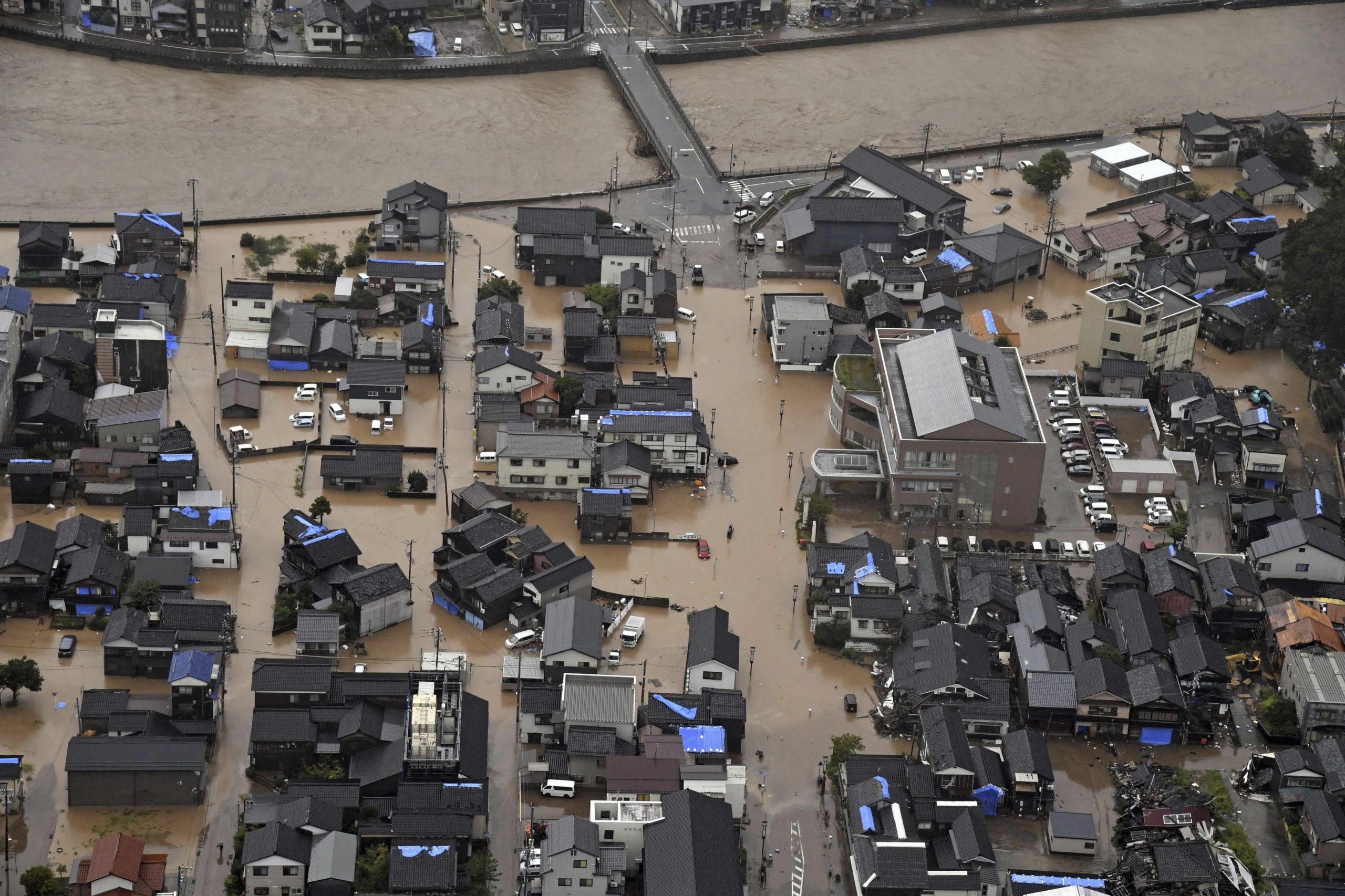
The death toll in Japan Ishikawa Prefecture has risen to nine following relentless heavy rainfall that began over the weekend. The unprecedented downpour has wreaked havoc across the region, leading to severe flooding and landslides, particularly affecting the cities of Wajima, Suzu, and Noto. Emergency officials continue to search for two individuals still missing as rescue operations unfold.
The torrential rains commenced on Saturday, September 21, and have since been described by meteorological authorities as “unprecedented,” with some areas receiving rainfall amounts double their average for September. Wajima recorded a staggering 498.5 millimeters of rain within just a couple of days, prompting the Japan Meteorological Agency to issue its highest level of alert. This alert warned residents of life-threatening conditions due to overflowing rivers and potential landslides.
Among the deceased are several elderly individuals, with reports indicating that some were found near landslide-affected areas. The situation has been compounded by the fact that these communities are still recovering from a devastating 7.6 magnitude earthquake that struck on January 1, 2024, which had already claimed hundreds of lives and left thousands displaced. Many residents were still living in temporary shelters when this latest disaster struck.
READ ALSO: Four die as Typhoon Shanshan slams Japan with torrential rain, disrupts daily life
As floodwaters surged, over 46 communities became isolated, leaving at least 367 people stranded without access to essential services. Approximately 2,900 households lost electricity, and water supplies were cut off for around 5,200 homes. In response to the crisis, local authorities have set up evacuation centers where hundreds are currently taking refuge.
Rescue efforts have been hampered by ongoing adverse weather conditions. The Self-Defense Forces have been deployed to assist local responders in search and recovery operations. As of Wednesday morning, search teams continue to comb through affected areas for any remaining survivors or additional casualties.
In light of these events, Japanese Prime Minister Fumio Kishida has emphasized the government’s commitment to prioritizing disaster management and ensuring the safety of residents. He instructed officials to closely monitor the situation and provide necessary support to local governments grappling with the aftermath of both the flooding and the earlier earthquake.
The devastation in Ishikawa serves as a stark reminder of the increasing frequency and intensity of extreme weather events in Japan, attributed in part to climate change. As communities begin to assess the damage and plan for recovery, they face not only physical rebuilding but also emotional healing from yet another tragedy in a year already marked by loss.
As rescue operations continue and recovery efforts ramp up, the resilience of the people in Ishikawa will be tested once again. The nation watches closely as they navigate this latest chapter in their ongoing struggle against natural disaster.
Credible News.ng