Former Minister of Power, Senator Liyel Imoke has disclosed that the Obasanjo Administration did not spend $16 billion on the power sector as widely alleged.
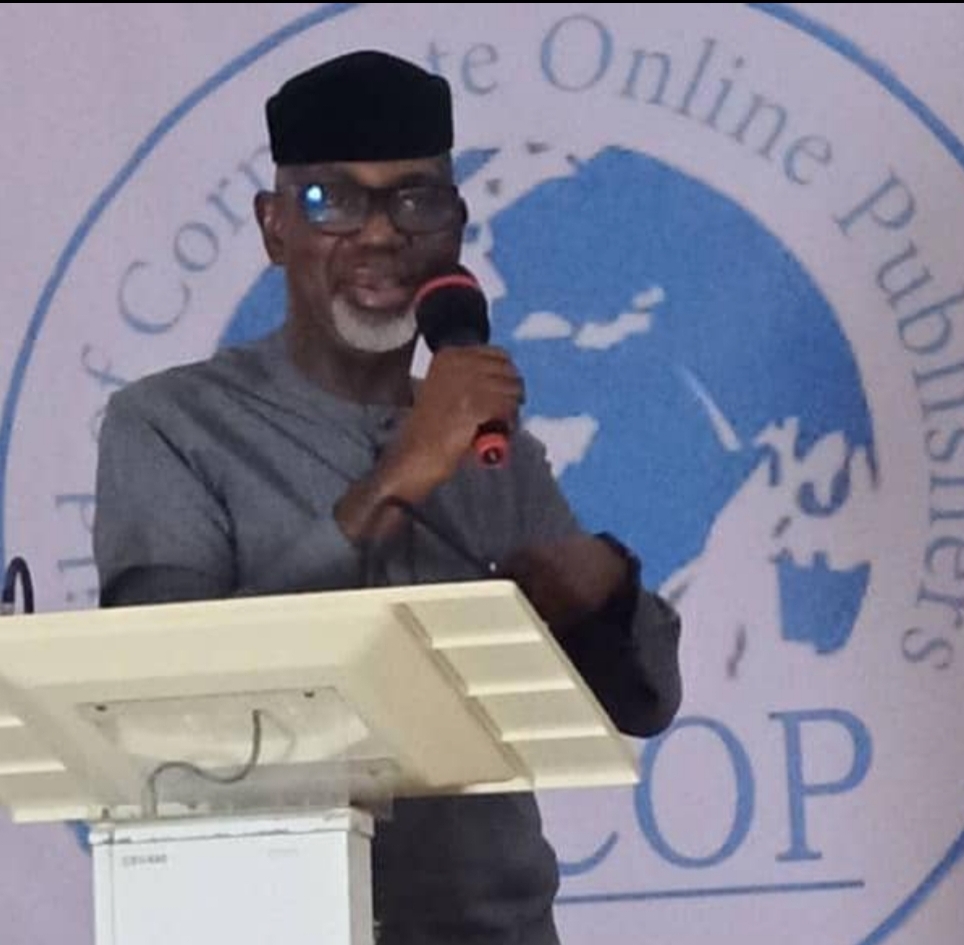
Imoke, who was also Chairman of the Power Sector Technical Board under the Obasanjo administration, spoke at the 8th Annual Conference of the Guild of Corporate Online Publishers, GOCOP, held in Lokoja at the weekend.
Admitting that the National Electric Power Authority, NEPA, as it then was, was a monopoly, he said that electricity distribution was also a monopoly even as the execution of so many programmes faced various challenges.
He referred to the undue delay in implementation of the power sector reforms, which resulted from the probe of the claim of a phantom expenditure of $16 billion on the sector under the administration.
“The power sector probe took about two years. The delay led to huge cost overruns; doubling costs of various contracts awarded during my tenure. Several of these projects were delayed in completion. As we speak, we still have several IPP projects that are ongoing, said Imoke.
The probe found out that there was no missing $16b, but lamented that the alleged expenditure of the phantom $16b had been used as a political tool to criticize “those of us in government.”
Imoke fingered inadequate information as the trigger for the allegation, pointing out that, for instance, on his watch as Minister of Power, the actual spending was between $2b and $3b, much of which went to the original electric manufacturer.
The former governor of Cross Rivers State, said that insecurity, power deficit, and the slowness in Nigeria’s transition to a full digital economy were challenges impeding national growth and development.
“These are challenges that impede our growth as a nation. They make us less globally competitive. If you look at electricity insecurity and digital economy and if we tackle these, we will be on our way to economic growth”, submitted Imoke.
He said to unlock Nigeria’s potential, the administration must tackle insecurity, noting that there had been insurgency and the emergence of Boko Haram, which split into ISWAP.
“We have experienced banditry, kidnapping, armed killings, mass kidnapping, and illegal mining. These days, we can’t go to a gathering of this magnitude without seeing someone who had been kidnapped before. This is one of our new realities,” he stated.
He cited ethnic tension as a contributory cause of communal violence, adding that grievances in the Niger Delta caused a lot of insecurity in the region in the 2000s.
Imoke also listed the organized private crimes in the Gulf of Guinea, which created insecurity in the area and the separatist marginalization in the southeast region, leading to agitation.
Imoke listed poverty, high unemployment rate, which was in 1999 put at six per cent, in 2022 put at 22 per cent but which as of today is approaching 40 per cent, weak governance and corruption as well as climate change, as some of the factors that contributed or fuelled insecurity in the country.
He also listed proliferation of small arms and violent crimes across the country as a sore thumb, lamenting that there were more arms with some non-state actors put in their hands by desperate politicians and which at the end of elections, were not retrieved from them and on which they now depended to survive.
Saying that hope was not lost, Imoke declared that successive administrations had succeeded in degrading Boko Haram and recovering territories in the Northeast hitherto seized by the group.
“The military was able to degrade the group and reclaim the areas in the Northeast around Maiduguri”, he noted.
He listed other successes as the decrease in Boko Haram insurgency and deaths by 23 per cent according to the global terrorism index, adding that “there is also reduction of militancy in the Niger Delta as there is no more MEND in the region.”
He continued: “Oil production has significantly rebounded until recently because during the era of MEND, oil production dropped below 1.5 m barrels per day.
“There is anti-piracy measure launched through NIMASA and international collaborators to reduce the piracy in the Gulf of Guinea. Piracy decreased by 58 per cent between 2020 and 2021 in the Gulf of Guinea.
“In the Southeast, the arrest of Nnamdi Kanu is an achievement in the region…Nigerian government has increased its surveillance measures; its counter insurgency operation has been used in combating terrorism. We now have drone technology and others to attack security issues across the board. The persistent Boko Haram issue has been watered down, but there is a humanitarian issue. About 2.7m people have been affected. The UN said that 350,000 people have died as a result of insurgency.”
He, however, noted that Herder-farmers’ conflict was still ongoing, pointing out that over 2,600 people were reportedly killed in 2021 alone.
Imoke said that continued separatist agitation had led to the death of police officers as well as IPoB members, adding that there had been extra judicial killings and arbitrary arrests, among others.
He said a multifaceted approach was required to effectively tackle security issues in Nigeria, recommending among others community policing, which should be legally regulated, deployment of vigilance groups in securing the communities, and giving consideration to decentralisation of security rather than centralisation that has not worked.
He also established a nexus between security and economy, arguing that “until we can address the state of our economy, we will not able to address security issues effectively.”
He stated that education, skill acquisition, entrepreneurship training, and access to SMES funding were key, adding that a strong and comprehensive rural development programme was necessary to address banditry and farmer-herder conflicts.
Credible News.ng