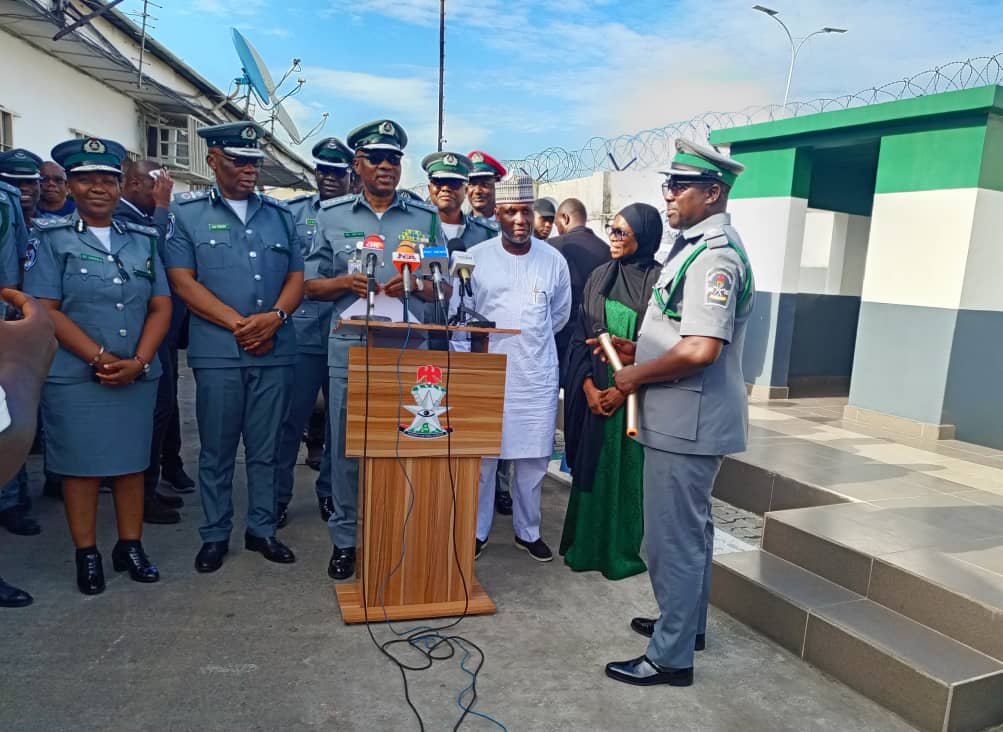
The Nigeria Customs Service, NCS, has officially launched B’Odogwu, a new Unified Customs Management System, marking a key step in the service’s digital transformation.
The pilot phase kicked off at the Port & Terminal Multi-Services Limited in Lagos on October 23. During a press briefing, Comptroller General Adewale Adeniyi highlighted that B’Odogwu aims to replace the existing Nigeria Integrated Customs Information System driving paperless customs operations while enhancing trade efficiency and security.
“B’Odogwu is our new customs management system that embodies our vision for a paperless customs administration that facilitates seamless trade while maintaining robust security measures.” “It is important to note that B’Odogwu will eventually replace the current Nigeria Integrated Customs Information System (NICIS II) as the NCS Legacy System. The system has been developed with foresight, acknowledging that the National Single Window will be coming on board soon, and B’Odogwu will be integrated with it when implemented by the Federal Government”, Adeniyi said.
He emphasized that the platform is built with future integration in mind, notably with the upcoming National Single Window initiative.
READ ALSO : NCS shines at ECOWAS cybersecurity hackathon, leading in digital security innovation
“Specifically, sections 28 and 29 of the Act empower the Service to develop, maintain, and employ electronic systems while ensuring transparency and stakeholder consultation. Speaking further, the CGC urged stakeholders to embrace the change with optimism and provide constructive feedback that will help improve the system. As we commence this pilot, I urge all stakeholders to embrace this change with optimism and provide constructive feedback that will help us refine and improve the system, as your input is crucial to the success of this initiative. B’Odogwu will enhance our ability to streamline end-to-end business processes, provide stakeholders with customised integration capabilities, support more efficient and intelligent business decisions, and facilitate ease of doing business, ” Adeniyi said.
The system launch, backed by the legal framework of the Nigeria Customs Service Act 2023, allows for the development of electronic customs systems under sections 28 and 29. Adeniyi encouraged stakeholders to provide feedback during the pilot phase to improve the system and support its nationwide rollout.
He acknowledged the collaborative efforts of terminal operators, customs officers, licensed agents, and the Trade Modernisation Project team in making the project a reality, urging officers to embrace training and lead by example for future command implementation.
Credible News.ng