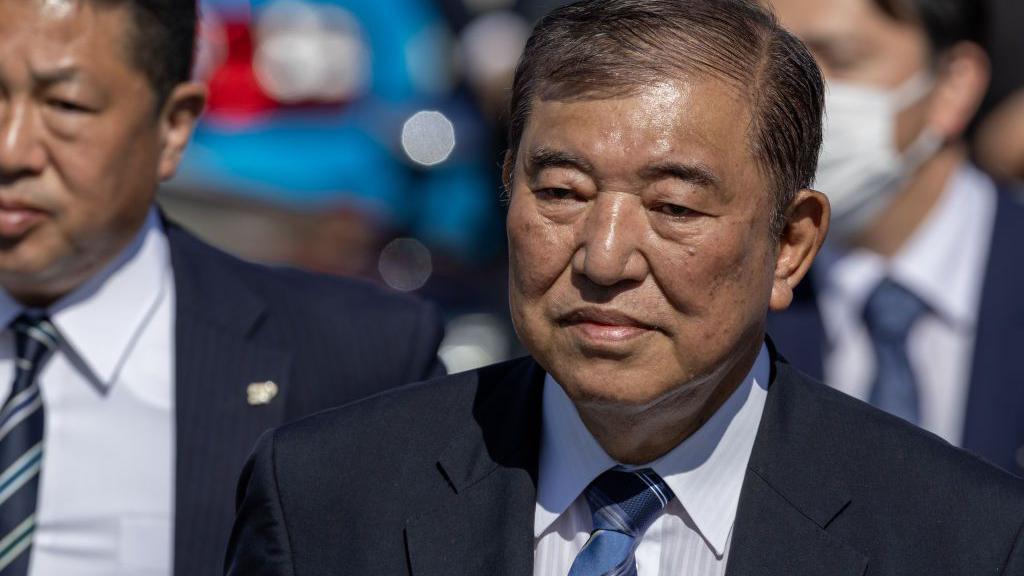
Japan voters delivered a stinging rebuke to the country’s longtime ruling party in elections on Sunday, plunging the world’s fourth largest economy into a rare period of political uncertainty.
Japan’s Liberal Democratic Party, which has governed almost continuously since 1955, has lost its parliamentary majority in the powerful lower house for the first time in 15 years.
Public anger and distrust in the government had been growing over rising living costs, inflation and a massive political funding scandal at the heart of the LDP, with voters voicing their discontent at the ballot box.
The LDP and its coalition partner Komeito secured just 215 of the House of Representatives’ 465 seats, short of the 233 needed to reach a majority, according to public broadcaster NHK.
The result is a major blow to freshly minted Prime Minister Shigeru Ishiba, whose gamble to call a snap election to bolster his position after taking office only this month dramatically backfired.
READ ALSO: Japan’s LDP set to replace outgoing PM Kishida
Ishiba said Monday that voters had delivered an “extremely harsh judgement” his party must take “seriously and solemnly,” but also indicated he would not step down as prime minister.
“I myself will also go back to the start and promote severe internal reforms within the party and further drastic reforms regarding the political situation,” he said.
Ishiba said the party did not have a coalition in mind to put forward to govern but it will begin by “discussing each of the party’s policies.”
Elections for Japan’s lower house are usually a foregone conclusion, with the conservative LDP dominating the country’s post-World War II political scene.
Now, it’s unclear who will govern Japan as Ishiba, a former defense minister and political veteran, may struggle to form a government.
Ahead of the elections, the LDP and its junior coalition partner Komeito had a stable majority of 279 seats while the LDP alone had 247. On Sunday, the LDP won just 191 seats – its worst result since 2009, when the party suffered its biggest defeat and was forced to hand control to an opposition party.
To remain in power, the LDP could try and bring other parties into its coalition or rule via a minority government, with both options putting Ishiba’s position as prime minister in jeopardy.
The main opposition Constitutional Democratic Party of Japan, CDPJ, won 148 seats, a significant increase from 98. CDPJ leader Yoshihiko Noda said in a press conference Sunday, “Our goal was to break the ruling party’s majority, and we achieved it, which is a great accomplishment.”
Reported by CNN