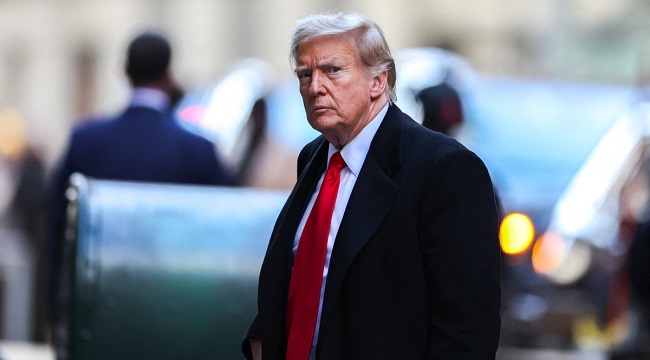
United States President-elect Donald Trump is filling his incoming administration with figures known for their hawkish views on China, signalling a tough line on Beijing in areas ranging from national security to trade.
Trump on Tuesday nominated former Director of National Intelligence John Ratcliffe to head the Central Intelligence Agency, FOX News host and army veteran Pete Hegseth as secretary of defence, and Florida Congressman Michael Waltz as national security adviser.
On Monday, the president-elect named Elise Stefanik, a House representative from New York, as his pick for United Nations ambassador.
Florida Senator Marco Rubio, meanwhile, is widely expected to be tapped for secretary of state.
All five are known for viewing the US and China as being locked in a Manichean struggle for power and advocating a hard line towards Beijing.
Trump on Tuesday also named Tesla and SpaceX CEO Elon Musk and entrepreneur Vivek Ramaswamy to lead a “Department of Government Efficiency“.
Unlike other figures in Trump’s cabinet, Musk, who has extensive business interests in China, is known for his relatively positive views about the Chinese government.
Other notable China hawks who have been floated as candidates to join Trump’s administration include former Ambassador to Germany Richard Grenell, Tennessee Senator Bill Hagerty and former US Trade Representative Robert Lighthizer.
READ ALSO: Trump announces immigration official Tom Homan as ‘border czar’
On Tuesday, The Wall Street Journal, citing people familiar with the matter, reported that Trump plans to name Lighthizer as his “trade czar”.
Lighthizer played an instrumental role in Trump’s trade war during his first term in office, helping to craft tariffs on $380bn worth of Chinese goods.
He could play a similar role again if Trump chooses to make good on his campaign pledge of imposing tariffs of 60 percent or more on Chinese goods and a 10-20 percent tariff on all other imports.
In his book No Trade is Free: Changing Course, Taking on China, and Helping America’s Workers, Lighthizer called for further “decoupling” from China by limiting trade, including exports of critical technology.
In a recent op-ed for The Financial Times, he accused other countries of “adopting industrial policies that are designed not to raise their standard of living, but to increase exports in order both to accumulate assets abroad and to establish their advantage in leading-edge industries”.
“These are not the market forces of Smith and Ricardo. These are beggar thy neighbour policies that were condemned early in the last century,” Lighthizer wrote, referring to the famed British economists Adam Smith and David Ricardo.
Trump’s proposed tariffs would not only affect China but also reverberate throughout Asia due to the region’s close links to the world’s second-largest economy.
Analysts at the London School of Economics and Political Science have estimated that Trump’s proposed tariffs would result in a 0.68 percent reduction in China’s gross domestic product (GDP), with neighbours India and Indonesia facing smaller losses of 0.03 percent and 0.06 percent, respectively.
Trump’s second term in office also comes amid rising tensions between China and self-governing Taiwan, which Beijing claims as its territory.
Aljazeera.com